
Common Fire Hazards in the Workplace: Identification and Control
Learn how to recognise ignition sources, combustible materials, unsafe work practices and housekeeping failures — and how to turn those observations into practical fire prevention controls.

A workplace fire rarely begins with a dramatic warning. It may start with a damaged cable, a heater beside packaging, oily rags in a maintenance area or sparks from a cutting task reaching nearby waste. Such conditions can look routine and go unnoticed.
Understanding workplace fire hazards means recognising ignition sources, identifying materials that can burn and checking how work activities bring them together. The same principles apply in offices, warehouses, workshops, factories, kitchens, laboratories, shops and temporary work areas.
This guide explains common causes, warning signs and practical controls, then shows how findings should feed into a suitable fire risk assessment.
What Is a Fire Hazard?
A fire hazard is a condition, material, substance, activity or energy source that could contribute to a fire starting or developing. Examples include a damaged electrical lead, an unguarded hot surface, a flammable-liquid leak or welding sparks near combustible waste.
A hazard is not the same as fire risk. The hazard is the source or condition; risk considers the likelihood of a fire and its possible consequences for people, property and operations. A small quantity of liquid stored correctly away from ignition sources presents a different risk from the same liquid left open beside a hot process.
Understand the fire triangle
The fire triangle describes three elements needed for ordinary combustion: an ignition source or heat, fuel and oxygen. A workplace inspection should identify where each element is present and how they could come together.
Ignition or heat
Electrical faults, flames, hot surfaces, friction, welding sparks, smoking materials or other energy sources.
Fuel
Paper, cardboard, timber, textiles, packaging, oils, solvents, gases and some combustible dusts.
Oxygen
Usually available from surrounding air. Oxygen-enriched work processes or substances may increase the hazard and need specific controls.
Break the combination
Remove ignition sources or fuel where possible, separate them, and control the work activity that could bring them together.
A grinder, cardboard and the surrounding air illustrate how these elements can come together. A safe system removes or protects combustibles before grinding and checks the area afterwards. The UK government fire risk assessment guidance also identifies ignition, fuel and oxygen as key hazard sources.
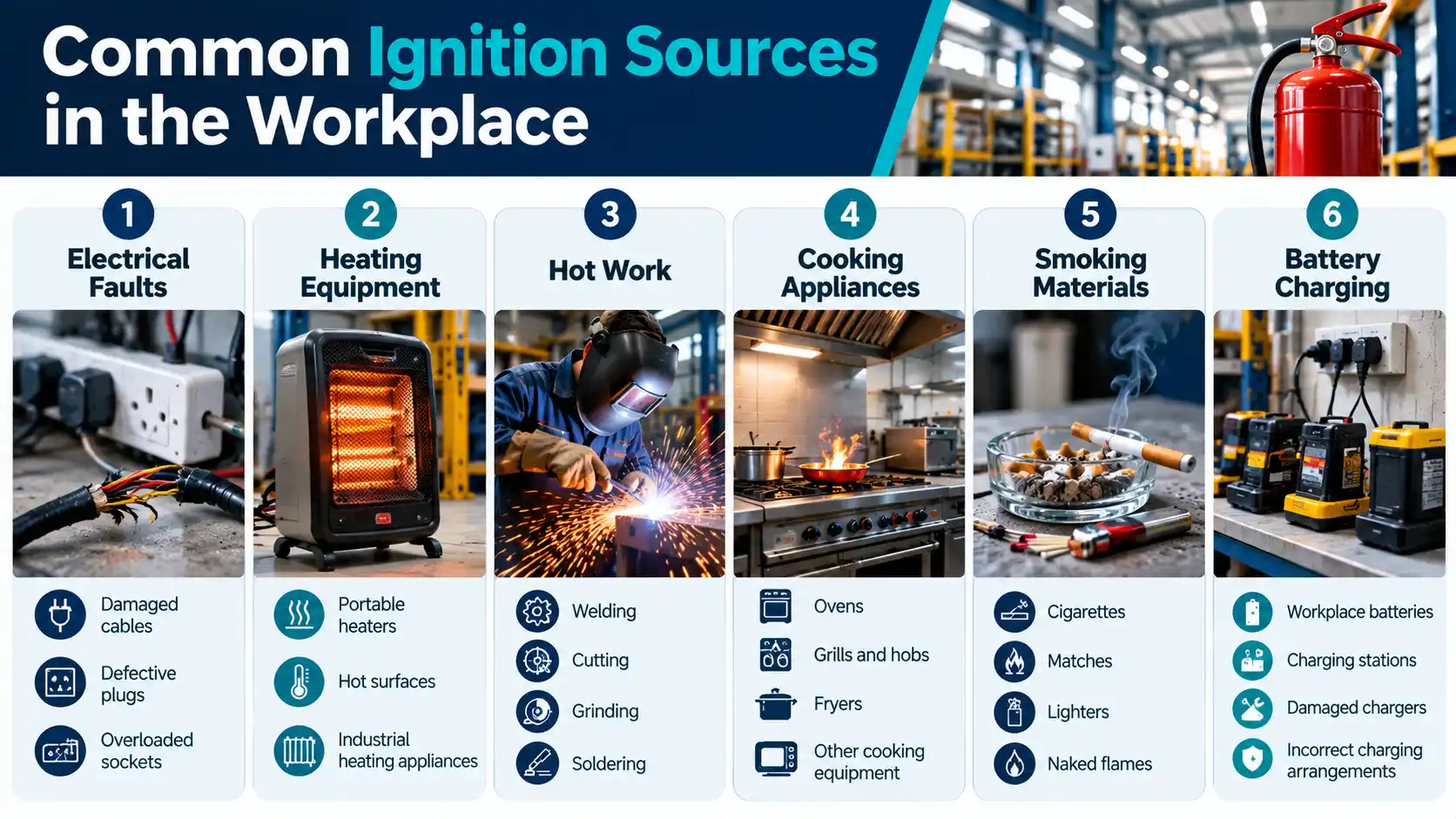
Common Ignition Sources in the Workplace
An ignition source provides heat, flame, sparks or energy that can start a fire when it reaches suitable fuel. An office may have heaters and chargers; a workshop may also use welding equipment, grinders, engines and gas cylinders.
Electrical equipment and installations
Damaged cables, loose connections, defective plugs and overloaded circuits can cause overheating, arcing or sparks. Warning signs include scorch marks, burning smells, repeated trips, buzzing, cracked insulation and exposed conductors. Stop using suspect equipment, isolate it where safe and arrange competent inspection. Do not improvise repairs or repeatedly reset a protective device without investigating the fault.
Heating equipment and hot surfaces
Portable heaters, ovens, hot pipes, lamps and industrial dryers can ignite nearby materials if defective or incorrectly positioned. Look for covered heaters, stock against plant and blocked ventilation. Use suitable equipment, follow manufacturer instructions, maintain required clearances and consider unattended operation.
Cooking appliances and commercial kitchens
Ovens, toasters, grills and fryers introduce heat and sometimes hot oil or grease. Fires may follow unattended cooking, grease build-up, damaged appliances or nearby packaging. Controls include planned cleaning, maintenance, safe oil handling, supervision and clear shutdown procedures. Staff should only tackle a fire when trained and it is safe.
Hot work: welding, cutting, grinding and soldering
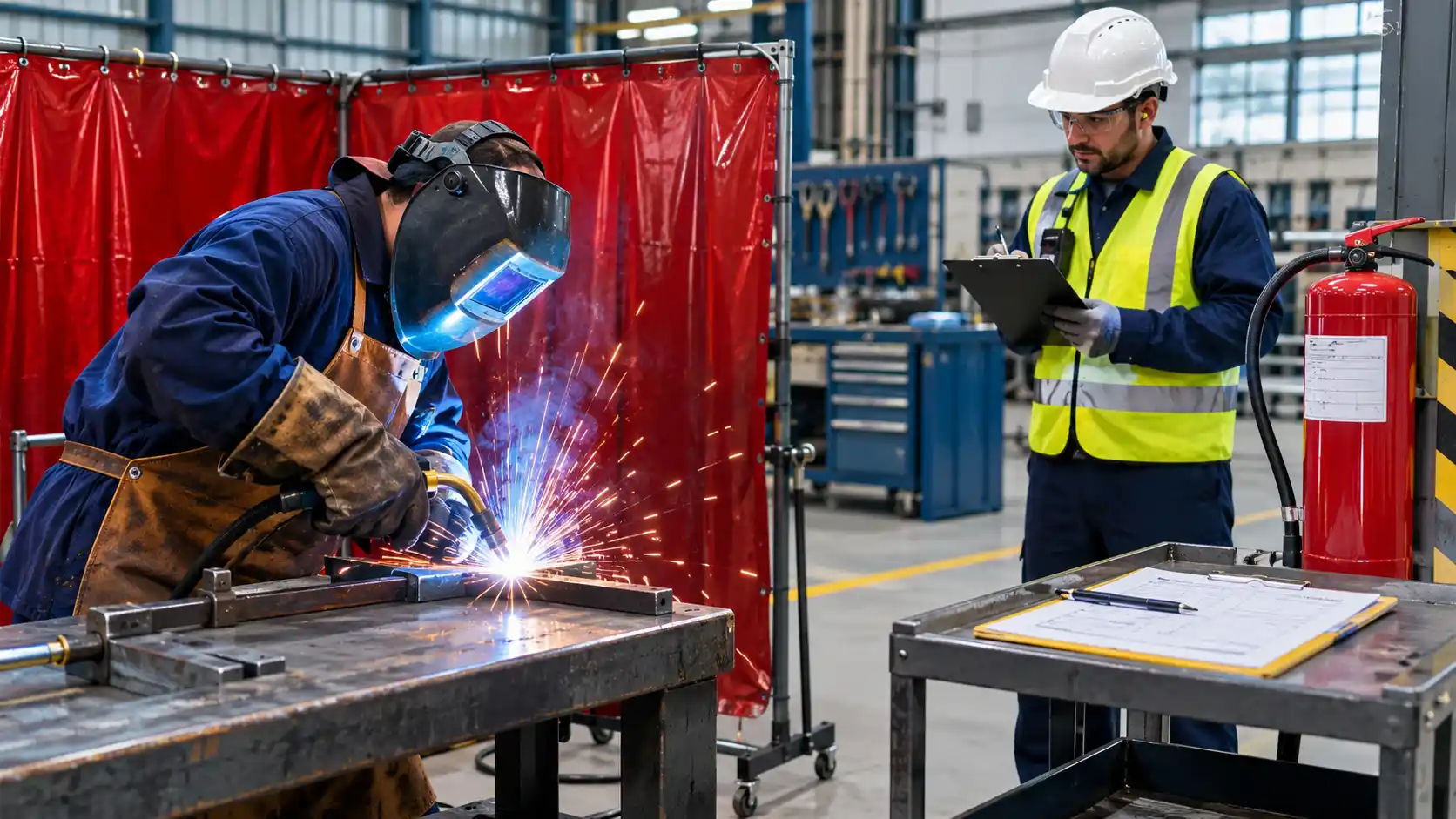
Welding, flame cutting, grinding, brazing and soldering can ignite materials beyond the work point: sparks may pass through gaps or fall to lower levels. Consider a safer method or designated area first. If hot work is necessary, authorise and assess it, remove or protect combustibles, check adjoining spaces, provide suitable firefighting arrangements and appoint a fire watch where required. HSE says a fire watch may need to continue for at least 30 minutes after welding, and potentially 60 minutes where ignition is hard to detect or slow to develop. Follow the task assessment and HSE welding guidance.
Smoking materials, naked flames and deliberate ignition
Cigarettes, matches, lighters and other naked flames can ignite waste, packaging or textiles. Manage cigarette disposal even in designated smoking areas, communicate site rules and provide suitable disposal points. Consider deliberate ignition where waste or flammable substances are accessible from outside; secure vulnerable storage and keep combustible bins away from the building.
Machinery, friction and mechanical failure
Bearings, belts, conveyors, engines and cutting equipment may overheat through friction, poor lubrication or breakdown. Oil, grease, lint and dust can add fuel. Watch for unusual noise, vibration, temperature, smoke and repeated stoppages. Maintenance, cleaning, guarding and prompt defect reporting help control these hazards.
Battery charging and energy storage
Tools, vehicles and portable devices introduce charging risks. Damaged batteries, incompatible chargers and unsuitable charging locations can contribute to overheating. Use compatible chargers, inspect batteries, remove damaged items from service safely and keep charging away from escape routes and combustible stock. Follow manufacturer instructions and the site risk assessment.
Combustible Materials and Storage Hazards
A fire needs fuel as well as an ignition source. Paper, cardboard, timber pallets, textiles, plastic packaging, furniture, oils, cleaning products and waste can all contribute to fire growth. Quantity, arrangement and location matter as much as material type.
Paper, cardboard, packaging and general stock
Packaging accumulates in receiving areas, stores, corridors and behind machinery. Large quantities can provide a path for fire to spread, particularly near heaters or electrical equipment. Keep only necessary stock in work areas, use designated storage, separate combustibles from ignition sources and remove waste routinely. Never obstruct escape routes, fire doors, detectors, sprinklers or firefighting equipment.
Flammable liquids, gases and aerosols
Solvents, paints, thinners, fuels, cleaning agents, LPG and some aerosols can create fire or explosion risks. Vapours may travel from a container to an ignition source. Identify substances from labels and safety data sheets, minimise quantities, use suitable storage, segregate incompatible materials and control access. Provide ventilation where required and follow spill procedures. Never decant chemicals into unlabelled bottles. See the HSE DSEAR guidance.
Combustible dust and deposits
Dust from woodworking, food processing, grain, paper, plastics and some metal processes may be combustible. A cloud of certain dusts can create an explosion risk if an ignition source is present. Identify where dust is produced and settles, maintain extraction, prevent deposits accumulating and avoid cleaning methods that create an unsafe dust cloud. Seek specialist assessment where an explosive atmosphere may occur.
Oily rags, waste and contaminated materials
Cloths, absorbents and filters contaminated with oils, solvents or chemicals may present a fire risk. Waste can also obstruct ventilation or hide heat. Use suitable identified containers, segregate waste where necessary and remove it at a frequency that suits the hazard. Follow safety data sheets and site disposal procedures. Read Managing Combustible Waste in Commercial and Industrial Buildings for more detail.
Electrical and Hot Work Hazards: What to Inspect
Electrical faults and hot work can introduce heat or sparks near combustible materials. Inspect the equipment, how and where it is used, and whether temporary work has changed the normal risk.
Electrical warning signs and suitable responses
| What you may observe | Why it matters | Appropriate response |
|---|---|---|
| Cracked plugs, damaged cables or exposed conductors | Insulation failure can cause overheating, arcing or electric shock. | Stop using the item, isolate it where safe and arrange competent inspection or replacement. |
| Several extension leads or adaptors connected together | Improvised distribution can increase the chance of overload, damage or unsuitable use. | Remove the arrangement and obtain a suitable supply specified by a competent person. |
| Scorch marks, burning smell, buzzing or repeated trips | These may indicate overheating or an electrical fault. | Stop use and report promptly; do not repeatedly reset the protective device. |
| Equipment covered by stock or placed against combustibles | Heat may not dissipate and nearby fuel may ignite. | Restore the required clearance and improve ventilation and storage. |
| Damaged batteries or unsuitable charging arrangements | Overheating may develop in the charging area. | Follow the designated charging procedure and remove damaged items from service safely. |
Electrical maintenance should reflect the equipment, environment and use. HSE guidance, Maintaining Portable Electrical Equipment (HSG107), describes user checks, formal visual inspections and testing where appropriate. It does not set one universal testing interval for every appliance and workplace.
Hot work controls before, during and after the task
Plan whether the job can be avoided, who authorises it, whether a permit is required, which combustibles must be removed or protected and how the area will be monitored. Check adjoining rooms, lower levels and voids where sparks may travel. After the job, inspect for hot fragments, smoke and smouldering; record the checks and close the permit only when precautions are complete.
Housekeeping and Human Factors That Increase Fire Risk
Some hazards develop gradually: a box becomes routine corridor storage, a fire door is wedged open or waste accumulates beside a loading bay. Such shortcuts can increase ignition potential, accelerate fire spread or make evacuation harder.
Poor housekeeping and accumulated waste
Waste, dust, grease, lint and packaging add fuel. Deposits may also obstruct vents or moving parts and contribute to overheating. Inspect beneath benches, behind machines, under stairs and around external waste stores. Set cleaning standards, assign responsibility, provide suitable containers and remove waste often enough. A “keep tidy” sign is not enough if staff lack time or safe disposal facilities.
Blocked exits, corridors and fire doors
Items in stairways, corridors or beside exits can delay evacuation. Locked or obstructed exits prevent people reaching safety, while wedged or defective fire doors can allow smoke and hot gases into escape routes. Keep routes clear, ensure exits are usable whenever the premises are occupied and report door defects. Do not prop doors open unless an approved system is installed and maintained.
Unsafe work practices and human factors
Unsafe practices include leaving cooking unattended, bypassing interlocks, ignoring spills, smoking in unauthorised areas or restarting faulty machinery. Production pressure, poor supervision and unclear procedures can contribute. Provide task-specific training, involve workers in identifying problems and ensure supervisors act on reports.
Contractors, maintenance and temporary changes
Contractors may bring temporary electrics, gas cylinders, solvents and new waste. Building work may also affect fire-stopping, escape routes or alarm systems. Use inductions, coordinate activities and apply permits where appropriate. Agree arrangements for hot work, waste and emergency procedures, then inspect the area and confirm affected fire precautions are reinstated.
How to Identify Fire Hazards at Work
Inspect the premises and observe work as it is performed. Written procedures may not reveal a heater behind stock, a temporary lead under a desk or hot work beside packaging. Combine walk-throughs with conversations, maintenance records, incident reports and information about substances used.
Use a structured workplace walk-through
- Divide the premises into areas. Include offices, kitchens, plant rooms, stores, loading bays, workshops, external waste areas and temporary work locations.
- Identify ignition sources. Look for electrical equipment, heaters, cooking appliances, hot processes, smoking, machinery and battery charging.
- Identify fuel sources. Check packaging, stock, timber, liquids, gases, aerosols, waste, oils and dust.
- Look for the connection. Ask how heat or sparks could reach fuel. Check separation, barriers, ventilation, spills and nearby activities.
- Consider people and escape. Include employees, visitors, contractors, lone workers, night staff and anyone who may need assistance to evacuate.
- Record and verify actions. Assign an owner and deadline, then check that the control has been implemented and remains effective.
Ask questions that reveal hidden risks
Ask workers which equipment overheats, which tasks produce sparks, where flammables are used, where waste accumulates and what changes after hours. Discuss near misses, unusual smells and recurring faults. Review safety data sheets, maintenance reports and previous risk assessment actions to identify repeat problems.
Workplace Fire Hazard Control Checklist
Use this checklist during inspections and work reviews. It is a prompt, not a substitute for a site-specific assessment or specialist advice on dangerous substances, electrical systems or combustible dust.
Ignition sources and equipment
- Plugs, cables, sockets and equipment are visibly undamaged.
- Overloaded adaptors and unsuitable extension-lead arrangements are removed.
- Heaters and cooking appliances are used and maintained correctly.
- Machinery is free from abnormal overheating, friction and excessive deposits.
- Battery charging follows the manufacturer’s instructions and site procedure.
- Hot work is assessed, authorised where required and checked afterwards.
- Smoking and naked-flame controls are communicated and followed.
Combustible materials and storage
- Packaging, pallets and stock are stored in designated areas.
- Combustible materials are separated from ignition sources and hot processes.
- Flammable liquids, gases and aerosols are identified and stored appropriately.
- Incompatible substances are segregated in accordance with relevant guidance.
- Waste and contaminated materials are placed in suitable containers.
- Dust and grease are controlled, and extraction systems are maintained.
- External waste storage is managed to reduce accumulation and exposure to ignition.
Management, people and protection
- Escape routes, stairways and final exits are clear and usable.
- Fire doors are not wedged open and defects are reported.
- Fire alarms, emergency lighting and other precautions are maintained.
- Employees and contractors know how to report hazards and raise the alarm.
- Contractor activities, hot work and temporary changes are coordinated.
- Actions have owners and deadlines, and completed work is verified.
- The fire risk assessment is reviewed after significant changes or incidents.
Examples across different workplace settings
| Workplace | Hazards to look for | Control priorities |
|---|---|---|
| Offices and shops | Overloaded sockets, chargers, heaters, cardboard stock, blocked exits and kitchen appliances. | Electrical checks, sensible equipment use, stock control, clear routes and staff awareness. |
| Warehouses | Packaging, pallets, charging areas, vehicle-related ignition sources and accumulated waste. | Defined storage zones, separation, charging controls, housekeeping and inspections. |
| Factories and workshops | Hot work, machinery overheating, combustible dust, flammable liquids and gas cylinders. | Process-specific assessment, maintenance, extraction, substance controls and hot-work authorisation. |
| Commercial kitchens | Cooking oil, grease, unattended appliances, faulty equipment and packaging. | Cleaning, maintenance, safe oil handling, staff procedures and suitable fire protection. |
| Laboratories and maintenance rooms | Solvents, gases, chargers, heating devices, chemical reactions and temporary work. | Substance inventories, safety data sheets, segregation, ventilation and competent supervision. |
| Construction and refurbishment | Welding, temporary electrics, fuel storage, waste and impaired fire precautions. | Site coordination, permits, temporary arrangements, waste removal and reinstatement checks. |
Fire Risk Assessment and Workplace Fire Safety Responsibilities
Hazard identification is one part of fire safety management. Evaluate findings and include them in the risk assessment and action plan, considering the likelihood of fire, possible consequences, people affected and the suitability of existing controls.
In England and Wales, the Regulatory Reform (Fire Safety) Order 2005 is the main regime for most non-domestic premises. The responsible person must make a suitable and sufficient assessment and keep it under review. Depending on the premises, this may be an employer, owner, landlord, occupier or another person with control. See GOV.UK’s workplace fire safety guidance.
Requirements differ across the UK. Scotland has the Fire (Scotland) Act 2005 and Fire Safety (Scotland) Regulations 2006; Northern Ireland has the Fire and Rescue Services (Northern Ireland) Order 2006 and Fire Safety Regulations (Northern Ireland) 2010. Check the rules that apply to each premises.
Where dangerous substances are present, DSEAR may also apply in Great Britain. Employers and the self-employed must assess and control fire and explosion risks from those substances. Seek specialist advice where explosive atmospheres, combustible dust, gas systems or complex chemical processes are involved.
When should a fire risk assessment be reviewed?
Review the assessment when processes, equipment, buildings, stock, occupancy or fire precautions change, and after a fire or near miss. The government five-step checklist covers hazards, people at risk, evaluation, recording and review. Read the site’s fire risk assessment guide for more detail.
Building Fire Safety Knowledge Through Training
Employees need instruction on relevant hazards, safe equipment use, reporting and emergency actions. Supervisors may need additional knowledge to coordinate inspections and corrective actions. Anyone carrying out fire risk assessments needs competence appropriate to the premises and activities.
Structured learning can support development. Introductory options include the ICTQual AB Level 2 Award in Fire Safety Principles and ICTQual Level 1 Certificate in Fire Protection and Prevention. Broader prevention study is covered by the ICTQual Level 3 Award in Fire Protection and Prevention.
For risk assessment and control, consider the ICTQual AB Level 3 Award in Fire Safety Risk Assessment and Control, ProQual Level 4 Award in Advanced Fire Risk Assessment or ProQual Level 5 Diploma in Fire Risk Assessment. Check each page for current entry criteria and assessment details. A course does not automatically make someone competent to assess every premises or specialist process.
Develop your workplace fire safety knowledge
Explore learning pathways covering fire prevention, inspection, risk assessment and control. Choose a course that matches your experience and intended responsibilities.
Explore Fire Safety QualificationsCommon Mistakes to Avoid When Controlling Fire Hazards
- Assuming a small hazard is harmless. A minor electrical defect or small spill can still create an ignition pathway when fuel is nearby.
- Using one checklist for every area. Kitchens, warehouses and workshops need controls matched to their activities.
- Storing materials wherever space is available. Unplanned storage can bring fuel close to ignition sources and obstruct escape routes.
- Relying only on reminders. Training matters, but safe equipment, adequate storage, maintenance and supervision are also necessary.
- Closing actions without checking. Verify that a control has been implemented and is still working.
- Ignoring temporary work. Contractors and maintenance jobs can introduce short-term hazards.
- Confusing prevention with emergency protection. Alarms, extinguishers and escape routes are essential, but they do not remove the need to prevent ignition and control fuel.
Combine prevention with detection, containment and evacuation arrangements. Alarms and escape routes protect people if prevention fails; they do not replace controls on ignition sources and fuel.
Frequently Asked Questions About Workplace Fire Hazards
What are common workplace fire hazards?
Electrical faults, heaters, cooking appliances, hot work, smoking materials, flammable substances, combustible dust, accumulated waste, poor housekeeping and contractor activities are common examples. The exact hazards depend on the workplace.
How do I identify fire hazards at work?
Inspect work areas, observe normal and non-routine tasks, identify ignition sources and fuel, and check how they could come together. Speak with workers, review maintenance records and safety data sheets, then record actions and owners.
Are overloaded sockets a fire hazard?
Yes. Overloaded or unsuitable electrical arrangements can overheat. Avoid improvised adaptors and daisy-chained leads, follow equipment ratings and report damaged or overheating sockets for competent inspection.
How should hot-work hazards be controlled?
Consider avoiding or relocating the task. If required, assess and authorise it, remove or protect combustibles, check adjoining spaces, provide suitable firefighting arrangements and a fire watch where needed, then inspect the area after work.
Who is responsible for workplace fire safety in the UK?
It depends on the premises and jurisdiction. In England and Wales, the responsible person may be an employer, owner, landlord, occupier or another person with control. Scotland and Northern Ireland have separate legislation.
How often should fire hazards be checked?
Set inspection frequency according to risk, activities, equipment, substances, occupancy and previous findings. High-risk tasks may need checks before each job or shift. Review the fire risk assessment after significant changes, incidents or control failures.
Does fire safety training make someone competent to assess any premises?
No. Competence also depends on experience, skills and the complexity of the premises. Specialist risks such as dangerous substances or combustible dust may require additional expertise.
Conclusion: Make Fire Hazard Identification Part of Everyday Work
Effective fire prevention starts with recognising how ignition sources, combustible materials and work activities interact. Electrical faults, hot work, flammable substances, dust and poor housekeeping can all contribute when left uncontrolled.
Observe work as it is performed, involve employees, maintain equipment, manage storage and waste, coordinate contractors and verify corrective actions. Record significant findings and review the fire risk assessment when the workplace changes. Clear responsibilities and practical controls help prevent incidents.
Further reading and authoritative guidance
- GOV.UK: Fire safety in the workplace — responsibilities
- GOV.UK: Fire risk assessments
- GOV.UK: Fire safety risk assessment — five-step checklist
- HSE: Dangerous Substances and Explosive Atmospheres Regulations (DSEAR)
- HSE: Safety risks from welding
- HSE: Maintaining portable electrical equipment (HSG107)
- Scottish Government: Non-domestic fire safety
- Northern Ireland Fire & Rescue Service: Business fire safety
This article provides general information and is not a substitute for a site-specific fire risk assessment, legal advice or competent technical assessment. Check current legislation, local guidance, manufacturer instructions and the requirements applicable to your premises and activities.