
Managing Fire Risks in Temporary Workplaces and Mobile Worksites
A practical UK-focused guide to identifying fire hazards, controlling temporary ignition sources, protecting workers and maintaining effective emergency arrangements across changing workplaces and mobile operations.
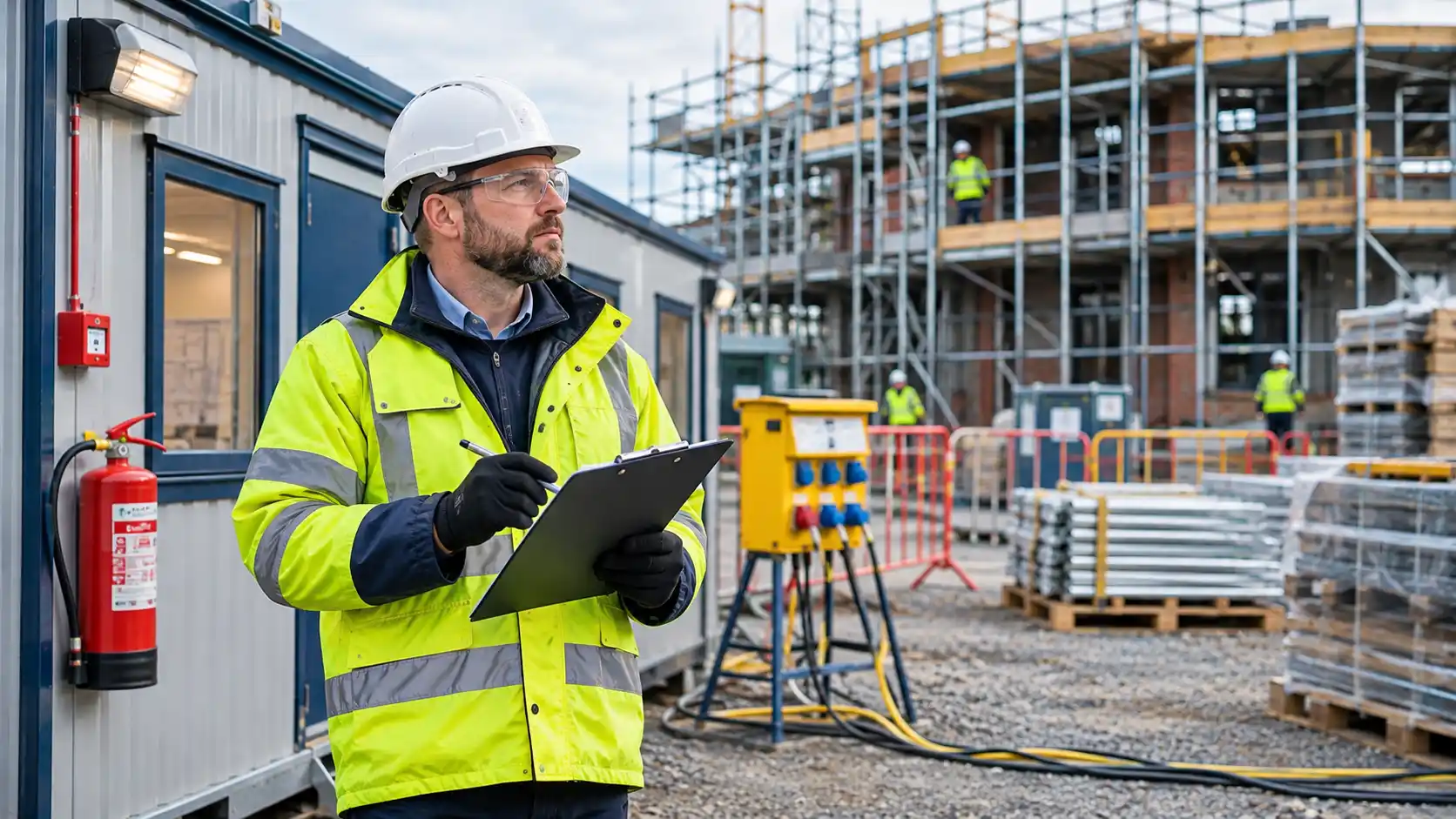
Temporary workplaces and mobile worksites present fire safety challenges that are often different from those found in permanent commercial buildings. Construction projects, maintenance operations, roadworks, temporary installations, outdoor events and mobile service operations frequently involve changing layouts, unfamiliar workers, temporary electrical equipment and materials that can increase the likelihood of fire.
Managing fire risks in temporary workplaces and mobile worksites requires more than installing fire extinguishers or displaying emergency instructions. Employers, contractors and site managers must understand how work activities, temporary structures, equipment, storage arrangements and site movements influence fire hazards. A workplace that was safe at the beginning of a project may develop different risks when additional contractors arrive, hot work starts or combustible materials accumulate.
In the UK, organisations must consider their relevant fire safety legislation and ensure that suitable fire prevention, warning, escape and emergency arrangements are maintained. Construction projects also require coordination of health and safety responsibilities under the Construction (Design and Management) Regulations 2015, where applicable.
This guide explains common fire hazards in temporary workplaces, the responsibilities of employers and contractors, practical control measures, mobile-worksite precautions and the steps required to establish an effective fire safety management system.
How can fire risks be managed in temporary workplaces?
Fire risks can be managed by carrying out a suitable fire risk assessment, identifying ignition sources and combustible materials, controlling hot work, maintaining safe electrical installations, storing flammable substances correctly, providing suitable warning and escape arrangements, training workers and reviewing precautions whenever site conditions change. These controls must remain effective throughout the duration of the work.
Understanding Temporary Workplaces and Mobile Worksites
A temporary workplace is a location used for work activities for a limited period rather than as a permanent operational base. It may be established for a construction project, refurbishment programme, maintenance assignment, temporary installation or specialist industrial operation. A mobile worksite is a working environment that moves between different locations or changes position as part of the work being performed.
These workplaces can include construction compounds, temporary site offices, maintenance cabins, roadwork locations, mobile workshops, service vehicles, temporary warehouses and outdoor project areas. Their facilities and arrangements may change regularly, making consistent fire safety management particularly important.
Examples of temporary and mobile working environments
Construction sites
Building projects may involve temporary electrical supplies, hot work, scaffolding, timber storage, combustible packaging and changing escape routes.
Maintenance workplaces
Repair and maintenance operations may introduce welding, grinding, temporary machinery, electrical isolation and flammable cleaning products.
Mobile workshops
Service vehicles and mobile workshops may contain fuel, batteries, electrical tools, gas cylinders and other potentially hazardous materials.
Temporary event facilities
Temporary marquees, exhibition structures, catering units and temporary electrical installations can introduce additional ignition and evacuation risks.
A key characteristic of these environments is that the fire safety arrangements must respond to the actual workplace rather than relying on a fixed plan created for a different location. Site access, working hours, occupancy, equipment and emergency arrangements should be considered whenever the workplace changes.
Why Temporary Workplaces Create Additional Fire Risks
Temporary workplaces can experience increased fire exposure because they combine changing operational conditions with temporary facilities and equipment. Controls that are adequate during one phase of a project may become unsuitable when another activity begins.
Changing layouts and working conditions
Construction and maintenance sites rarely remain in the same condition throughout their operational life. Materials are delivered, machinery is relocated, temporary partitions are installed and work areas are reorganised. These changes can affect the location of fire exits, access routes, combustible storage and firefighting equipment.
A clear escape route at the beginning of a shift could become obstructed by equipment or construction materials later in the day. Fire safety arrangements therefore need to be checked whenever significant changes occur.
Temporary equipment and installations
Temporary power supplies, extension leads, portable heaters, lighting equipment and machinery may be introduced to support short-term activities. If these installations are poorly selected, damaged, overloaded or incorrectly positioned, they can create ignition hazards.
Multiple contractors and unfamiliar workers
Temporary projects frequently involve several contractors working simultaneously. Each organisation may bring its own equipment, materials and working methods. Without effective coordination, one contractor’s activities may introduce fire risks that affect everyone on the site.
Workers who visit a location occasionally may also be unfamiliar with its alarm arrangements, evacuation routes and assembly points. A site-specific induction is essential to explain the arrangements before work begins.
Reduced supervision and changing occupancy
Some temporary operations take place during evenings, weekends or overnight shutdowns. Fewer people may be present to identify developing hazards or raise the alarm. Lone workers and remote teams may also experience delays in receiving assistance.
Important consideration: The duration of a project does not determine whether fire safety precautions are necessary. A short maintenance activity can introduce serious fire hazards if ignition sources, combustible materials and emergency arrangements are not properly controlled.
Common Fire Hazards in Temporary Workplaces and Mobile Worksites
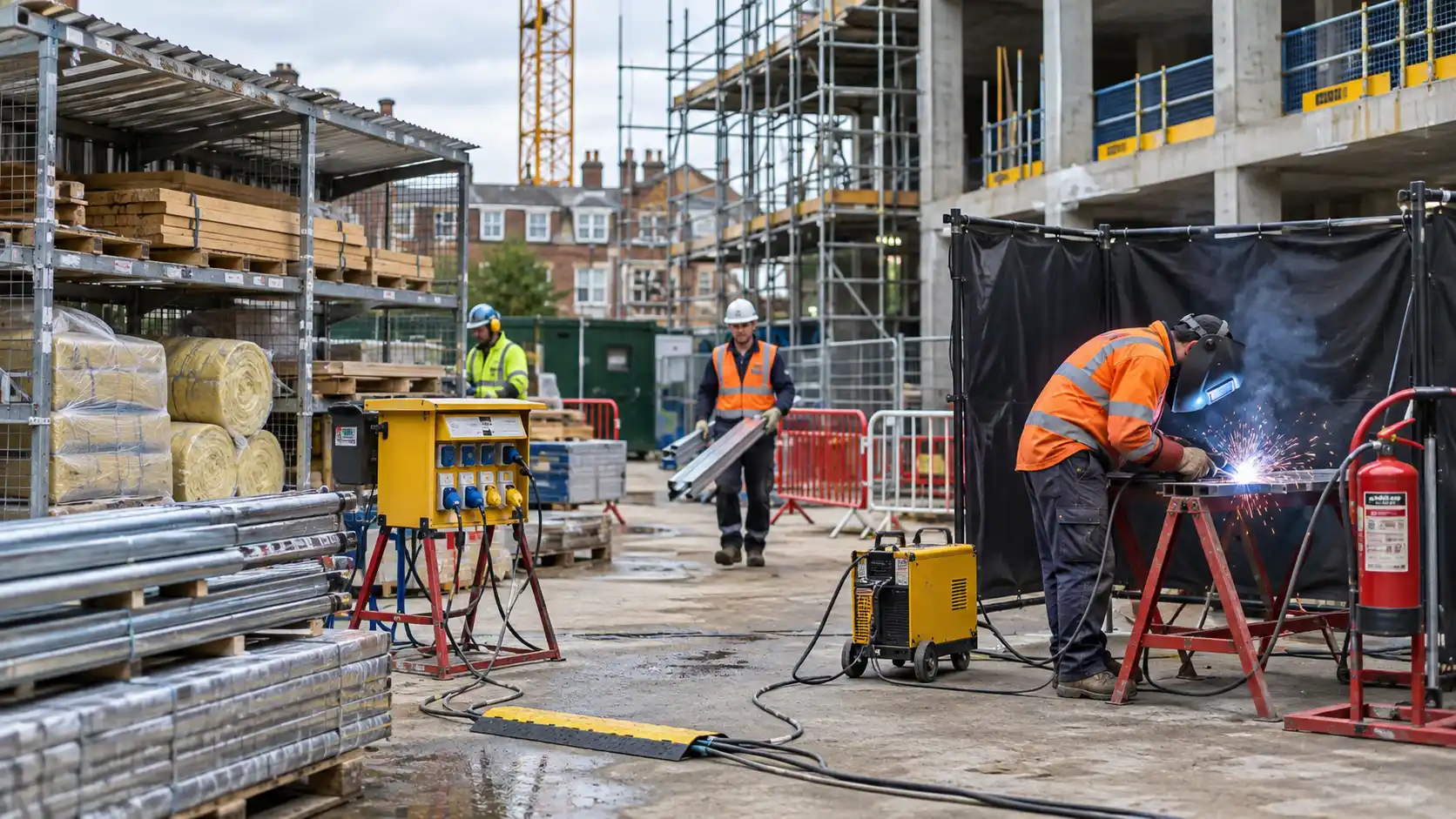
Identifying hazards is the foundation of effective fire prevention. Site managers should consider how ignition sources, combustible materials and oxygen can combine to create a fire. They must also assess how a fire could spread and affect people working nearby.
Hot work activities
Welding, flame cutting, brazing, soldering, grinding and other spark-producing activities can introduce significant ignition sources. Sparks and hot particles may travel beyond the immediate work area and ignite packaging, insulation, timber, dust or other combustible materials.
Heat can also transfer through metal structures, walls and concealed spaces. A fire may develop after the work has stopped if hot materials or smouldering combustibles have not been identified.
Organisations should establish suitable hot-work controls, including authorisation, removal or protection of combustibles, appropriate firefighting arrangements and post-work fire checks. The level and duration of monitoring should be determined by the risk assessment and permit arrangements.
Temporary electrical installations
Temporary electrical systems can become dangerous when cables are damaged, connections are unsuitable or equipment is used beyond its intended capacity. Overloaded circuits, exposed conductors, overheating equipment and poorly maintained generators may create electrical ignition sources.
Electrical supplies should be designed, installed and maintained by suitably competent people. Cables should be protected against mechanical damage, moisture and vehicle movements. Equipment showing signs of damage or overheating should be removed from service until it has been assessed and made safe.
Flammable liquids and gases
Paints, solvents, adhesives, petrol, diesel, cleaning agents and other hazardous substances may be present during construction and maintenance work. Their vapours can ignite when exposed to unsuitable ignition sources.
LPG cylinders and other compressed gas containers require particular attention. Leaks can allow flammable gas to accumulate, particularly in poorly ventilated or enclosed areas. Cylinders should be secured, protected from damage and stored in suitable designated locations.
Storage and handling arrangements should follow the relevant product instructions, workplace risk assessments and applicable dangerous substances requirements.
Combustible waste and poor housekeeping
Temporary projects can generate cardboard, plastic packaging, timber offcuts, insulation, oily cloths, sawdust and other combustible waste. If these materials accumulate near machinery, heaters or hot-work locations, they can contribute to fire development.
Waste should be removed regularly and placed in appropriate designated areas. Combustible waste should not be allowed to accumulate near temporary cabins, escape routes, electrical equipment or external building openings.
For more detailed guidance, read our related article: Managing Combustible Waste in Commercial and Industrial Buildings .
Temporary heating and cooking equipment
Portable heaters, temporary catering equipment and cooking appliances can introduce additional ignition sources. Their use should be controlled through suitable positioning, maintenance, ventilation and manufacturer instructions.
Heaters should be kept away from combustible materials and should not be left operating unattended where the risk assessment or manufacturer instructions prohibit this. Improvised heating arrangements should never replace suitable approved equipment.
Disabled fire protection systems
Refurbishment and maintenance work can affect existing fire alarms, detectors, sprinklers, emergency lighting and fire doors. Systems may need temporary isolation for specific activities, but an uncontrolled impairment can leave people exposed to increased risk.
Any necessary impairment should be authorised, recorded and communicated. Alternative precautions should be established before protection is reduced, and systems should be restored and verified as soon as practicable.
Arson and unauthorised access
Unsecured temporary sites may be vulnerable to unauthorised access, vandalism and deliberate ignition. The presence of combustible materials, fuel containers and temporary accommodation can increase the potential consequences.
Appropriate perimeter security, lighting, access controls and secure storage can help reduce exposure. High-risk locations may also require additional surveillance or security arrangements.
| Fire hazard | Potential consequence | Recommended control |
|---|---|---|
| Welding and grinding | Sparks ignite combustible materials | Hot-work authorisation and fire monitoring |
| Temporary electrical systems | Overheating, arcing or electrical fire | Competent installation and inspection |
| Flammable liquids | Vapour ignition and rapid fire spread | Suitable storage and handling controls |
| Combustible waste | Increased fire load and fire spread | Regular removal and designated storage |
| LPG cylinders | Gas leaks, fire or explosion | Secure storage and leak prevention |
| Blocked escape routes | Delayed or prevented evacuation | Routine inspections and clear access |
| Disabled alarms | Delayed fire detection and warning | Authorised impairment management |
UK Fire Safety Legislation for Temporary Workplaces
Fire safety responsibilities depend on the location, nature of the workplace, activities undertaken and relevant dutyholders. Temporary workplaces are not automatically exempt from fire safety requirements because they operate for a limited period.
Employers and project managers should identify which legal framework applies to their particular site. The following legislation and guidance are particularly relevant to workplace and construction fire safety.
Regulatory Reform (Fire Safety) Order 2005
The Regulatory Reform (Fire Safety) Order 2005 is the principal fire safety legislation for most non-domestic premises in England and Wales. It establishes duties for responsible persons, including undertaking and reviewing fire risk assessments and implementing appropriate general fire precautions.
Its requirements include identifying people who may be at risk, providing suitable means of escape, establishing fire warning arrangements and ensuring appropriate firefighting measures are available.
Article 5 also extends relevant duties to other persons who have control of premises, to the extent of their control. This is important where employers, contractors, owners and site operators share responsibility for a temporary workplace.
Read the official legislation: Regulatory Reform (Fire Safety) Order 2005 .
Fire Safety Act 2021
The Fire Safety Act 2021 clarified the application of the Fire Safety Order to certain elements of multi-occupied residential buildings, including external walls and flat entrance doors. It is relevant when temporary work takes place in or around buildings where those provisions apply.
It should not be interpreted as a separate general workplace fire safety code for all temporary sites.
Fire Safety (England) Regulations 2022
These regulations introduce additional requirements under the Fire Safety Order for specified residential buildings in England. They include provisions relating to building information, fire doors and access to firefighting information in relevant buildings.
They are not a universal set of temporary construction site requirements. Their application should be assessed according to the building type and circumstances of the work.
Official guidance: Fire Safety (England) Regulations 2022 .
Construction (Design and Management) Regulations 2015
The Construction (Design and Management) Regulations 2015 establish health and safety duties for clients, designers, principal designers, principal contractors, contractors and workers involved in construction projects.
Principal contractors must plan, manage, monitor and coordinate the construction phase. They must also prepare and maintain a suitable construction phase plan and ensure workers receive appropriate site-specific information and training.
Fire safety should be integrated into project planning, coordination and site management rather than treated as a separate activity.
Read the HSE guidance: Principal Contractors: Roles and Responsibilities .
Electricity at Work Regulations 1989
These regulations are relevant to electrical equipment and installations used in temporary workplaces. Electrical systems should be constructed, maintained and used in a manner that prevents danger, so far as is reasonably practicable.
Temporary power supplies, generators, distribution equipment and portable electrical tools should therefore be selected and managed appropriately.
Fire safety legislation across the UK
| UK jurisdiction | Relevant fire safety framework | Important consideration |
|---|---|---|
| England and Wales | Regulatory Reform (Fire Safety) Order 2005 | Responsible person duties and general fire precautions. |
| Scotland | Fire (Scotland) Act 2005 and Fire Safety (Scotland) Regulations 2006 | Scottish fire safety duties and workplace assessment requirements. |
| Northern Ireland | Fire and Rescue Services (Northern Ireland) Order 2006 and Fire Safety Regulations (Northern Ireland) 2010 | Separate workplace fire safety and enforcement arrangements. |
For Scotland, consult the Fire (Scotland) Act 2005 . For Northern Ireland, consult the Fire and Rescue Services (Northern Ireland) Order 2006 .
Legal note: This article provides general UK fire safety information, not legal advice. Organisations should check current legislation, applicable regulations and official guidance for their jurisdiction and workplace. Requirements may also arise under other relevant legislation depending on the work activity.
Roles and Responsibilities for Managing Fire Risks
Effective workplace fire safety requires cooperation between the organisations and individuals who control the premises, manage the project and carry out work. Responsibilities should be clearly defined before temporary operations begin.
Employers
Employers must protect employees and other relevant people from workplace fire risks in accordance with applicable legislation. Their responsibilities include identifying hazards, assessing risks, providing suitable precautions and ensuring workers receive relevant information and training.
Site managers and principal contractors
Site managers and principal contractors should coordinate fire safety arrangements across the working environment. They should ensure that contractors understand site requirements, work activities are coordinated and emergency arrangements remain suitable as the project develops.
Contractors and subcontractors
Contractors must manage the risks associated with the work under their control and cooperate with other relevant dutyholders. They should provide appropriate equipment, follow site procedures, control ignition sources and report unsafe conditions.
Responsible persons and other persons in control
Under the Fire Safety Order in England and Wales, the responsible person has specific duties concerning fire risk assessment and general fire precautions. Where more than one organisation has control over relevant premises or activities, cooperation and coordination are important.
Employees and temporary workers
Workers should follow fire safety instructions, use equipment correctly, maintain good housekeeping and report damaged electrical equipment, unsafe storage and blocked escape routes. They should also understand how to raise the alarm and where to assemble during an emergency.
Example of responsibility allocation
On a temporary refurbishment project, the principal contractor coordinates site-wide arrangements, an electrical contractor manages electrical hazards associated with its work, the responsible person coordinates precautions for the occupied premises, and workers follow the site induction and emergency procedures. The exact allocation depends on the contractual, operational and legal responsibilities of each party.
How to Conduct a Fire Risk Assessment for a Temporary Workplace
A fire risk assessment is a systematic examination of the workplace to identify fire hazards, people who may be affected and measures required to prevent fire and protect life. For temporary workplaces, the assessment should reflect the actual activities, site layout, equipment and expected changes.
The HSE’s construction fire guidance identifies risk assessment, escape, warning and firefighting as key elements of construction site fire safety. Read HSE general fire safety guidance .
Step 1: Identify fire hazards
Inspect the workplace and identify anything that could start a fire or contribute to its development. Consider welding, grinding, electrical equipment, heating appliances, smoking, fuel storage, gas cylinders, combustible waste and temporary machinery.
Consider hazards arising from adjacent activities and neighbouring premises as well as the immediate work area.
Step 2: Identify people at risk
Consider everyone who could be affected, including employees, subcontractors, visitors, delivery drivers, members of the public and people working in neighbouring occupied buildings.
Particular attention should be given to young workers, people with disabilities, lone workers, night staff and individuals unfamiliar with the location.
Step 3: Evaluate the risks and select controls
Assess the likelihood of ignition and the potential consequences if a fire occurs. Consider the combustible materials present, possible fire spread, number of people exposed, detection arrangements and available escape routes.
Select controls that remove hazards where possible and reduce remaining risks. For example, eliminate unnecessary hot work, relocate combustible storage and use suitable electrical equipment.
Step 4: Establish fire safety arrangements
Determine how people will receive warning, how they will escape, where they will assemble and who will coordinate the response. Identify the firefighting equipment required and ensure that it is accessible and appropriate for the hazards present.
Step 5: Record findings, communicate and train
Record the significant findings and actions required in accordance with applicable legal requirements. Assign responsibility and completion dates for outstanding measures. Communicate the arrangements to employees, contractors and other relevant people.
Step 6: Review the assessment when conditions change
Temporary workplaces can change quickly. Review the assessment when there are significant changes in site layout, work activities, occupancy, materials, equipment or emergency arrangements. Also investigate incidents, near misses and newly identified hazards.
You can explore our detailed Fire Risk Assessment Guide for further information about the assessment process.
Remember: A fire risk assessment is not a document to complete once and leave untouched. Its findings must inform daily workplace management and be reviewed when relevant circumstances change.
Fire Prevention and Control Measures for Temporary Workplaces
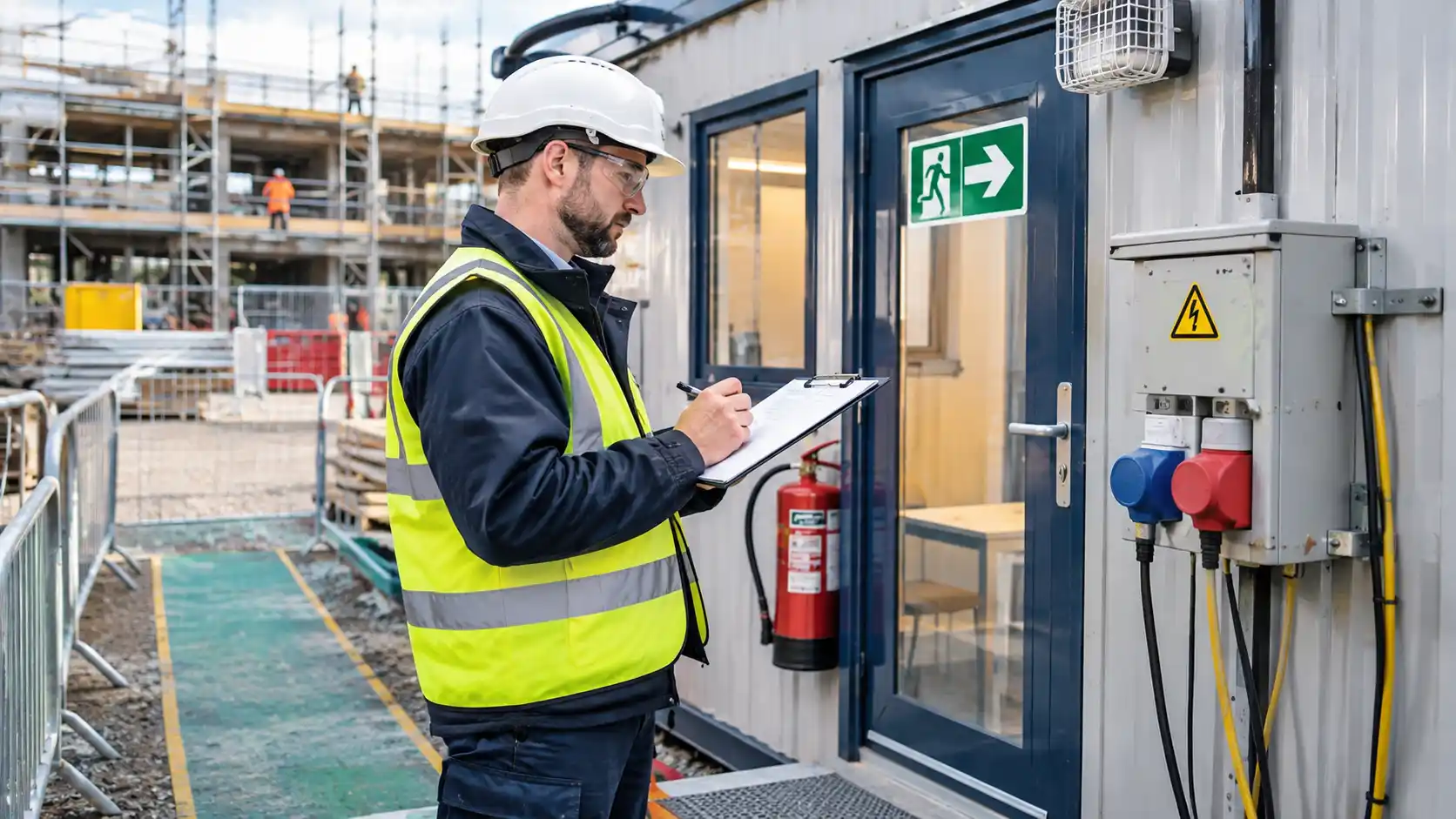
Fire prevention should be integrated into everyday site management. The most effective arrangements combine technical controls, safe working procedures, competent supervision and worker awareness.
Control hot work through formal procedures
Hot work should be avoided where a safer alternative is reasonably practicable. When it is necessary, organisations should implement a suitable control system based on the level of risk.
A hot-work permit can help confirm that essential precautions have been considered and authorised before work begins. It should identify the work location, task, responsible persons, time period and required precautions.
- Remove combustible materials from the work area where practicable.
- Protect materials that cannot reasonably be removed.
- Check concealed spaces and the opposite side of surfaces where heat may transfer.
- Provide appropriate firefighting equipment.
- Assign competent personnel to monitor the work and surrounding area.
- Carry out post-work checks for residual heat or smouldering materials.
Maintain safe temporary electrical systems
Temporary electrical installations should be planned and installed for their intended conditions of use. Competent people should select equipment suitable for the electrical load and the environment.
- Inspect cables, plugs, connections and distribution equipment.
- Prevent cable damage from vehicles, water and sharp edges.
- Avoid unsafe overloading and unauthorised connections.
- Use suitable protection for the environmental conditions.
- Remove defective equipment from service.
- Maintain suitable inspection and maintenance records.
Improve flammable substance storage
Flammable substances should be stored in suitable designated locations, with access controlled according to the nature of the material and the hazards identified.
Containers should remain properly closed when not in use, and incompatible substances should be segregated where necessary. Storage locations should be positioned to minimise exposure to ignition sources and avoid compromising escape routes.
Maintain good housekeeping
A housekeeping programme should identify who is responsible for removing waste, when inspections take place and where combustible materials are stored. Waste should be removed frequently enough to prevent unnecessary accumulation.
Manage temporary fire protection arrangements
Fire alarms, detection systems, emergency lighting, fire doors and other protective arrangements should remain suitable for the changing workplace. If any system must be isolated or becomes defective, the impairment should be controlled and alternative precautions established.
Provide suitable fire detection and warning
The warning method should reflect the size, layout, occupancy and noise conditions of the workplace. A small outdoor operation may use a suitable audible warning device, while a larger temporary facility may require a more comprehensive alarm arrangement.
Workers must be able to recognise the alarm and understand the action required. Warning signals should be distinguishable from normal workplace sounds.
Protect escape routes and emergency access
Escape routes should remain available, suitable and unobstructed. Where work changes the site layout, the escape arrangements must be reviewed before people begin using the altered area.
Temporary signage and lighting should be provided where required by the assessment. Emergency access for fire and rescue services should also be considered, including vehicle access and suitable access to relevant parts of the site.
Managing Fire Risks in Mobile Worksites
Mobile worksites introduce additional challenges because workers, equipment and materials may move between locations. Fire safety arrangements must therefore be suitable for the specific working environment rather than relying on procedures designed for a permanent base.
Fire safety in service vehicles and mobile workshops
Vehicles used as mobile workshops may contain electrical tools, batteries, fuel, lubricants, cleaning products, gas cylinders and other potentially hazardous materials.
Storage should prevent movement and accidental damage during transport. Equipment should be maintained and unsuitable materials should not be stored alongside ignition sources without appropriate controls.
Vehicle-specific emergency arrangements should explain how workers can stop work, raise the alarm, move to a safe location and contact emergency services.
Fire risks associated with temporary site cabins
Site cabins may be used for offices, welfare facilities, storage or accommodation. They can contain electrical appliances, heating systems, furniture, paper products and combustible furnishings.
Their location, construction, internal layout, ventilation and means of escape should be considered during the fire risk assessment. LPG equipment and portable heaters require particular care where used.
Battery charging and portable power equipment
Mobile teams increasingly use rechargeable batteries to power tools, communication devices and other equipment. Damaged batteries, unsuitable charging equipment and incorrect charging arrangements can create fire hazards.
Charging should follow manufacturer instructions and workplace procedures. Damaged or abnormal batteries should be removed from use and managed through an appropriate safe process. Charging locations should be selected with consideration of surrounding combustible materials and escape routes.
Remote and outdoor work locations
Remote sites may have limited access to emergency services, poor communication coverage or restricted access for firefighting vehicles. Workers may also be spread across a large area.
Managers should consider location details, emergency contact arrangements, communication equipment, access routes and suitable assembly points. Lone workers may require additional communication and emergency response procedures.
Fuel storage and mobile plant
Mobile plant and vehicles can introduce diesel, petrol, hydraulic fluids, lubricants and hot engine surfaces into working areas. Refuelling should take place in designated locations with appropriate controls for ignition sources and spill risks.
Plant should be maintained according to manufacturer requirements, and any evidence of fuel leaks, overheating or electrical defects should be investigated promptly.
Mobile worksite fire safety essentials
- Inspect vehicles and mobile equipment before use.
- Secure tools, batteries and combustible materials during transport.
- Keep fuel and gas containers in suitable locations.
- Establish site-specific emergency contact arrangements.
- Identify safe evacuation and assembly locations.
- Provide suitable warning and communication equipment.
- Review arrangements whenever the work location changes.
Emergency Planning and Evacuation in Temporary Workplaces
An emergency plan explains how people should respond when a fire occurs. In temporary workplaces, the plan must account for the site layout, number of workers, work activities and available emergency facilities.
Establish a clear fire evacuation procedure
The procedure should explain how the alarm is raised, what workers must do when they hear it, which escape routes are available and where everyone should assemble.
Workers should be instructed not to delay evacuation to collect belongings or attempt firefighting unless they have the appropriate training, equipment and circumstances permit a safe intervention under the established procedure.
Provide effective warning arrangements
Warning arrangements should be audible or otherwise accessible to everyone who needs to receive them. If a site contains noisy machinery, multiple work areas or isolated workers, additional communication methods may be necessary.
Identify assembly points and account for workers
Assembly points should be located at a suitable safe distance from the hazard and should not interfere with emergency vehicle access. Supervisors or designated personnel should establish a suitable method for accounting for employees, contractors and visitors.
Consider vulnerable people and visitors
Emergency procedures should consider people who may need additional assistance, including people with mobility, hearing or visual impairments. Visitors and temporary workers should receive information appropriate to their familiarity with the location.
Coordinate with neighbouring organisations
Temporary works inside occupied buildings can affect people who are not directly involved in the project. Site managers and contractors should coordinate arrangements with building management to ensure existing escape routes, alarm systems and fire protection measures remain effective.
Monitoring and Reviewing Fire Safety Controls
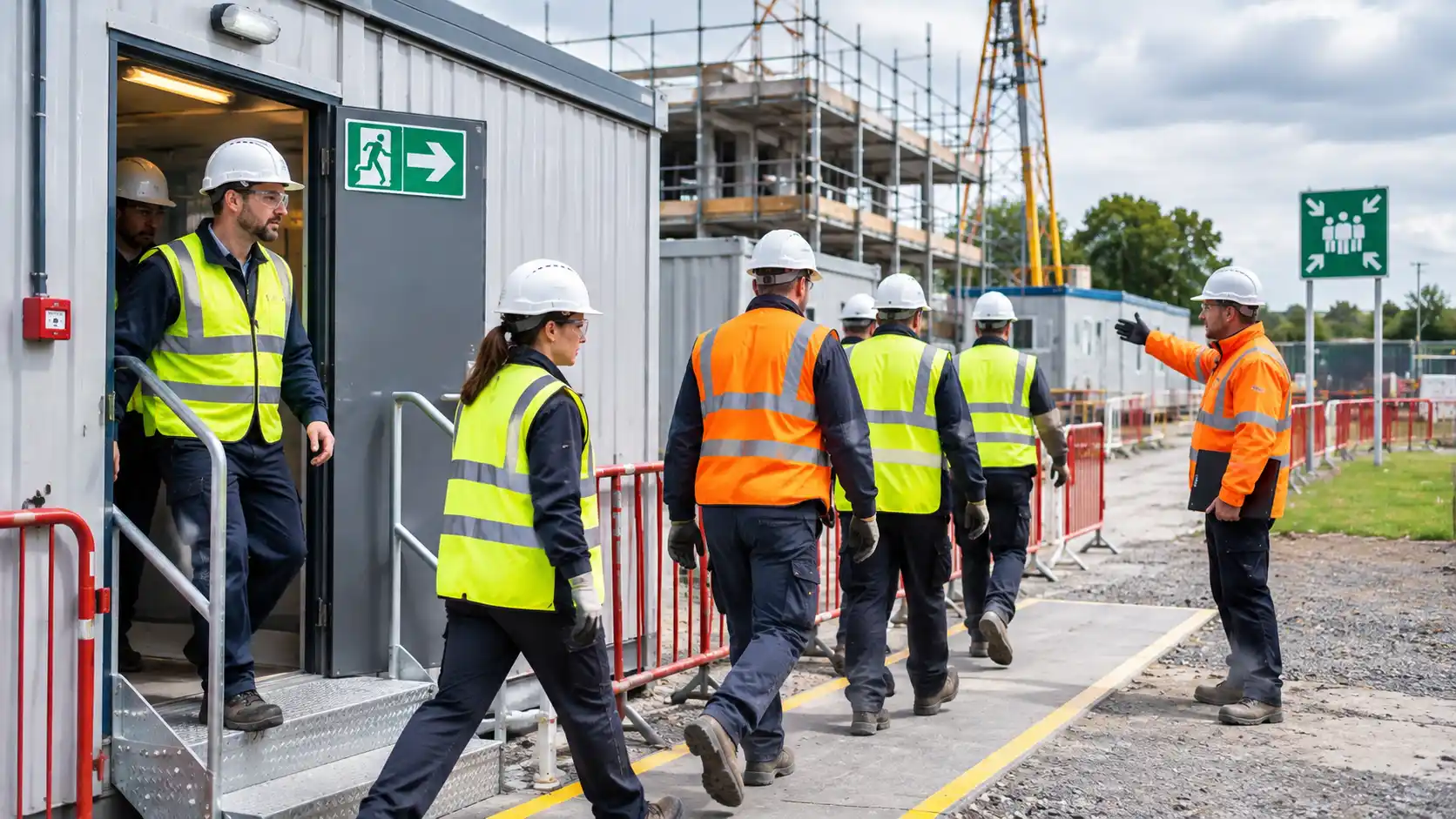
Fire safety management should continue throughout the operational life of a temporary workplace. A control measure that was appropriate at the beginning of a project may become inadequate when activities or site conditions change.
Conduct routine workplace inspections
Inspections should check that escape routes are clear, firefighting equipment is accessible, combustible waste is controlled and electrical equipment remains in a safe condition.
Review after significant changes
A review should take place when new equipment is introduced, additional contractors arrive, work activities change or temporary facilities are relocated. The review should also consider whether emergency arrangements remain suitable.
Record incidents and corrective actions
Near misses, overheating equipment, small fires, damaged cables and failures in warning arrangements can reveal weaknesses in the management system. These events should be investigated appropriately, with corrective actions assigned and followed through.
Use a practical monitoring schedule
| Monitoring activity | Suggested timing | Responsible person |
|---|---|---|
| Work-area housekeeping checks | Daily or according to site risk | Site supervisors |
| Escape route inspections | At suitable operational intervals and after changes | Site management |
| Hot-work checks | Before, during and after authorised work | Permit issuer and responsible workers |
| Temporary electrical inspections | According to risk and inspection programme | Competent electrical personnel |
| Fire risk assessment review | Regularly and when significant changes occur | Responsible person or appropriate dutyholder |
| Emergency procedure review | After changes, exercises or relevant incidents | Site management |
These are suggested management intervals, not universal statutory inspection frequencies. The actual schedule should reflect the site-specific risk assessment, equipment requirements and applicable legal duties.
Fire Safety Training and Competence for Temporary Workers
Workers must understand the fire hazards associated with their activities and the precautions required at the workplace. Training is particularly important where people work at different locations or join temporary projects for short periods.
Site-specific fire safety induction
A site induction should explain the location of escape routes, alarm arrangements, assembly points, firefighting equipment and procedures for reporting fire hazards.
Workers should also be informed about restricted areas, smoking controls, hot-work authorisation, flammable substance storage and emergency communication methods.
Fire marshal and emergency response training
Where designated, fire marshals should understand their responsibilities, including raising the alarm, supporting evacuation procedures and reporting relevant information to emergency services. Their role must not expose them to unacceptable danger.
Training should be appropriate to the workplace and should be refreshed when responsibilities or site conditions change.
Develop professional fire safety knowledge
Organisations can strengthen their workplace fire safety arrangements by developing the knowledge and competence of managers, fire marshals and individuals involved in risk assessment and safety coordination.
Relevant professional learning can support better hazard identification, emergency planning, assessment practices and workplace fire safety management.
Relevant professional training and certifications
- ProQual Level 2 Award for Fire Marshals – relevant for developing knowledge of fire marshal responsibilities and workplace emergency arrangements.
- QualCert Level 3 Award in Fire Safety for Managers – relevant to managers responsible for workplace fire safety arrangements.
- ProQual Level 4 Certificate in Fire Risk Assessment – relevant to developing professional fire risk assessment knowledge.
- ICTQual Level 3 Diploma in Industrial Fire Safety Management – relevant to industrial fire safety management and hazard control.
Learners and employers should check the individual course specifications, entry requirements and awarding organisation details before enrolment.
Common Fire Safety Management Mistakes to Avoid
Even when organisations have fire safety policies, practical weaknesses can arise during temporary operations. Understanding common mistakes helps managers identify where controls may fail.
Using the same risk assessment for every location
A generic assessment may overlook differences in site access, equipment, combustible materials and working activities. Assessments should reflect the actual workplace and be reviewed when circumstances change.
Allowing hot work without adequate authorisation
Informal arrangements can result in sparks reaching combustible materials or work continuing after safety precautions have been compromised. Hot work should be properly assessed and controlled.
Ignoring temporary electrical equipment
Extension cables and portable equipment are sometimes treated as low-risk because they are used temporarily. However, their condition, electrical load and environment must still be considered.
Failing to update evacuation arrangements
Site layouts change as work progresses. If signs, routes and assembly arrangements are not updated, workers may follow outdated instructions during an emergency.
Overlooking contractor coordination
Contractors may introduce new ignition sources, flammable substances or temporary installations. Failure to communicate can allow different activities to create combined risks.
Assuming short-term workers need less training
Temporary workers may be unfamiliar with the location and emergency procedures. They need sufficient information and instruction for the activities and hazards they encounter, regardless of their employment duration.
Practical Fire Safety Checklist for Temporary Workplaces
The following checklist can help site managers, employers and contractors review important fire safety arrangements before and during temporary operations. It should be adapted to the actual workplace and its risk assessment.
Before work begins
- Complete a suitable fire risk assessment.
- Identify ignition sources and combustible materials.
- Confirm who is responsible for fire safety arrangements.
- Review contractor activities and coordination requirements.
- Establish suitable emergency access and escape routes.
- Provide appropriate warning and firefighting arrangements.
- Identify suitable locations for flammable substance storage.
During daily operations
- Inspect work areas and maintain good housekeeping.
- Control welding, cutting and other hot work.
- Check temporary electrical equipment for visible defects.
- Keep fire exits and access routes unobstructed.
- Ensure workers understand the emergency arrangements.
- Monitor temporary protection system impairments.
- Remove combustible waste regularly.
When workplace conditions change
- Review the fire risk assessment.
- Update escape routes and site information.
- Reassess new equipment and work activities.
- Inform contractors and workers about revised arrangements.
- Confirm that emergency facilities remain accessible.
When work is completed
- Check for residual heat and potential ignition sources.
- Remove waste and unused flammable materials safely.
- Restore isolated fire protection systems.
- Close outstanding safety actions.
- Record relevant incidents and lessons learned.
Frequently Asked Questions About Managing Fire Risks in Temporary Workplaces
What are the main fire risks in temporary workplaces?
Common risks include hot work, temporary electrical installations, flammable liquids and gases, combustible waste, portable heating equipment, disabled fire protection systems and obstructed escape routes. The actual risks depend on the work activities and site conditions.
Is a fire risk assessment required for a temporary workplace?
Where the applicable fire safety legislation requires an assessment, the temporary nature of the workplace does not remove that duty. In England and Wales, the Regulatory Reform (Fire Safety) Order 2005 requires the responsible person to make a suitable and sufficient assessment of relevant risks. Other UK jurisdictions have their own requirements.
Who is responsible for fire safety on a construction site?
Responsibilities depend on the applicable law and the control exercised by different organisations. The responsible person under the relevant fire safety legislation has specific duties. Under CDM 2015, clients, principal contractors, contractors and other dutyholders also have relevant health and safety responsibilities.
What is a hot-work permit?
A hot-work permit is a formal authorisation used to control higher-risk activities such as welding, flame cutting and grinding. It identifies the work, location, authorised personnel and required safety precautions. It should form part of a suitable risk management system rather than replace the risk assessment.
How often should a temporary workplace fire risk assessment be reviewed?
It should be reviewed regularly and whenever there are significant changes that could affect fire safety. Examples include changes to work activities, equipment, site layout, occupancy, combustible materials and emergency arrangements. Applicable legal requirements must also be followed.
What fire safety equipment is needed on a temporary worksite?
Equipment should be selected according to the risk assessment and workplace conditions. It may include suitable fire extinguishers, warning systems, emergency lighting, fire detection equipment and appropriate signage. There is no single equipment package suitable for every temporary site.
How can fire risks be reduced in mobile workshops?
Mobile workshops should maintain suitable vehicle and electrical equipment inspections, secure storage, controlled battery charging, safe fuel arrangements and appropriate emergency procedures. Workers should understand how to raise the alarm and reach a safe location.
Why is contractor coordination important for fire safety?
Different contractors may introduce ignition sources, combustible materials and equipment that affect other workers. Coordination helps prevent conflicting activities, supports consistent emergency arrangements and ensures that changes in workplace conditions are communicated.
What should workers do if they discover a fire?
Workers should follow the site emergency procedure, raise the alarm, evacuate using the designated safe route and proceed to the assembly point. They should not delay evacuation to collect belongings or take unnecessary risks attempting to fight the fire.
Does the Fire Safety Order 2005 apply throughout the UK?
No. The Regulatory Reform (Fire Safety) Order 2005 applies in England and Wales. Scotland and Northern Ireland operate separate fire safety legislative frameworks. Organisations should identify the legislation applicable to the location of their workplace.
Conclusion: Building a Strong Fire Safety Management System
Managing fire risks in temporary workplaces and mobile worksites requires a proactive approach that recognises changing work activities, temporary equipment, combustible materials and different working environments. Fire safety arrangements must remain effective from the beginning of a project through to its completion.
Employers, contractors, site managers and responsible persons should work together to identify hazards, carry out suitable assessments, control ignition sources, maintain escape routes and establish effective emergency procedures.
Regular inspections, suitable training, contractor coordination and timely reviews help organisations maintain workplace fire safety as conditions change. A well-managed approach protects workers, visitors, property and business operations while supporting compliance with applicable UK fire safety requirements.
Professional fire safety knowledge also plays an important role in developing competent individuals who can contribute to effective workplace risk management. Organisations should therefore invest in appropriate training and ongoing professional development.
Develop Your Professional Fire Safety Knowledge
Explore professional fire safety and risk assessment courses designed to support workplace safety knowledge, hazard identification and effective fire safety management.
Explore Fire Safety Qualifications Visit Fire Safety & Risk AssessmentOfficial Fire Safety Resources and Further Reading
The following official resources provide further information about workplace fire safety, construction fire hazards and relevant legal responsibilities.
- HSE – General Fire Safety on Construction Sites
- HSE – Construction Fire Safety FAQs
- HSE – Process Fire Risks
- HSE – HSG168: Fire Safety in Construction
- GOV.UK – Fire Safety Risk Assessment: Five-Step Checklist
- GOV.UK – Guide for Persons with Duties under Fire Safety Legislation
- Legislation.gov.uk – Regulatory Reform (Fire Safety) Order 2005
- HSE – Principal Contractors under CDM 2015
This article is intended for general educational and informational purposes. It does not replace a site-specific fire risk assessment, competent professional advice or applicable legal requirements.