
How Changes in Building Use Can Affect Fire Risk
Understand how changes in occupancy, building layout, storage, equipment and workplace activities can introduce new fire hazards, and learn how UK businesses can review their fire safety arrangements.
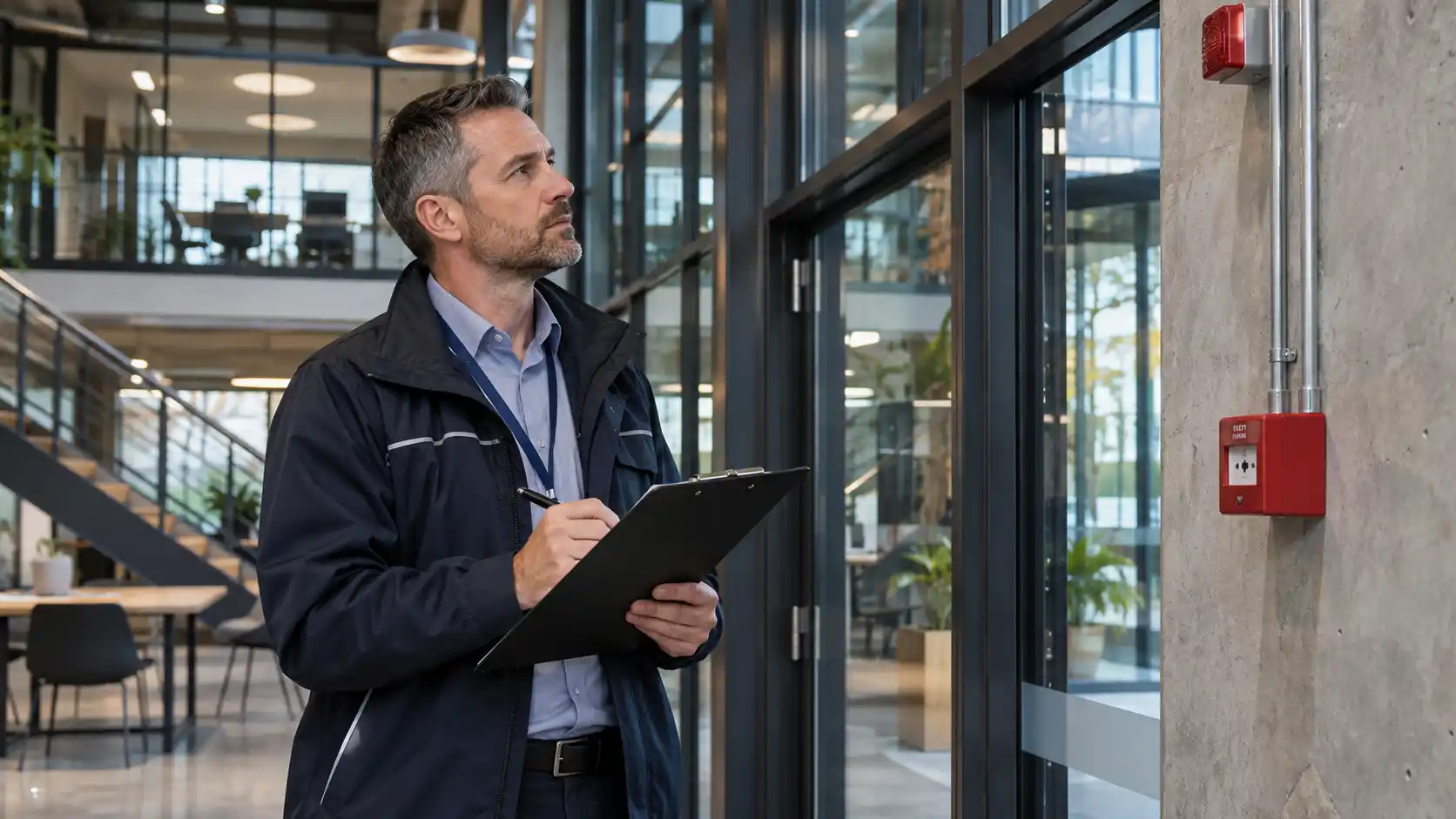
A building that was originally designed and operated as an office may eventually become a warehouse, restaurant, residential accommodation or manufacturing facility. Although its physical structure may remain largely unchanged, its fire risk can change considerably. Different activities, increased occupancy, additional electrical equipment and new combustible materials can create hazards that were not considered when the original fire safety arrangements were established.
Understanding how changes in building use can affect fire risk is therefore an important part of workplace fire safety management. A change in the purpose of a premises can influence the likelihood of ignition, the development of a fire, smoke movement, evacuation arrangements and the effectiveness of existing fire protection systems. Even relatively small operational changes can become significant when several changes occur together.
In the UK, businesses and other organisations must ensure that their fire safety arrangements remain suitable for the actual conditions and activities within their premises. A fire risk assessment should not simply describe how a building was originally used. It should reflect how the building is currently occupied, managed and operated.
This guide explores common changes in building use, the fire hazards they can introduce, the impact on occupants and evacuation, and practical steps for reviewing fire risk assessments. It also explains relevant UK responsibilities and the control measures businesses should consider when modifying their premises or workplace activities.
How Changes in Building Use Can Affect Fire Risk in UK Workplaces
Changes in building use affect fire risk because the original fire safety arrangements may have been based on a different combination of activities, occupants, materials, equipment and operational conditions. When those conditions change, the assumptions behind the original fire risk assessment may no longer be accurate.
For example, an office normally contains computers, printers, office furniture and a relatively predictable number of employees. If the same premises becomes a food preparation facility, it may introduce cooking appliances, hot surfaces, extraction systems, cooking oils and additional cleaning materials. These changes introduce different ignition sources and fuel hazards. They may also require additional maintenance and different emergency procedures.
Changes to the purpose of a building
A building’s purpose determines many of its operational characteristics. Offices, shops, factories, warehouses, educational facilities and hospitality premises have different fire safety considerations. Their activities determine the types of equipment used, the quantities of combustible materials present and the number and characteristics of people occupying the building.
Converting an existing property into a different type of premises can therefore require a detailed review of fire precautions. The responsible person should consider whether existing escape routes, detection systems, emergency lighting, fire doors, compartmentation and evacuation procedures remain appropriate.
Changes to operational activities
Not every significant change involves a formal conversion or structural alteration. A business may introduce a new manufacturing process, increase stock levels, install machinery or begin using a previously unused area for storage. These operational changes can influence fire risk even when the building’s external appearance remains exactly the same.
Businesses should consider proposed changes before introducing them. This allows potential problems to be identified while there is still an opportunity to improve storage arrangements, electrical capacity, ventilation, fire protection and escape provisions.
The relationship between building use and fire risk
Fire risk is influenced by the interaction between three fundamental elements: sources of ignition, combustible materials and oxygen. Changes in building use can affect any of these elements. They can also influence how quickly a fire develops and whether people can escape safely.
Common Building Use Changes That Increase Fire Risk
Building use can change gradually or through a planned conversion. In either situation, the fire risk assessment should consider the activities being introduced and whether existing controls remain suitable. The following examples illustrate common changes that can influence workplace fire safety.
1. Converting offices into residential accommodation
Converting office premises into residential accommodation introduces a different pattern of occupancy. People may sleep in the building, use cooking appliances, charge personal electronic devices and occupy different areas throughout the day and night. These activities create fire safety considerations that are not necessarily present in a conventional office.
Sleeping occupants may not respond to an incident as quickly as people who are awake and familiar with workplace evacuation procedures. The design and management of detection, warning, escape routes and compartmentation therefore require careful consideration. Where a building contains multiple dwellings, the responsibilities relating to common areas and residential fire precautions also need to be understood.
A commercial-to-residential conversion should be assessed against the relevant building regulations, planning requirements and fire safety legislation. The appropriate arrangements depend on the building’s design, height, occupancy and intended residential use.
2. Changing retail premises into restaurants or cafés
Retail premises generally have different ignition sources and operational activities from restaurants. Introducing food preparation may create additional risks associated with cooking equipment, heated surfaces, cooking oils, gas appliances and extraction systems.
Kitchens may also contain packaging, cleaning chemicals, oils and other combustible materials. Extraction equipment requires appropriate cleaning and maintenance to prevent the accumulation of grease. Poor housekeeping and inadequate separation between cooking activities and combustible materials can increase the potential for fire.
Customer occupancy is another important consideration. A restaurant may have customers who are unfamiliar with the building, including children, older people and individuals who need assistance during evacuation. Emergency exits, signs and evacuation arrangements should reflect the new environment.
3. Using warehouses for manufacturing or storage
A warehouse designed for general goods storage may experience a significant change in fire risk when manufacturing activities are introduced. Machinery, welding, cutting, grinding, heat-producing processes and additional electrical equipment can introduce ignition sources.
Changes to the types and quantities of stored goods can also influence fire development. Packaging, plastics, timber, textiles and other combustible materials may increase the available fire load. Storage arrangements that were previously suitable may become inadequate when stock levels increase or materials change.
Businesses should examine storage heights, aisle arrangements, sprinkler coverage, fire detection, access for emergency services and the separation of hazardous processes from combustible storage. The assessment should reflect the actual materials and processes present rather than assuming that all warehouses have similar fire risks.
4. Increasing workplace occupancy
An increase in the number of employees, customers, contractors or visitors can affect evacuation arrangements. Existing exits may become inadequate for the number of people expected to use them. Corridors, stairways and circulation spaces may experience greater congestion during an emergency.
Higher occupancy can also affect fire safety management. More people may require information, instruction, training and assistance. Businesses should review the maximum expected occupancy, shift patterns, visitor arrangements and the availability of suitable evacuation procedures.
5. Introducing new equipment, machinery or processes
New equipment can create fire hazards through overheating, electrical faults, friction, hot surfaces or the use of combustible materials. Machinery may also require additional electrical circuits, ventilation or dedicated operating areas.
Businesses should consider manufacturers’ instructions, equipment installation requirements, maintenance arrangements and the separation of ignition sources from combustible materials. Processes involving hot work require particular attention because sparks and heat can ignite materials that may not be immediately obvious.
| Building use change | Potential fire risk | Important control considerations |
|---|---|---|
| Office to restaurant | Cooking equipment, hot surfaces and grease | Kitchen controls, extraction maintenance and suitable detection |
| Office to residential | Sleeping occupants and domestic activities | Detection, compartmentation and evacuation arrangements |
| Warehouse to manufacturing | Machinery, hot work and combustible materials | Process separation, electrical safety and fire protection |
| Small office to large workplace | Higher occupancy and evacuation congestion | Exit capacity, emergency planning and staff training |
| Retail to mixed-use premises | Different activities sharing the same building | Compartmentation, coordinated management and escape routes |
These examples demonstrate why a change of use should be considered as a fire safety management issue, not simply an operational or commercial decision. For further guidance on how workplace arrangements can create additional hazards, read our article on managing fire risks in temporary workplaces and mobile worksites .
Key Fire Hazards Created by Changes in Building Use
Identifying new fire hazards is a central part of reviewing fire safety after a change in building use. A suitable assessment should examine how changes affect ignition sources, combustible materials, fire development and the ability of occupants to reach safety.
Increased fire loading and combustible materials
Fire loading refers to the potential energy that could be released through the combustion of materials within a particular space. Introducing additional combustible materials or increasing their quantities can influence the severity and development of a fire.
Common examples include cardboard packaging, plastic products, timber, textiles, furniture, paper stock and certain chemicals. Storage arrangements should account for the type, quantity and location of materials. Businesses should also consider whether new products create additional smoke or other hazards when exposed to heat.
Electrical overload and new equipment
Changes in building use frequently involve additional electrical demand. New machinery, refrigeration systems, cooking appliances, charging facilities and office equipment can place greater demands on electrical installations.
Overloaded circuits, damaged cables, defective connections and poorly maintained equipment can increase ignition risks. Businesses should ensure that electrical installations and equipment are suitable for the intended use and inspected or maintained by appropriately competent people.
Blocked or altered escape routes
New furniture, shelving, machinery, stock and partitions can obstruct escape routes or change the way people move through a building. A corridor previously used for straightforward evacuation may become narrower or more difficult to navigate.
Businesses must ensure that escape routes and exits remain available, suitable and clearly identifiable. Changes to the layout should not compromise access to final exits, protected stairways or other essential escape provisions.
Inadequate fire detection and alarm systems
A detection system that was suitable for an office may not provide appropriate coverage after the premises becomes a restaurant, warehouse or manufacturing facility. Different processes and environmental conditions may affect detector selection, positioning and system performance.
Dust, steam, cooking fumes, high ceilings and changes in room configuration can influence detection requirements. A competent specialist should review whether the existing system remains appropriate for the new building use.
Changes to ventilation and compartmentation
Ventilation systems influence the movement of air and, depending on their design and operation, can affect how smoke moves through a building. New ductwork, extraction systems and modifications to existing ventilation arrangements may affect fire and smoke separation.
Compartmentation is intended to restrict the spread of fire and smoke between designated parts of a building. Structural alterations, new service penetrations and changes to internal partitions may compromise fire-resisting construction if they are not properly designed and installed.
Fire doors are an important part of many compartmentation strategies. Their condition, installation and ability to close correctly should be considered when building layouts change. Businesses can learn more about specialist inspection through the ProQual Level 3 Award in the Inspection and Testing of Fire Resisting Door Installations .
Increased ignition sources
New activities may introduce additional ignition sources, including cooking equipment, industrial machinery, heating appliances, welding equipment, charging devices and maintenance activities.
The risk depends on how these sources are used, maintained and separated from combustible materials. Businesses should examine working procedures, contractor activities, equipment positioning and housekeeping practices to identify preventable ignition hazards.

How Changes in Occupancy, Layout and Activities Affect Fire Safety
Fire safety depends not only on the physical characteristics of a building but also on the people who use it and the activities they undertake. A building may have suitable fire protection equipment but still present serious risks if evacuation arrangements do not reflect the actual occupants and operational conditions.
Changes in the number and type of occupants
Increasing the number of people using a building can affect evacuation time, congestion and the suitability of existing exits. A workplace that previously accommodated a small team may need different arrangements when it becomes a public-facing facility or a larger operational centre.
The characteristics of occupants also matter. Children, older people, disabled individuals, temporary workers and visitors may have different information, mobility or assistance requirements. Fire safety arrangements should consider people who may be unfamiliar with the premises or unable to use ordinary escape routes without assistance.
Changes to working hours and occupancy patterns
Extending operating hours or introducing night shifts can change the level of supervision and the availability of trained personnel. Some buildings may have substantially fewer occupants at night, while others may have employees working in isolated areas.
Evacuation arrangements should reflect these patterns. Businesses should consider whether sufficient trained personnel are available during every operating period and whether emergency communication systems are appropriate.
Changes to internal building layouts
Reorganising workstations, adding partitions or introducing storage structures can affect visibility, circulation and escape routes. New partitions may also change the way smoke travels and influence detector coverage.
Businesses should review floor plans, exit accessibility, emergency signage and the positioning of fire safety equipment after layout modifications. Particular attention should be given to areas where people may become separated from familiar escape routes.
Accessibility and personal emergency evacuation plans
A change in occupancy may introduce people who require additional support during an emergency. Businesses should consider individual evacuation needs and whether suitable arrangements, including personal emergency evacuation plans where appropriate, are required.
Accessible escape planning should address communication, assistance, refuge arrangements where applicable, and the safe movement of individuals. A general evacuation procedure should not assume that every person can use stairs or respond in the same way.
Shared and multi-use buildings
Buildings containing offices, shops, restaurants, storage areas or residential accommodation may involve several organisations and people with different responsibilities. A change in one part of the premises can affect the safety arrangements of other occupants.
Relevant dutyholders should cooperate and coordinate their arrangements. This may include sharing information about evacuation procedures, fire alarm systems, maintenance, access restrictions and changes to building operations.
Where alterations affect fire-resisting doors or compartmentation, appropriate inspection and professional assessment are particularly important.
How to Review and Update a Fire Risk Assessment After Building Use Changes
Reviewing a fire risk assessment after a change in building use helps establish whether existing fire precautions remain suitable. The process should identify what has changed, determine who may be affected, examine the adequacy of existing controls and establish corrective actions.
In England and Wales, Article 9 of the Regulatory Reform (Fire Safety) Order 2005 requires a suitable and sufficient assessment and its regular review. A review is particularly important where significant changes affect the premises, work activities, technical arrangements or organisational measures.
The following approach provides a practical framework for reviewing fire safety arrangements.
1 Identify new and existing fire hazards
Begin by examining the changes introduced into the building. Identify new equipment, processes, storage arrangements, ignition sources and combustible materials. Consider whether any previous hazards have increased or moved to different locations.
Review the entire premises rather than concentrating only on the area where the change occurred. A new activity may affect shared corridors, electrical systems, ventilation arrangements and neighbouring workplaces.
Record the hazards identified and consider the likelihood of ignition and the possible consequences of fire.
2 Evaluate people at risk
Identify everyone who may be affected by fire, including employees, visitors, customers, contractors, residents and people in neighbouring areas.
Consider the number of people present, their familiarity with the premises, operating hours and any assistance required during evacuation.
Pay particular attention to changes in occupancy patterns, sleeping accommodation, public access and individuals with mobility or communication requirements.
3 Review existing fire safety controls
Examine whether the existing preventive and protective measures remain appropriate for the new building use. This includes fire detection, alarm systems, emergency lighting, fire doors, extinguishers and other relevant fire protection arrangements.
Review maintenance records and inspection information. Consider whether changes to the building have affected system coverage, equipment accessibility or the effectiveness of passive fire protection.
4 Assess escape routes and evacuation procedures
Check that exits remain accessible and that escape routes are suitable for the expected number and characteristics of occupants. Examine whether new furniture, stock or machinery creates obstructions.
Review signage, emergency lighting, assembly arrangements and communication procedures. Confirm that staff understand the revised arrangements and that visitors can receive appropriate instructions.
5 Record findings and implement corrective actions
Record the hazards, people at risk, existing controls, identified weaknesses and required improvements. Actions should be assigned to responsible individuals and given realistic completion dates.
Prioritise urgent matters that could compromise life safety. Examples include obstructed escape routes, defective fire protection systems and unsafe storage of combustible materials.
For further information on maintaining clear and accountable assessment documentation, read Fire Risk Assessment Records: What to Document and Why .
6 Review the assessment whenever significant changes occur
A fire risk assessment should remain a working management document. Businesses should review it regularly and whenever changes may affect the validity of its findings.
Further reviews may be necessary following building alterations, new machinery, significant stock increases, changes in occupancy, fire incidents or failures of existing precautions.
The review should confirm whether existing actions have been completed and whether the remaining controls are effective. Where necessary, revise the assessment and emergency arrangements.
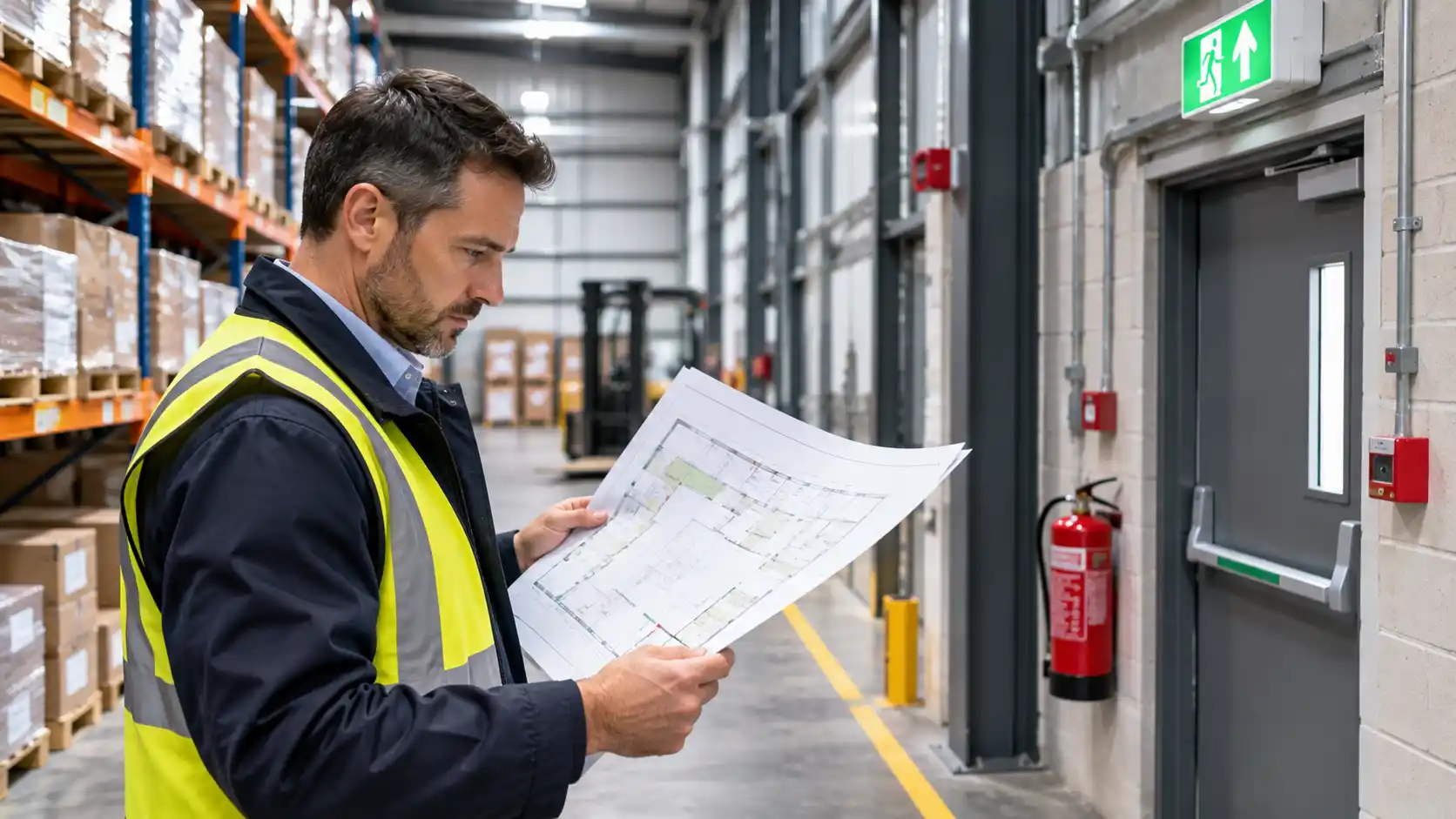
When should a fire risk assessment be reviewed?
There is no single review interval that is suitable for every building. The appropriate frequency depends on the premises, its complexity, activities and risk profile. A regular review should be combined with event-driven reviews when significant changes occur.
| Change or event | What should be reviewed? |
|---|---|
| New machinery installation | Ignition sources, electrical demand, equipment positioning and maintenance |
| Increase in storage | Fire loading, storage height, separation and sprinkler suitability |
| Building extension | Escape routes, compartmentation, detection coverage and evacuation plans |
| Higher occupancy | Exit capacity, congestion, evacuation assistance and training |
| Change in working hours | Staff availability, supervision, emergency communication and evacuation procedures |
| Fire or near miss | Incident causes, existing controls and possible weaknesses in the assessment |
Businesses can also improve the management of identified weaknesses by using a structured fire risk assessment action plan to assign responsibilities, monitor completion and verify that corrective measures are effective.
Effective Fire Prevention and Control Measures After Changes in Building Use
Once new fire hazards have been identified, businesses should introduce appropriate preventive and protective measures. The objective is to reduce the likelihood of fire, limit its development and ensure that people can escape safely if an incident occurs.
The measures selected should be proportionate to the actual hazards, building characteristics and occupancy arrangements.
Improve fire detection and warning systems
Review the existing fire detection and alarm system to determine whether it remains suitable for the revised building use. Changes to room configurations, processes, ceiling heights and environmental conditions may affect detection requirements.
Ensure that warning arrangements can alert everyone who may be affected, including people working in isolated areas and those with relevant communication requirements. Systems should be tested and maintained according to their applicable requirements.
Maintain suitable emergency lighting and escape routes
Emergency lighting should support safe evacuation where normal lighting fails. Businesses should inspect escape routes following layout changes and confirm that exits, corridors, stairs and final exit doors remain suitable.
Storage and operational activities must not obstruct designated escape routes. Clear signs and suitable evacuation information should be provided for the revised building arrangement.
Provide appropriate firefighting equipment
Fire extinguishers and other firefighting equipment should be selected and positioned according to the hazards identified. A change from office work to food preparation or industrial manufacturing may alter the types of fires that could occur.
Equipment should be accessible, properly maintained and accompanied by appropriate information and training. Employees should understand the limitations of firefighting equipment and prioritise evacuation when necessary.
Strengthen housekeeping and storage management
Effective housekeeping helps prevent unnecessary accumulation of combustible materials. Businesses should establish suitable arrangements for waste removal, stock management, chemical storage and the separation of materials from potential ignition sources.
Storage areas should be organised so that fire protection equipment, electrical installations and escape routes remain accessible.
Maintain equipment and fire protection systems
New building activities may require additional inspection and maintenance arrangements. Fire alarms, emergency lighting, extinguishers, fire doors, suppression systems and other relevant equipment should be maintained according to applicable standards, manufacturer instructions and competent professional advice.
Businesses should also ensure that structural alterations do not compromise fire compartmentation or other passive fire protection measures.
Update staff training and evacuation planning
Employees need to understand the revised workplace arrangements and know how to respond to a fire. Changes to departments, working hours, machinery and building layouts may require additional instruction and refresher training.
Emergency plans should identify evacuation routes, reporting arrangements, assistance requirements and assembly procedures. Fire drills should be appropriate to the building’s occupancy and operational arrangements.
Monitor changes through ongoing fire safety management
Fire prevention should continue after the initial review. Managers should monitor whether new procedures are being followed, equipment remains suitable and identified corrective actions have been completed.
Contractors and department managers should communicate proposed alterations before work begins. This helps ensure that new equipment, processes and storage arrangements are considered before they introduce additional hazards.
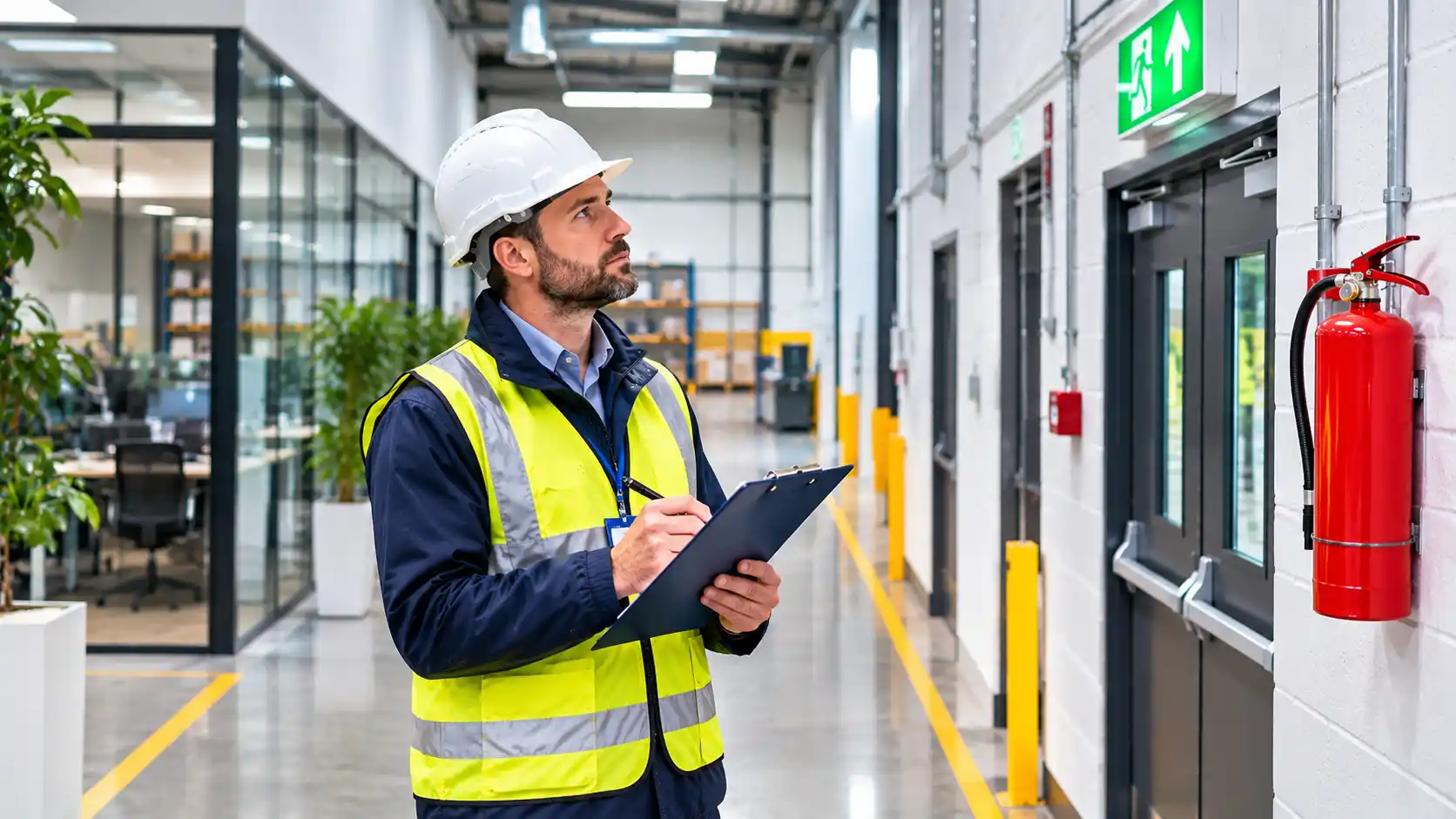
Practical building-use change checklist
Before introducing a significant change to a building or its activities, responsible individuals should consider the following questions.
- Has the intended new building use been clearly identified?
- Have new ignition sources and combustible materials been assessed?
- Have the types and numbers of occupants been reviewed?
- Have new processes, machinery and electrical demands been considered?
- Are existing escape routes and final exits still suitable?
- Does the fire detection and alarm system remain appropriate?
- Have emergency lighting and fire safety signage been reviewed?
- Could alterations affect compartmentation or fire-resisting doors?
- Are firefighting equipment and maintenance arrangements appropriate?
- Have staff training and evacuation procedures been updated?
- Have contractors and other responsible persons been informed?
- Have findings and corrective actions been recorded?
Developing competent fire risk assessment knowledge
Effective fire safety management depends on the ability to recognise hazards, evaluate risks and select appropriate control measures. People responsible for workplace fire safety should have knowledge appropriate to the complexity of their responsibilities.
Professional learning can help develop understanding of fire risk assessment principles, workplace hazards, preventive controls and assessment documentation. For individuals seeking to strengthen their practical knowledge, the ICTQual AB Level 3 Award in Fire Safety Risk Assessment and Control provides a relevant learning pathway to explore.
Those seeking further professional development can also explore the ProQual Level 4 Certificate in Fire Risk Assessment and the ProQual Level 4 Award in Advanced Fire Risk Assessment . These programmes are relevant to individuals developing their knowledge and skills in fire risk assessment.
For more advanced professional development, the ProQual Level 5 Diploma in Fire Risk Assessment is another option to explore.
UK Fire Safety Responsibilities When Building Use Changes
Businesses must understand their fire safety duties when changing how premises are occupied or operated. The applicable legislation depends on the UK nation and the type of premises.
England and Wales
The Regulatory Reform (Fire Safety) Order 2005 provides the principal framework for fire safety responsibilities in most non-domestic premises in England and Wales. Article 9 requires a suitable and sufficient fire risk assessment and regular reviews, particularly where significant changes occur.
Article 11 also addresses fire safety arrangements. Responsible persons should ensure that appropriate arrangements remain effective as the building and its activities change.
Section 156 of the Building Safety Act 2022 introduced amendments that strengthened certain fire safety duties, including the requirement to record the full fire risk assessment under Article 9.
Official guidance: Article 9 – Risk Assessment and UK Government workplace fire safety responsibilities .
Scotland
Non-domestic fire safety responsibilities in Scotland are primarily addressed through the Fire (Scotland) Act 2005 and the Fire Safety (Scotland) Regulations 2006. Dutyholders should use the relevant Scottish guidance when reviewing premises and operational changes.
Official resource: Scottish Government – Non-domestic fire safety .
Northern Ireland
Northern Ireland has a separate fire safety legislative framework, including the Fire and Rescue Services (Northern Ireland) Order 2006 and associated regulations and guidance. Businesses should consult the relevant Northern Ireland requirements rather than assuming that the English and Welsh framework applies.
Who is responsible for fire safety?
Depending on the premises and the nature of control, responsibilities may involve employers, owners, landlords, occupiers, facilities managers and other persons with control of the premises. Where multiple dutyholders are involved, cooperation and coordination are important.
Appointing a competent fire risk assessor can help businesses identify hazards and determine suitable precautions. However, commissioning an assessment does not automatically transfer the responsible person’s legal duties to the assessor.
Frequently Asked Questions About How Changes in Building Use Can Affect Fire Risk
How do changes in building use affect fire risk?
Changes in building use can introduce new ignition sources, combustible materials, equipment, activities and occupants. They can also affect escape routes, detection systems, compartmentation and evacuation procedures. The existing fire risk assessment should be reviewed to determine whether current precautions remain suitable.
Why should a fire risk assessment be reviewed after a building use change?
A review helps establish whether the original assessment still reflects the actual premises and activities. New processes, changes in occupancy and structural alterations may create hazards that were not previously considered. Reviewing the assessment helps identify weaknesses and determine appropriate improvements.
What building changes can increase workplace fire hazards?
Common examples include converting offices into restaurants, introducing manufacturing activities into warehouses, increasing storage quantities, installing new machinery, changing internal layouts and increasing the number of occupants. Even operational changes without structural modifications can affect fire risk.
Does changing an office into a warehouse require a new fire risk assessment?
A significant change from office use to warehouse operations should trigger a review of the existing fire risk assessment. The review should consider the types and quantities of stored materials, storage heights, ignition sources, equipment, escape routes and fire protection systems. Whether a new assessment record or a substantially revised assessment is needed depends on the extent of the changes and the findings.
Who is responsible for fire safety when a building’s use changes in the UK?
Responsibility depends on the premises, applicable legislation and the level of control held by different parties. Employers, owners, occupiers, landlords and other persons with control may have relevant duties. Where several responsible persons or dutyholders are involved, they should cooperate and coordinate their fire safety arrangements.
How can businesses manage fire risks after changing building activities?
Businesses should identify new hazards, assess people at risk, review existing fire precautions and update evacuation arrangements. They should also introduce appropriate maintenance, housekeeping, training and monitoring procedures. Significant findings and corrective actions should be recorded and followed up.
How often should fire safety arrangements be reviewed after changes in building use?
Fire risk assessments should be reviewed regularly and whenever significant changes may affect their validity. There is no universal statutory annual review interval for every premises under the Fire Safety Order. The frequency should reflect the complexity and risk of the building. Small, simple premises may use an annual review as good practice, but significant changes should prompt an earlier review.
Conclusion: Managing Fire Risk When Building Use Changes
Understanding how changes in building use can affect fire risk is essential for maintaining effective workplace fire safety. A building’s original purpose does not guarantee that its existing fire precautions will remain appropriate after changes to occupancy, equipment, storage, layout or operational activities.
Businesses should assess the potential consequences of proposed changes before they are introduced and review their fire risk assessments whenever significant changes affect the premises. This approach helps identify new hazards, protect occupants and maintain suitable emergency arrangements.
Effective fire safety management also requires ongoing communication, appropriate maintenance, staff training and documented corrective actions. By treating fire risk assessment as a continuous process rather than a one-off exercise, organisations can respond more effectively to changing workplace conditions.
Whether a business is extending its premises, introducing new processes or converting a building to a different use, the central principle remains the same: fire safety arrangements must reflect how the building is actually used.
Develop Your Knowledge of Fire Risk Assessment
Building use changes require informed fire safety decisions, effective hazard identification and appropriate risk management. Developing professional knowledge can help individuals understand fire safety responsibilities and improve workplace risk assessment practices.
Explore professional fire safety and risk assessment programmes at Fire Safety and Risk Assessment.