
Preventing Fires in Storage Rooms, Archives and Document Facilities
Learn how to identify fire hazards, improve storage arrangements, control ignition sources and protect workplace archives through practical fire-prevention measures.
Storage rooms, archives and document facilities are important parts of many workplaces. They contain business records, paper documents, files, cardboard boxes, packaging materials and other items that may contribute to fire growth. Although these rooms are sometimes visited less frequently than other workplace areas, they should never be overlooked when managing fire safety.
Preventing fires in storage rooms requires more than keeping documents organised. Employers and facilities managers need to consider electrical safety, combustible materials, heating equipment, housekeeping, fire detection, emergency arrangements and the condition of fire doors. A well-managed storage facility reduces the likelihood of ignition and helps protect employees, visitors, buildings and important business information.
Understanding Fire Risks in Storage Rooms and Archives
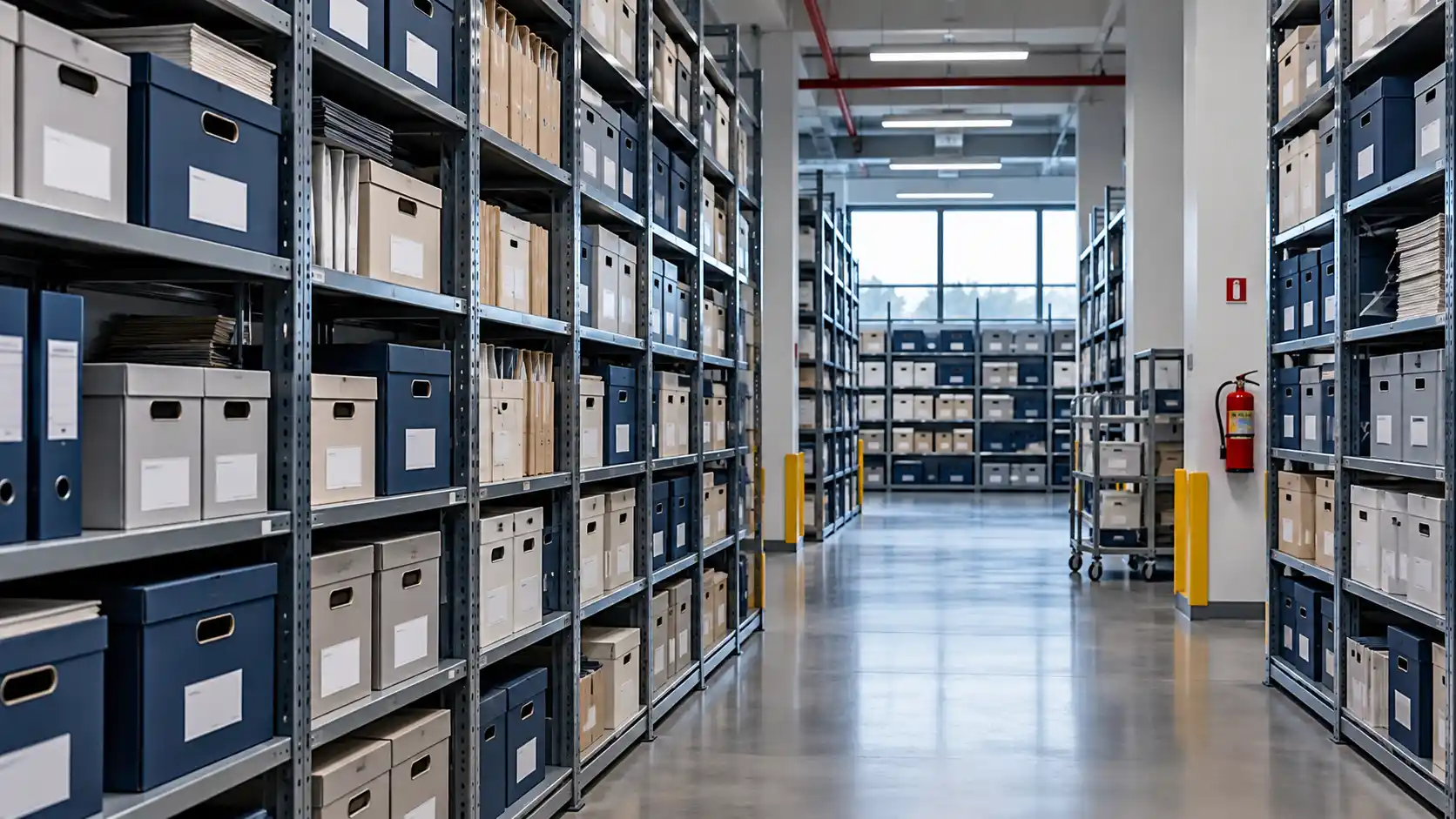
Storage rooms and archives can present a significant fire risk because they frequently contain large quantities of combustible materials. Paper, cardboard, folders, packaging, wooden furniture and certain plastics can contribute to the available fuel load. When these materials are stored densely, a fire may spread through the contents and produce substantial smoke and heat.
The risk can be increased when storage areas contain electrical equipment, portable heaters, extension leads or poorly maintained building services. Limited occupancy can also create difficulties because an incident may not be noticed immediately.
Combustible materials
Paper documents, cardboard boxes, packaging and other stored items can contribute to fire development.
Electrical equipment
Damaged cables, overloaded sockets and defective appliances can become potential ignition sources.
Restricted access
Overfilled shelving and obstructed walkways can make inspection, evacuation and emergency response more difficult.
Valuable records
Smoke, heat, soot and water damage can destroy documents that may be difficult or impossible to replace.
Different storage environments require different precautions. A small office records room, a basement archive and a large warehouse document facility may have very different fire hazards. The correct controls should therefore be based on the actual premises, the materials stored, the people who use the area and the building’s fire-safety arrangements.
Managers should also consider whether the room contains specialist equipment such as dehumidifiers, environmental monitoring systems, compact mobile shelving or IT equipment. Any change in the room’s use or storage capacity should trigger a review of the relevant fire-safety arrangements.
Common Causes of Fires in Storage Rooms
Electrical faults
Electrical faults are an important hazard in workplaces. Damaged cables, loose connections, defective plugs, overheating equipment and overloaded extension leads may create ignition risks. Equipment used in archives should be appropriate for the environment and maintained by competent persons.
Portable heaters
Portable heaters can create a fire hazard when positioned close to paper, cardboard, curtains or other combustible materials. Staff should not introduce personal heating appliances into archive rooms without proper authorisation and assessment. Heating systems should be maintained and operated according to manufacturer instructions.
Smoking materials
Smoking materials can ignite paper waste, packaging and other combustible materials. Smoking should be prohibited in storage facilities and managed through the organisation’s designated smoking policy.
Hot work activities
Welding, grinding, cutting and soldering can generate sparks and hot particles. Maintenance work in or near document storage areas should be controlled through suitable risk assessments and permit-to-work arrangements where necessary. Combustible materials should be removed or adequately protected before work starts.
Accumulated waste
Cardboard boxes, discarded paper, packaging and redundant files can increase the available fuel load. Regular waste removal and housekeeping inspections help prevent unnecessary accumulation.
Unauthorised access and deliberate ignition
Uncontrolled access can increase security and fire risks. Appropriate access controls, visitor arrangements, secure doors and good external waste management can reduce opportunities for deliberate ignition. Security measures must never prevent people from escaping during an emergency.
Fire Risk Assessment for Archives and Document Facilities
A fire risk assessment identifies potential fire hazards, considers who may be affected, evaluates existing precautions and determines what further action is required. It is an essential part of workplace fire safety management.
In England and Wales, the Regulatory Reform (Fire Safety) Order 2005 places responsibilities on the responsible person to take appropriate fire precautions and ensure that a suitable and sufficient fire risk assessment is carried out and reviewed.
Official guidance is available in the government’s Fire Safety Risk Assessment: Factories and Warehouses and Fire Safety Risk Assessment: Offices and Shops.
What should the assessment include?
- Sources of ignition, including electrical equipment and heating appliances.
- Combustible materials such as paper, cardboard and packaging.
- Hazardous substances and flammable liquids, where present.
- Employees, contractors, visitors and people requiring evacuation assistance.
- Storage layout, shelving arrangements and access routes.
- Fire doors, escape routes and compartmentation.
- Fire detection, alarm systems and emergency lighting.
- Firefighting equipment and maintenance arrangements.
- Housekeeping, waste management and contractor activities.
- Staff training and emergency procedures.
The assessment should be reviewed when significant changes occur. Examples include installing new shelving, increasing the volume of stored documents, changing the room’s use, introducing electrical equipment or modifying the building layout. It should also be reviewed following a fire, near miss or evidence that existing precautions are no longer effective.
Safe Storage Arrangements and Archive Organisation
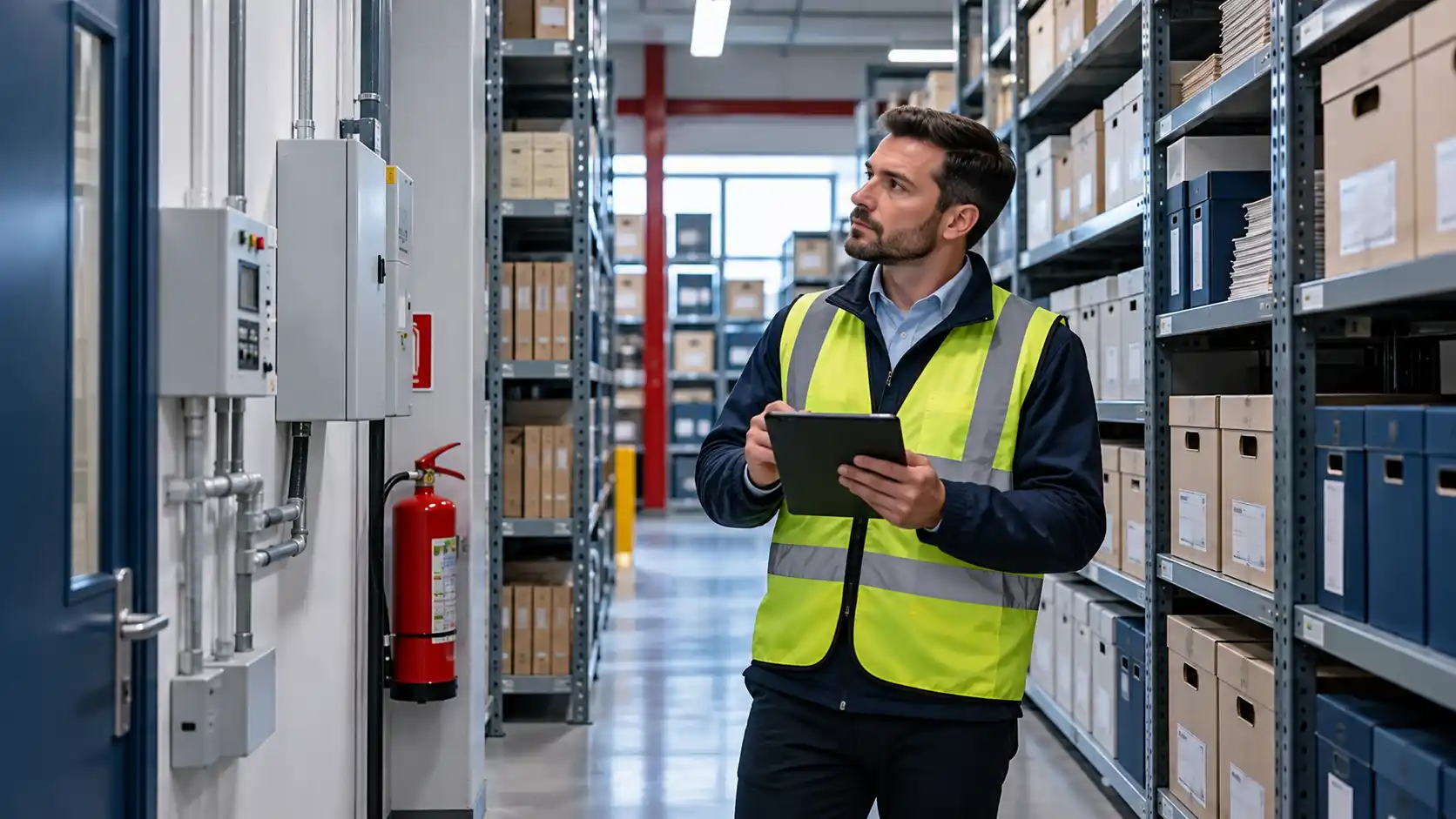
Safe storage arrangements reduce unnecessary combustible materials and help maintain access to emergency equipment. Storage systems should be suitable for the weight and type of documents and should not interfere with fire protection systems.
Remove unnecessary documents and packaging
Organisations should apply approved document-retention policies. Records that are no longer required should be reviewed and disposed of through authorised procedures. Reducing unnecessary storage can help lower the combustible load and improve access within the room.
Maintain clear walkways
Aisles, doorways, corridors and emergency exits must remain clear. Archive boxes, delivery trolleys and temporary materials should never be left in escape routes. Access to fire alarm call points, extinguishers and electrical isolation equipment should also be maintained.
Use suitable shelving
Shelving should be stable, properly installed and appropriate for the weight of the stored material. Avoid overloading shelves or stacking boxes where they could fall. Mobile shelving requires particular attention because its movement may affect access, escape routes and fire protection coverage.
Keep fire protection equipment unobstructed
Archive boxes and high-level shelving should not obstruct smoke detectors, sprinkler heads, alarm sounders, vents or emergency lighting. Storage arrangements should follow the approved fire-protection design and the advice of competent specialists.
Separate hazardous substances
Cleaning chemicals, aerosols, flammable liquids and other hazardous substances should not be stored casually with paper records. Where these materials are necessary, suitable storage arrangements and controls should be established based on their properties, quantities and applicable safety requirements.
Good storage practices should form part of a wider workplace housekeeping programme. You can also read our guide on fire-safety housekeeping and workplace organisation.
Controlling Ignition Sources in Storage Areas
Controlling ignition sources is one of the most important parts of preventing fires in storage rooms. Organisations should establish clear rules for equipment, heating, maintenance and access.
- Prohibit smoking in document storage facilities.
- Do not allow unauthorised portable heaters or cooking appliances.
- Keep electrical equipment away from combustible materials.
- Switch off non-essential equipment when appropriate and safe.
- Control welding, cutting and other hot-work activities.
- Restrict access to authorised personnel.
- Inspect equipment for visible signs of damage or overheating.
- Ensure maintenance activities are properly planned and supervised.
Where equipment must operate continuously for environmental or security reasons, managers should ensure that it is suitable for the location, maintained correctly and included in the fire risk assessment.
Electrical Safety in Archives and Document Facilities
Electrical equipment should be installed, inspected and maintained by competent persons. Managers should consider fixed wiring, sockets, lighting, portable appliances, heating systems, ventilation equipment, dehumidifiers, IT equipment and access-control systems.
Employees should report:
- Damaged electrical cables or plugs.
- Scorch marks around sockets or equipment.
- Unusual smells or signs of overheating.
- Repeated electrical circuit trips.
- Loose connections and damaged fittings.
- Extension leads that are overloaded or improperly connected.
Defective equipment should be taken out of use where necessary and examined by a competent person. Cables should not be trapped beneath archive boxes, shelving or doors.
Where battery charging systems, server equipment or uninterruptible power supplies are present, their specific fire and electrical risks should also be assessed. Follow manufacturer instructions and obtain specialist advice where required.
Housekeeping and Waste Management for Fire Prevention
Effective housekeeping is a simple but important part of workplace fire prevention. A clean and organised storage room is easier to inspect, maintain and evacuate. It also reduces unnecessary combustible waste.
Establish a regular waste-removal routine
Remove unwanted cardboard, paper, packaging and redundant materials regularly. Waste containers should not overflow, and collection arrangements should prevent waste from accumulating near exits or building openings.
Keep equipment and plant areas clear
Do not store documents around electrical panels, heaters, ventilation equipment or maintenance access points. Cleaning staff should understand the importance of keeping these areas clear and reporting hazards.
Assign housekeeping responsibilities
Managers should identify who is responsible for checking the storage area. Inspections should be documented, defects assigned to responsible persons and corrective actions monitored until completion.
Housekeeping standards should also apply to staff rooms, kitchens and other shared workplace spaces. See our related guide on fire safety risks in staff rooms, canteens and workplace kitchens.
Fire Detection, Alarm and Suppression Systems
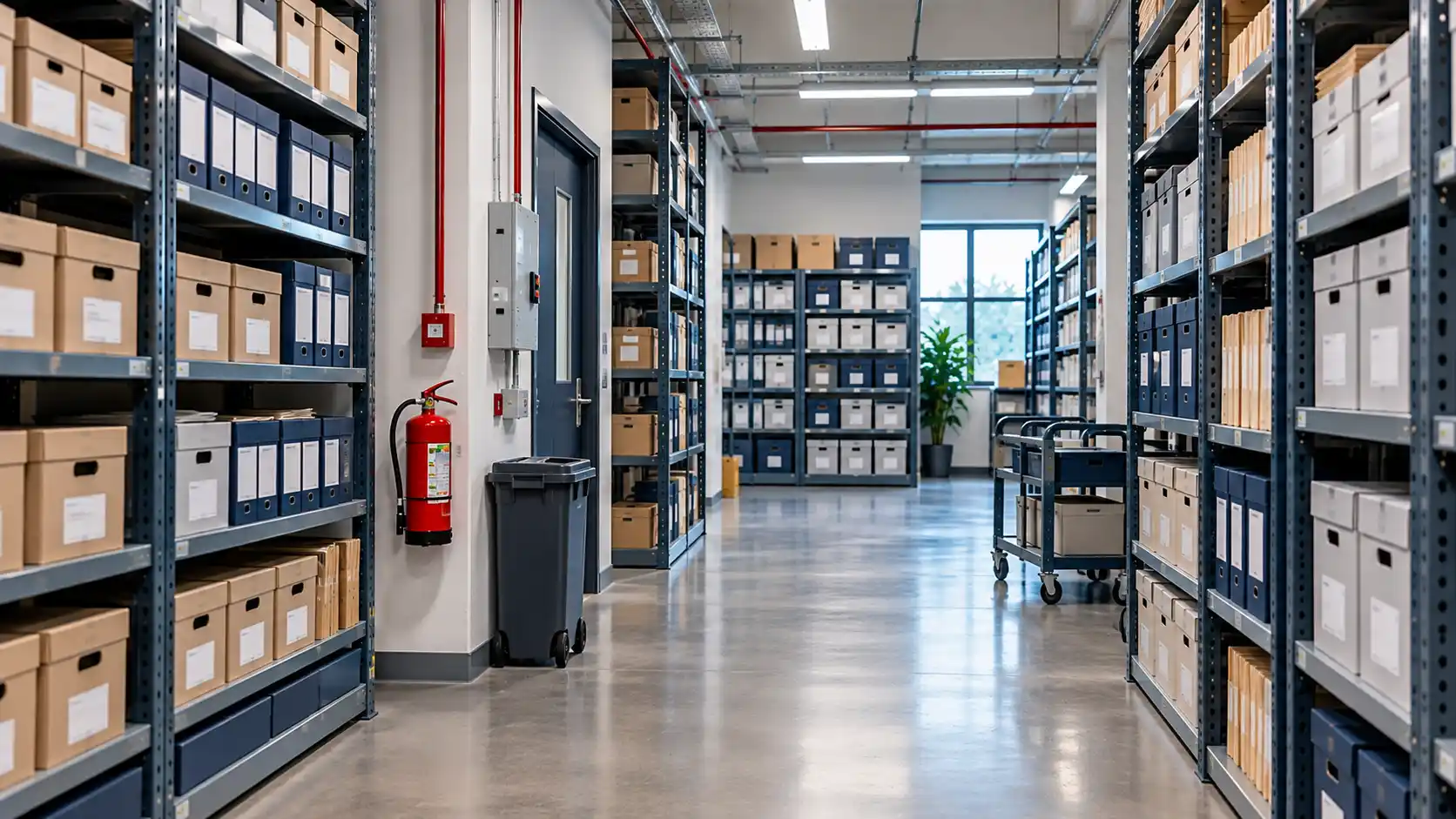
Fire detection and warning arrangements should be suitable for the premises, storage environment and people who may be present. A storage room that is rarely occupied may require particular consideration because an incident might not be discovered immediately.
Automatic fire detection
Smoke or heat detectors should be selected and positioned according to the building design, fire strategy and relevant standards. Detector performance can be affected by ceiling height, airflow, shelving arrangements and environmental conditions.
Aspirating smoke detection
Some high-value or high-density archives may benefit from aspirating smoke detection. These systems sample air through a network of pipes and may provide early warning in suitable environments. Their design and maintenance should be undertaken by competent specialists.
Automatic suppression systems
Sprinklers can provide important fire-control and life-safety benefits when properly designed and maintained. However, water can damage paper documents. In some specialist archive environments, gaseous or clean-agent suppression may also be considered.
There is no universally suitable suppression system for every archive. Selection should consider life safety, occupancy, building design, room integrity, evacuation, fire load, environmental factors and the consequences of discharge. A competent fire engineer should assess the options.
| Protection measure | Purpose | Important consideration |
|---|---|---|
| Smoke detection | Detect smoke and initiate warning. | Positioning must suit the room and storage layout. |
| Aspirating detection | Continuously samples air for early smoke indication. | Requires specialist design and maintenance. |
| Sprinklers | Help control or suppress fire. | Consider the building’s overall fire strategy. |
| Clean-agent systems | Suppress fire in suitable enclosed spaces. | Require specialist engineering and evacuation controls. |
| Portable extinguishers | Provide first-aid firefighting where appropriate. | Staff must be trained; evacuation takes priority. |
For further technical information, see WAGNER’s fire-protection information for museums, libraries and archives. Supplier information should be considered alongside independent professional advice and the premises’ fire risk assessment.
Fire Doors, Compartmentation and Escape Routes
Fire doors and fire-resisting construction help restrict the spread of smoke and fire. They are particularly important where archive rooms open onto corridors, stairways or other occupied areas.
Fire doors should be maintained in suitable condition and should close correctly. They must not be wedged open or altered without appropriate approval. Damaged doors, faulty closers and defective seals should be reported and repaired by competent persons.
Service penetrations through fire-resisting walls and floors should be protected using suitable fire-stopping systems. Improvised materials should not be assumed to provide adequate fire resistance.
Escape routes must remain available. Boxes, trolleys, waste and temporary deliveries should never obstruct corridors, stairways or final exits. Emergency access and evacuation arrangements should be reviewed whenever the storage layout changes.
Emergency Procedures and Fire Safety Training
Even with effective prevention measures, organisations must be prepared for the possibility of fire. Staff should understand how to raise the alarm, evacuate and report an incident.
Develop clear emergency procedures
- Explain how to raise the fire alarm.
- Identify escape routes and assembly points.
- Explain the responsibilities of fire wardens where appointed.
- Include arrangements for visitors and contractors.
- Provide assistance arrangements for people who may need support.
- Explain how to report missing persons.
- Prevent re-entry until authorised by the appropriate authority.
Provide relevant employee training
Training should explain the hazards associated with document storage, housekeeping standards, electrical defect reporting, fire alarm arrangements and evacuation procedures. New employees should receive appropriate instruction before working in the area.
Organisations can also consider structured fire-safety learning. For example, explore the ICTQual Level 3 Award in Fire Safety or the ICTQual Level 1 Award in Fire Protection and Prevention.
Those interested in introductory firefighting learning can also explore the ICTQual Level 1 Award in Fire Fighter. A qualification does not replace workplace-specific instruction or the employer’s responsibility to ensure suitable competence for assigned duties.
Employees should never risk their lives to rescue documents. Life safety must always come before the protection of records or other property. Only trained and authorised individuals should attempt first-aid firefighting, and only where it is safe to do so.
Protecting Important Documents and Business Continuity
Fire can cause more than physical building damage. It may destroy important records, interrupt business services and create legal, financial or operational difficulties. Organisations should therefore include archive facilities in their business continuity planning.
Identify critical records
Determine which records are essential for legal, financial, operational or historical reasons. Identify which documents can be recreated and which are unique or irreplaceable.
Maintain secure digital backups
Where appropriate, important information should be digitised and backed up securely. Digital copies need suitable access controls, backup arrangements and recovery testing. Scanning documents alone does not guarantee effective information recovery.
Plan for recovery
Establish responsibilities for assessing damage and recovering essential information. Coordinate recovery activities with emergency services, building management, insurers and specialist conservators. Never enter a fire-damaged building until it has been declared safe.
Practical Fire-Safety Inspection Checklist
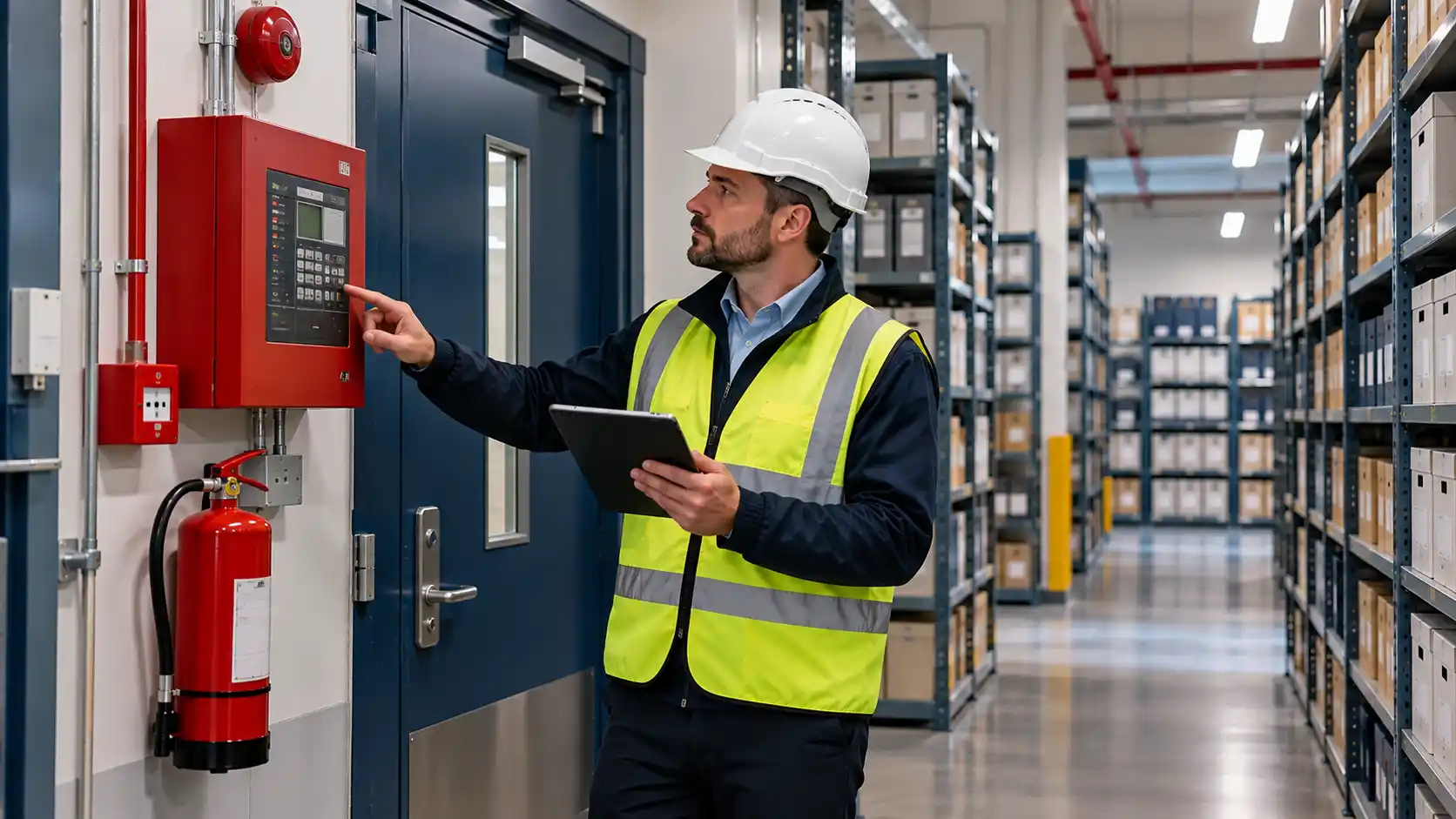
Regular inspections help ensure that fire-prevention measures remain effective. The inspection frequency should be determined by the fire risk assessment and the use of the storage area.
Storage and housekeeping
- Only necessary documents and materials are stored.
- Shelving is stable and not overloaded.
- Walkways and emergency exits remain clear.
- Paper waste and packaging are removed regularly.
- Combustible materials are kept away from heat sources.
- Hazardous substances are stored appropriately.
Electrical safety
- No damaged cables or electrical appliances are present.
- Electrical panels and isolation points remain accessible.
- Unauthorised heaters are not used.
- Extension leads are used appropriately.
- Electrical defects are reported and addressed.
- Contractor and hot-work activities are controlled.
Fire protection and emergency arrangements
- Fire doors are maintained and not wedged open.
- Fire detection equipment is unobstructed.
- Fire alarm arrangements are understood.
- Emergency lighting and escape routes are maintained.
- Firefighting equipment is accessible.
- Employees know how to raise the alarm and evacuate.
- Inspection and maintenance records are retained.
| Activity | Management approach | Evidence |
|---|---|---|
| Visual inspections | Check housekeeping, storage and access. | Inspection records. |
| Electrical checks | Arrange competent inspection and maintenance. | Electrical maintenance records. |
| Fire system maintenance | Follow system design and maintenance requirements. | Testing and service records. |
| Staff training | Provide induction and suitable refresher instruction. | Training records. |
| Risk assessment review | Review periodically and after significant changes. | Updated assessment and action plan. |
Common Fire-Safety Mistakes to Avoid
Using archives as overflow storage
Storage rooms should not become general-purpose spaces for unused furniture, packaging, cleaning products and miscellaneous equipment. Unauthorised materials may introduce additional hazards and increase the fuel load.
Blocking emergency routes
Boxes and archive trolleys should never be left in corridors, doorways or in front of safety equipment, even temporarily.
Ignoring low-occupancy areas
A room visited infrequently can still present a significant risk. Managers should consider how quickly a fire could be detected and how people would receive a warning.
Ignoring maintenance defects
Damaged electrical equipment, faulty fire doors and defective detection systems should be reported and addressed promptly.
Choosing suppression without professional assessment
System selection should not be based solely on protecting paper records. Life safety and the building’s overall fire strategy must remain the priority.
Failing to review changes
New shelving, additional documents, equipment changes and building alterations can affect fire safety. Review the risk assessment when circumstances change.
Frequently Asked Questions
What is the biggest fire risk in a document storage room?
There is no single biggest risk for every premises. Paper and cardboard create a combustible load, while electrical faults, heaters and uncontrolled maintenance activities may provide ignition sources. The actual risk depends on the room and its management arrangements.
How can workplaces prevent fires in storage rooms?
Control ignition sources, remove unnecessary combustible materials, maintain electrical equipment, organise shelving, keep escape routes clear, manage waste and ensure that suitable fire detection and emergency procedures are in place.
Should archive rooms have automatic fire detection?
Detection arrangements should be determined by the fire risk assessment and the building’s fire strategy. The appropriate type and positioning depend on the room layout, storage height, airflow and other environmental conditions.
Are sprinklers suitable for paper archives?
Sprinklers can provide important fire-control and life-safety benefits. However, water discharge can damage documents. The protection strategy should be assessed by competent professionals, taking account of life safety and the consequences of different suppression options.
Are fire doors necessary in document storage rooms?
The requirement for fire-resisting doors depends on the building design, fire strategy and applicable requirements. Where fire doors are provided, they must be maintained and kept operational.
How often should archive storage rooms be inspected?
Inspection frequency should reflect the fire risk assessment, room usage, stored materials, equipment and previous inspection findings. Specialist maintenance should follow applicable system requirements and competent-person advice.
Can employees use extinguishers to save important documents?
Employees should never put themselves at risk to protect documents. Evacuation and raising the alarm take priority. First-aid firefighting should only be undertaken by appropriately trained and authorised people where it is safe to do so.
What should an archive fire risk assessment include?
It should consider ignition sources, combustible materials, storage layout, people at risk, escape routes, fire doors, detection systems, firefighting equipment, housekeeping, maintenance, contractor controls and emergency procedures.
How can businesses protect records after a fire?
Identify critical records in advance, maintain secure backups, establish recovery responsibilities and plan alternative access to essential information. Recovery work should only begin when the building has been declared safe.
Conclusion: Make Fire Prevention Part of Archive Management
Preventing fires in storage rooms, archives and document facilities requires a systematic approach to workplace fire safety. Large quantities of paper, cardboard and packaging can contribute to fire development, while electrical faults, heating appliances and uncontrolled maintenance activities may create ignition risks.
Organisations should maintain suitable fire risk assessments, control ignition sources, improve storage arrangements, remove unnecessary waste, inspect electrical equipment and keep escape routes clear. Fire doors, detection systems and other protective measures should also be maintained according to the building’s fire strategy.
Regular inspections, staff training and effective emergency procedures help ensure that fire prevention is part of everyday workplace management. Where archive facilities are complex or contain particularly valuable records, competent professional advice should be obtained. Above all, people must always come before property and documents.
Improve Your Workplace Fire-Safety Knowledge
Explore professional fire-safety learning opportunities and develop a stronger understanding of fire prevention, protection and workplace safety responsibilities.
Explore Fire Protection and PreventionOfficial Guidance and Further Reading
- Regulatory Reform (Fire Safety) Order 2005
- GOV.UK – Fire Safety Risk Assessment: Factories and Warehouses
- GOV.UK – Fire Safety Risk Assessment: Offices and Shops
- WAGNER – Fire Protection for Museums, Libraries and Archives
- J.S.O – Fire Safety in Archive Storage
This article provides general information and does not replace a suitable and sufficient fire risk assessment, legal advice or specialist fire-system design. Organisations should check current requirements applicable to their premises and jurisdiction.