
Workplace Fire Safety · Practical Guide
Fire Safety Risks in Staff Rooms, Canteens and Workplace Kitchens
Staff rooms, canteens and workplace kitchens are important welfare spaces, but cooking appliances, electrical equipment, grease, combustible waste and unsafe everyday habits can create serious fire hazards.
This practical guide explains how UK workplaces can identify common fire risks, introduce effective preventive measures and help employees respond safely during a fire emergency.
Why Staff Rooms, Canteens and Workplace Kitchens Need Attention
Staff rooms and canteens are sometimes overlooked when organisations consider workplace fire safety. They may be used for short breaks rather than core business activities, but they can contain multiple ignition sources and combustible materials within a relatively small area.
A typical staff kitchen may include a kettle, microwave, toaster, coffee machine, refrigerator, chargers, paper towels, food packaging and waste bins. Commercial canteens may also use ovens, grills, deep-fat fryers, gas appliances and mechanical extraction systems. Each item introduces hazards that need to be considered in the context of the premises.
Everyday behaviour can increase these risks. An employee might leave food heating while answering a phone call, place packaging beside a toaster or connect several appliances to an unsuitable extension lead. A cleaner may not know which equipment must remain switched on, while temporary workers may be unfamiliar with emergency exits.
Fire prevention therefore requires more than displaying a warning sign. Employers need suitable equipment, clear procedures, regular maintenance, effective housekeeping and staff who understand their responsibilities.
The objective is to prevent fires where reasonably practicable and ensure that, if a fire occurs, people can receive a warning and evacuate safely. Measures should be proportionate to the actual hazards, the building layout, the number of occupants and the type of cooking carried out.
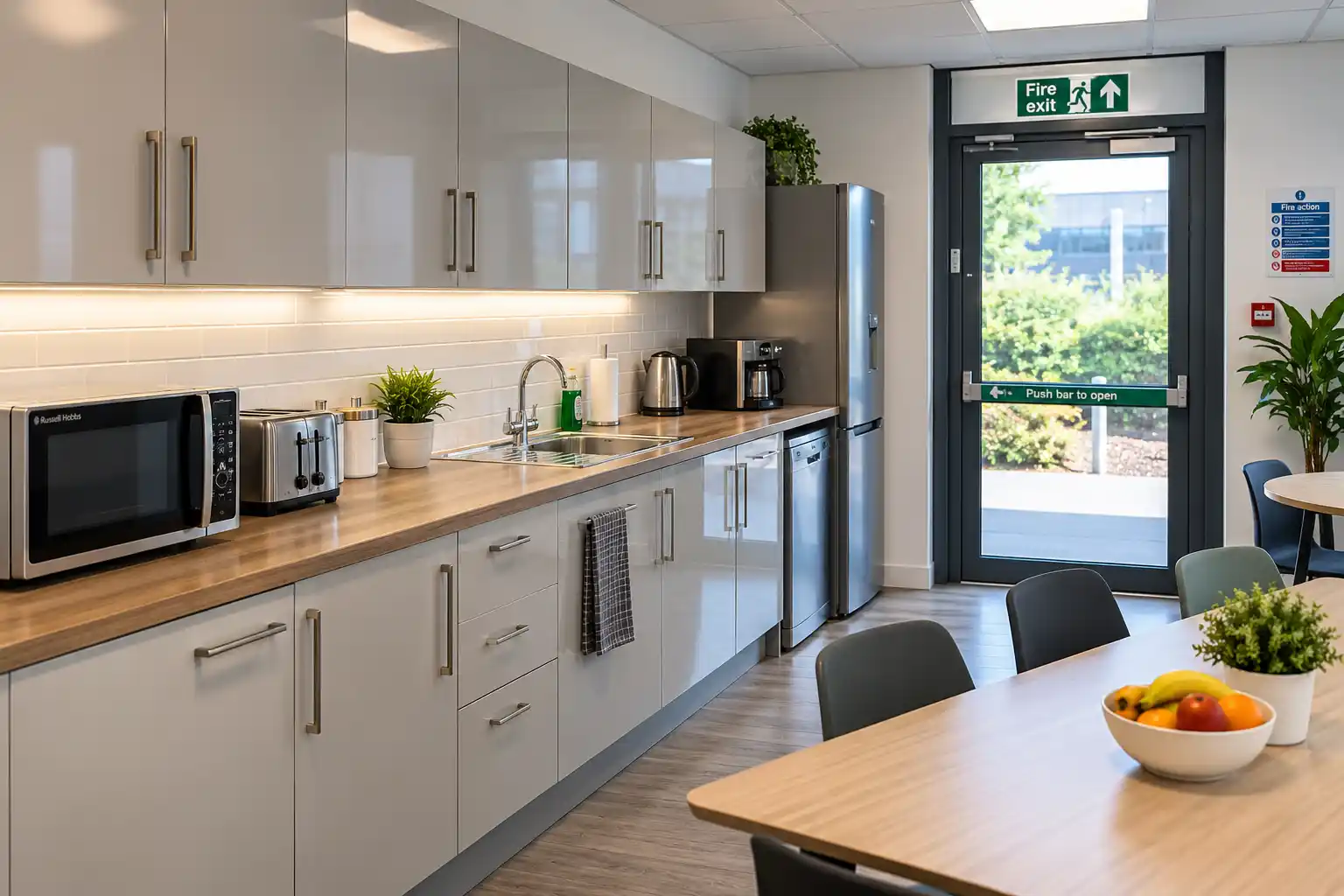
Common Fire Safety Risks in Staff Rooms and Canteens
Electrical Appliances and Overloaded Sockets
Kettles, toasters, microwaves, coffee machines and refrigerators are used frequently in staff kitchens. Damaged plugs, frayed cables, loose connections, blocked ventilation and faulty components can cause overheating or electrical faults.
Using several high-load appliances through one adaptor or connecting extension leads together can also create an unsafe electrical arrangement. Cables may become trapped behind equipment or exposed to water, heat and physical damage.
Inspect appliances for visible damage and ensure that defects are reported promptly. Remove faulty equipment from use until it has been assessed, repaired or replaced by a competent person. Follow manufacturer instructions and arrange appropriate maintenance and inspection based on the equipment and the risks.
Unattended Cooking and Overheating
Cooking appliances can become dangerous when employees leave food unattended or use equipment incorrectly. Bread left in a toaster, food overheated in a microwave or a pan forgotten on a hob may smoke or ignite.
Workplaces should establish clear rules for using cooking appliances. Staff should follow operating instructions, remain attentive where supervision is required and avoid using equipment for purposes for which it was not designed. End-of-use checks should form part of normal working practices.
Cooking Oil, Grease and Extraction Systems
Commercial kitchens can accumulate grease on filters, extraction canopies and ductwork. If deposits are not removed, they can provide fuel for a fire and allow flames and smoke to spread through the extraction system.
Cleaning frequency should reflect the type and volume of cooking, equipment design and the level of grease produced. Establish a documented cleaning and maintenance programme that covers relevant filters, canopies and ductwork, including less visible sections where applicable.
A clean-looking canopy does not necessarily mean that the entire extraction system is clean. Higher-risk cooking operations may require specialist inspection, cleaning and suppression arrangements. Seek competent advice and retain appropriate maintenance records.
Combustible Waste and Poor Housekeeping
Cardboard, paper towels, disposable packaging, food residue and general waste can increase the amount of fuel available to a fire. If these materials accumulate beside a toaster, oven, heater or electrical appliance, a small ignition may develop more quickly.
Remove unnecessary packaging, empty bins regularly and keep combustible supplies away from heat sources. Establish clear responsibilities for cleaning and waste removal so that staff do not assume another person will complete these tasks.
Portable Heaters and Unauthorised Appliances
Employees sometimes bring personal heaters, cooking devices or electrical equipment into a staff room. Such appliances may be unsuitable, damaged or positioned too close to paper, furniture, clothing and packaging.
Introduce a clear policy for personal electrical equipment. Keep heaters away from combustible materials, follow manufacturer instructions and do not permit appliances that create unacceptable risks. Any equipment that appears damaged or overheated should be reported and removed from use until it has been checked.
Smoking Materials and External Waste
Where smoking is restricted to designated external areas, staff should understand the site’s arrangements for disposing of smoking materials. Carelessly discarded cigarettes or matches can ignite combustible waste, particularly where bins or stored packaging are close to a building.
External waste storage should be managed according to the premises’ layout and the potential for a fire to spread back into the building. Keep waste areas tidy and secure where appropriate.
Gas Appliances and Cooking Materials
Gas cooking equipment requires suitable installation, ventilation, servicing and safe operation. A suspected gas leak or damaged connection must be treated as an urgent safety concern. Employees should follow the site’s emergency procedure rather than attempt unfamiliar repairs.
Cooking oils, cleaning products and other substances should be stored and handled according to their labels, safety information and the workplace risk assessment. Keep unsuitable materials away from ignition sources and hot surfaces.
Blocked Fire Doors and Escape Routes
Boxes, delivery crates, chairs, recycling bags and spare equipment can obstruct doors and corridors. Even temporary storage can delay evacuation or interfere with a fire door’s operation.
Keep exits, corridors and designated escape routes clear. Do not wedge fire doors open or store combustible materials in protected escape routes. Ensure that employees can identify the route they should take and know where to assemble outside the building.
Unsuitable or Inaccessible Fire Safety Equipment
Fire alarms, call points, extinguishers and other precautions must be appropriate for the premises and accessible when needed. Equipment that is blocked by furniture or has not been maintained may be ineffective during an emergency.
Do not select firefighting equipment simply because it is convenient. Cooking oil presents different hazards from ordinary combustible materials, and an unsuitable extinguishing agent may make an incident worse. Equipment should be selected and maintained by competent people, with staff trained to prioritise evacuation.
How to Reduce Fire Risks in Workplace Kitchens
Kitchen fire prevention works best when controls are practical, responsibilities are clear and unsafe conditions are corrected quickly. A written policy should be supported by appropriate equipment, maintenance, supervision and regular checks.
Introduce Safe Appliance Procedures
- Use cooking appliances only for their intended purpose.
- Follow manufacturer instructions and workplace procedures.
- Keep paper towels, packaging and cloths away from hot surfaces.
- Do not use appliances with damaged cables, plugs or casings.
- Keep ventilation openings clear and avoid unsafe electrical connections.
- Report unusual smells, sparks, overheating or repeated electrical tripping.
- Switch appliances off after use when required by the operating procedure.
- Ensure repairs are completed by suitably competent personnel.
Maintain Extraction and Cooking Equipment
Develop a documented schedule for cleaning and maintaining cooking equipment and extraction systems. Specify which components require attention, who is responsible, the required frequency and how completion will be recorded.
The programme should reflect the actual cooking process. A kitchen preparing meals throughout the day may require more frequent attention than a staff room used mainly for drinks and reheating food.
Where specialist cleaning is required, use a competent contractor and retain records. If a defect creates an immediate danger, stop using the affected equipment and arrange corrective action before it returns to service.
Control Cooking Oil and Hot Surfaces
Cooking oil fires can spread rapidly and are particularly dangerous when handled incorrectly. Never pour water onto burning oil, and never attempt to carry a burning pan or fryer. Water can cause burning oil to erupt and spread.
Where deep-fat frying or other higher-risk cooking takes place, the fire risk assessment should consider suitable suppression arrangements, emergency isolation and appropriate firefighting provisions. These should be selected with competent advice based on the cooking equipment and premises.
Employees should know when to evacuate rather than attempt firefighting. Only a suitably trained person should consider tackling an incipient fire when the emergency plan permits it, the correct equipment is available and a safe escape route remains clear.
Keep Exits and Safety Equipment Accessible
Do not position tables, bins, crates or spare chairs where they obstruct exits, alarm call points or firefighting equipment. Keep doors operating correctly and make sure the escape route remains clear throughout the working day.
Employees should know the alarm procedure, evacuation route and assembly point. Equipment intended for emergency use must be appropriate, maintained and accessible. Its presence must not encourage untrained staff to take unnecessary risks.
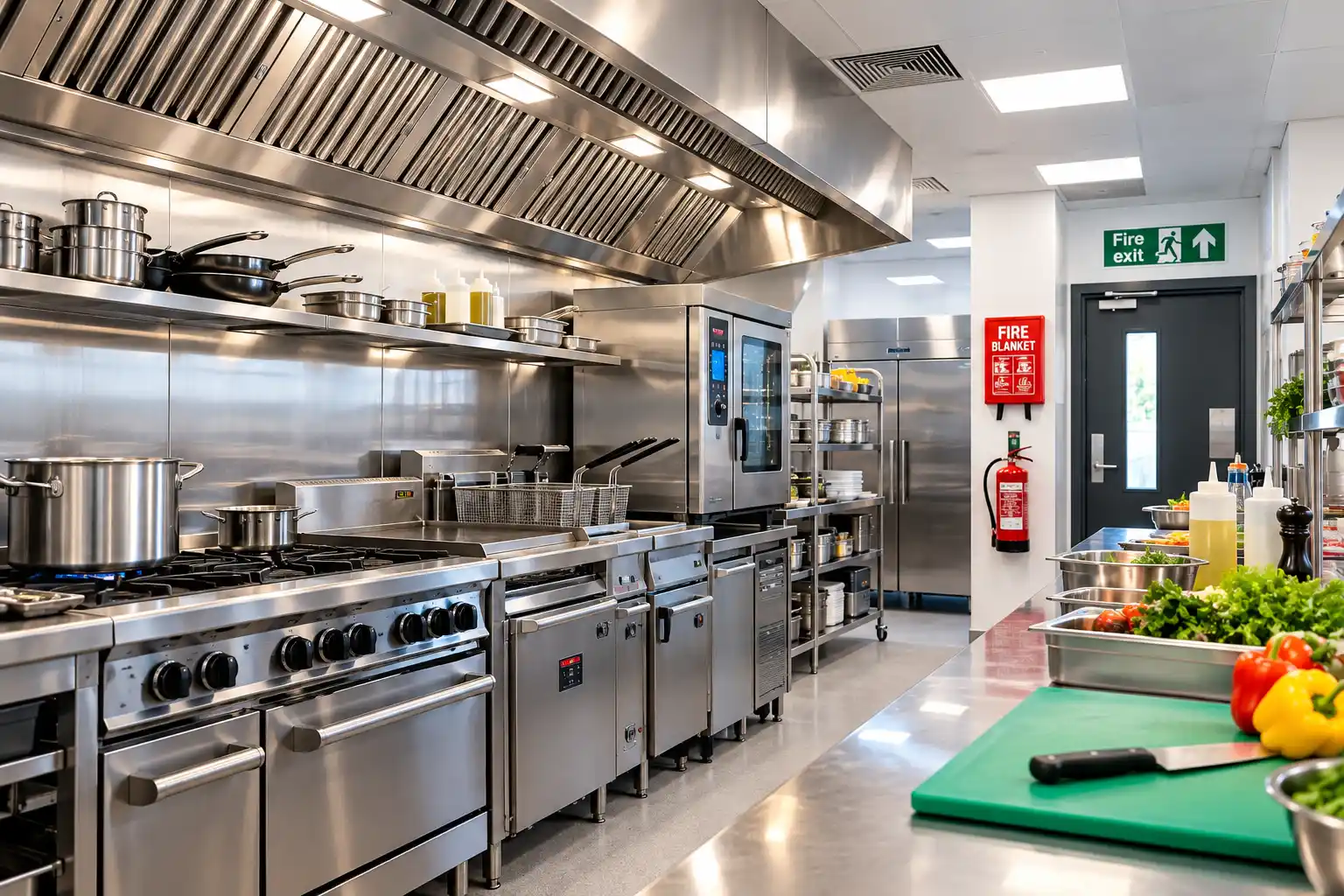
Fire Prevention in Staff Rooms and Smaller Canteens
Smaller staff rooms may not contain commercial cooking equipment, but they still need appropriate fire precautions. A kettle, microwave, toaster, refrigerator and phone chargers can create electrical and heat-related hazards when used incorrectly or poorly maintained.
Simple rules can make these areas safer without disrupting normal staff activities.
- Set clear appliance rules: Explain which appliances are permitted and how staff should use them safely.
- Keep worktops tidy: Do not store paper, packaging or cleaning products next to hot appliances.
- Manage charging devices: Use suitable chargers and undamaged cables. Do not cover devices while charging.
- Control personal equipment: Require approval for personal heaters and cooking appliances where appropriate.
- Keep routes clear: Arrange tables, chairs and storage so that exits remain accessible.
- Report defects: Provide a clear way to report damaged equipment, sparks or unusual smells.
- Assign routine checks: Make responsibility for housekeeping and relevant shutdown checks clear.
Consider how a fire in a staff room might affect nearby offices, workshops, corridors or shared escape routes. The size of the room alone does not determine its risk. Its location, contents, occupancy and relationship to the rest of the building must also be considered.
How to Assess Fire Safety Risks in Staff Rooms and Canteens
A fire risk assessment identifies potential fire hazards, people who may be harmed and the precautions needed to prevent a fire or reduce its consequences. It should reflect the actual premises, activities, equipment and occupants.
In England and Wales, the responsible person must ensure that a suitable and sufficient fire risk assessment is completed and reviewed. The official five-step approach provides a useful structure for identifying hazards, evaluating risks and planning improvements.
Step 1: Identify the Hazards
Inspect the staff kitchen or canteen during normal use where possible. Identify ignition sources such as cooking appliances, electrical equipment and heaters. Look for combustible materials including packaging, paper, cooking oil and grease.
Check storage areas, waste containers, ventilation systems, appliance condition and maintenance records. Consider whether temporary changes, deliveries or new equipment have introduced additional hazards.
Step 2: Identify People at Risk
Consider employees, cleaners, contractors, agency workers, visitors and people using nearby areas. Some occupants may be unfamiliar with the building or require assistance to evacuate.
Emergency procedures should account for relevant mobility, sensory or communication needs. Where several organisations share premises, ensure their emergency arrangements are coordinated.
Step 3: Evaluate Existing Controls
Determine whether current precautions are suitable and working effectively. Depending on the premises, these may include equipment maintenance, extraction cleaning, safe storage, alarm arrangements, emergency lighting, escape routes, signage and appropriate firefighting equipment.
Prioritise urgent hazards, assign an action owner and establish a suitable completion date. Do not leave serious defects unresolved simply because a routine inspection is not yet due.
Step 4: Record Findings and Train Staff
Record the assessment and required actions in accordance with applicable legal requirements. Make sure employees understand the hazards relevant to their work, how to raise the alarm, which routes to use and where to assemble.
Training should be appropriate to each role. Staff who supervise cooking or manage specialist equipment may need more detailed instruction than employees who occasionally use a kettle or microwave.
Step 5: Review the Assessment
A fire risk assessment should be reviewed when there are significant changes or evidence that existing controls are inadequate. Examples include installing a fryer, changing the room layout, increasing occupancy, changing cleaning arrangements or experiencing a fire or near miss.
Record the review, identify any new hazards and follow through on corrective actions. A risk assessment is most useful when it remains connected to daily workplace practice.
Example Fire Risk Control Table
The following table gives examples of hazards and possible controls. It is a planning aid, not a completed fire risk assessment. Each workplace must decide what measures are appropriate for its own circumstances.
| Hazard | Potential consequence | Example controls | Responsibility |
|---|---|---|---|
| Damaged appliance cable | Overheating, electrical fault or ignition | Remove equipment from use and arrange competent inspection or replacement. | All staff report; facilities team follows up. |
| Grease in extraction system | Fire spreading through the canopy or ductwork | Documented cleaning programme and appropriate specialist maintenance. | Catering manager or contractor. |
| Unattended cooking oil | Oil fire, burns and smoke spread | Safe operating procedures, staff instruction and suitable emergency arrangements. | Catering supervisor. |
| Packaging near hot equipment | Combustible materials ignite | Designated storage, housekeeping and regular waste removal. | Room users and shift lead. |
| Blocked escape route | Delayed or obstructed evacuation | Keep the route clear and correct obstructions immediately. | All staff and fire safety lead. |
| Unfamiliarity with alarm procedure | Delay or confusion during an emergency | Induction, refresher training, drills and clear instructions. | Employer or manager. |
What Should Staff Do if a Kitchen Fire Starts?
Emergency procedures should be specific to the premises and communicated to employees. The general priority is to raise the alarm, evacuate by a safe route and follow the site’s emergency plan. People should not delay leaving to save food, belongings or equipment.
- Raise the alarm. Activate the site’s warning arrangements and alert nearby people if it is safe to do so.
- Evacuate promptly. Use the designated escape route and proceed to the assembly point.
- Contact the emergency services. Follow the site’s procedure for calling the fire and rescue service and provide relevant details.
- Never use water on burning oil. Do not carry a burning pan or fryer, and do not attempt to tackle a fire if the route out is threatened.
- Account for people. Follow the site’s assembly and roll-call arrangements. Report missing people to the appropriate incident lead or fire service.
- Do not re-enter. Wait for the authorised all-clear before returning to the premises.
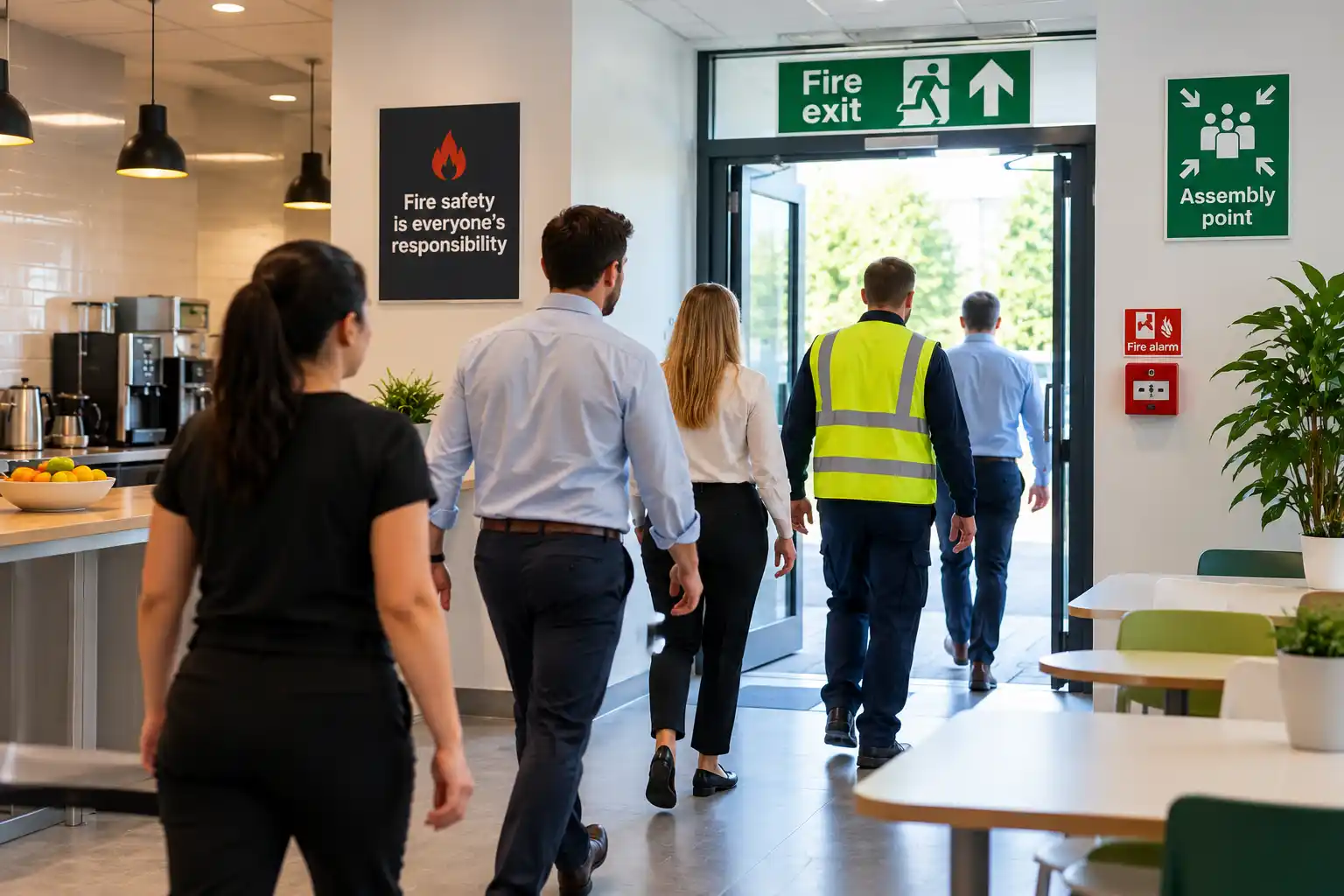 Employees should understand the alarm procedure, escape routes and assembly point before an emergency occurs.
Common Fire Safety Mistakes Employers Should Avoid
Assuming a Small Kitchen Is Automatically Low Risk
Risk depends on equipment, fuel, layout and people, not simply room size. A compact kitchen with intensive cooking and limited escape options may need more attention than a larger room used only for drinks.
Relying on Reminders Instead of Practical Controls
Posters and emails can reinforce safe behaviour, but they cannot repair damaged equipment or remove grease from ductwork. Instructions must be supported by maintenance, housekeeping, inspections and follow-up.
Encouraging Unsafe Firefighting
Employees should not be encouraged to use water on burning cooking oil, move burning cookware or fight a fire when evacuation is the safer option. Procedures and training must clearly establish when to leave immediately.
Ignoring Changes to Equipment or Layout
Adding a fryer, moving appliances, changing the room layout or altering cleaning arrangements can introduce new hazards. Review the risk assessment whenever changes affect fire risks or escape arrangements.
Leaving Responsibilities Unclear
If nobody knows who should report faults, arrange cleaning or check housekeeping, important tasks may be missed. Assign responsibilities clearly and ensure staff can escalate problems without delay.
Workplace Kitchen Fire Safety Inspection Checklist
Use this checklist as a prompt during routine inspections. It does not replace a suitable fire risk assessment or any specialist inspection required for the premises.
- Electrical appliances, plugs and cables appear undamaged.
- Appliances are used as intended and ventilation openings remain clear.
- Combustible materials are kept away from hot surfaces.
- Cooking is supervised in accordance with safe operating procedures.
- Extraction filters, canopies and ductwork are included in the cleaning programme.
- Grease, crumbs, packaging and general waste do not accumulate.
- Gas appliances, where present, receive appropriate servicing.
- Fire exits, doors, corridors and alarm call points remain accessible.
- Fire safety equipment is accessible and appropriately maintained.
- Employees know how to raise the alarm and evacuate.
- Emergency arrangements consider visitors and people needing assistance.
- Maintenance, cleaning and corrective actions are recorded as appropriate.
- The fire risk assessment reflects current equipment and working practices.
Record problems, assign an action owner and set a target date. Escalate urgent hazards immediately rather than leaving them on a routine maintenance list.
UK Fire Safety Responsibilities for Staff Kitchens and Canteens
Fire safety duties depend on the location and nature of the premises. In England and Wales, the Regulatory Reform (Fire Safety) Order 2005 is a central part of the framework for most non-domestic premises.
The responsible person may be an employer, owner, occupier or another person with control of the premises. Applicable duties include taking general fire precautions and ensuring that the fire risk assessment is suitable, sufficient and reviewed when necessary.
Fire safety arrangements may cover prevention, warning systems, escape routes, maintenance, emergency planning, staff information and training. The responsible person should consider everyone who may be affected, including visitors, contractors and people who may require assistance.
Where multiple organisations share a building, their responsible persons may need to cooperate and coordinate fire safety arrangements. Staff kitchens should not be treated in isolation if a fire could affect shared corridors, adjacent workplaces or protected escape routes.
Fire safety legislation and official guidance differ across the UK. Scotland and Northern Ireland have separate frameworks, and employers should consult the guidance applicable to their location and premises.
Read our related guide to UK fire safety law and the official GOV.UK explanation of workplace fire safety responsibilities.
Build Staff Awareness Through Fire Safety Training
Training helps employees recognise hazards, follow safe working procedures and respond appropriately to an alarm. Induction should explain the alarm method, escape routes, assembly point, fault-reporting procedure and any kitchen-specific rules.
Training should reflect the role. Employees who occasionally use a kettle may need different instruction from catering supervisors who oversee deep-fat frying, extraction cleaning or specialist equipment. Temporary workers and contractors should receive the relevant safety information before starting work.
Refresher instruction may be needed when procedures change, new equipment is introduced or inspections reveal gaps in understanding. Employers should also ensure that people with designated responsibilities understand what they are expected to do and the limits of their role.
Explore relevant learning options from our website, including the LICQual Level 3 Award in Fire Safety, the ProQual Level 3 Award in Fire Risk Assessment Awareness and the ICTQual AB Level 6 International Diploma in Fire Safety and Firefighting Technology. Review the individual course pages for their intended audiences, entry requirements and assessment details.
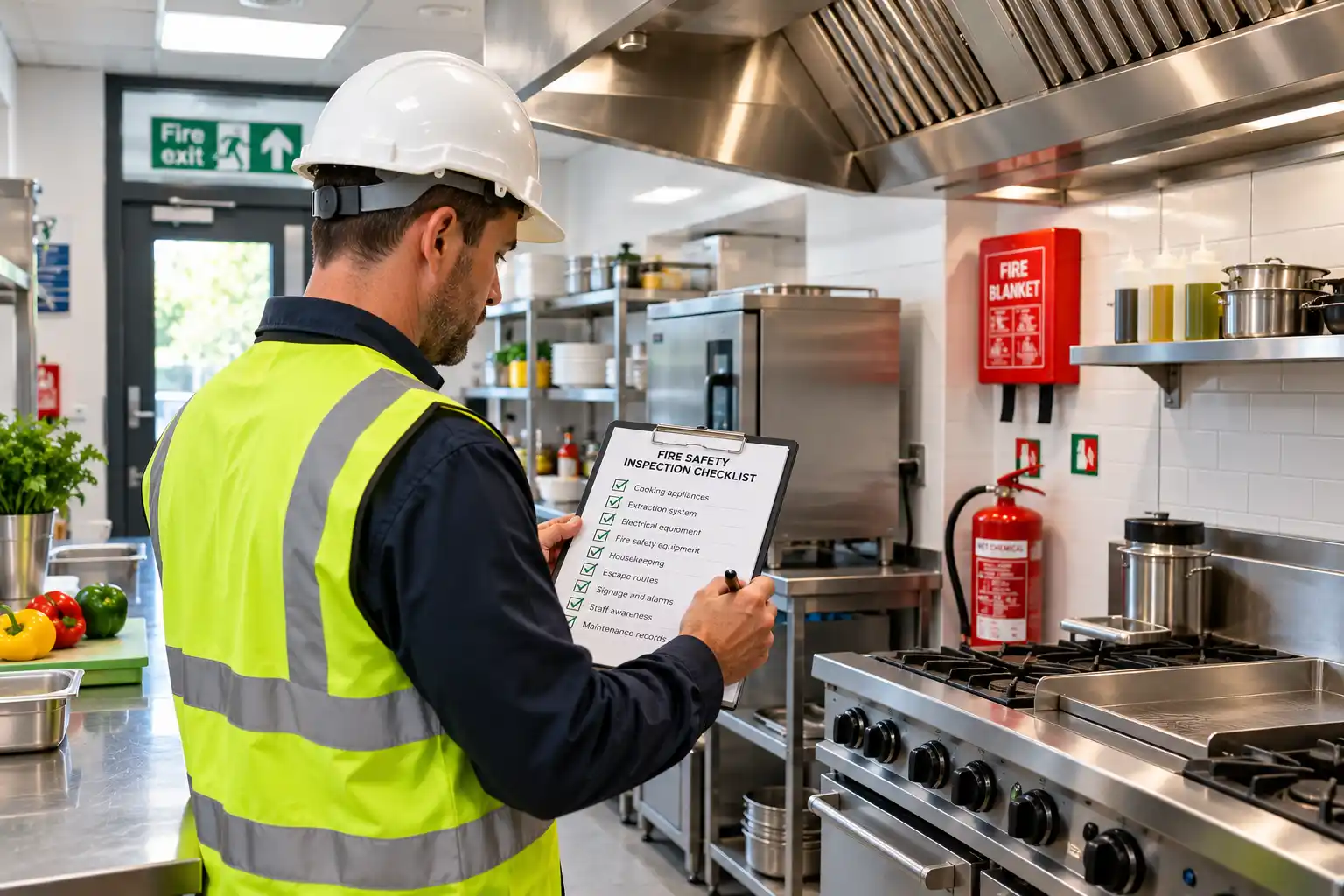
Conclusion: Make Fire Prevention Part of Everyday Practice
Fire safety risks in staff rooms, canteens and workplace kitchens can be reduced through a suitable risk assessment, sensible working procedures, well-maintained equipment and effective staff awareness.
Prioritise the control of ignition sources, grease and waste accumulation, electrical hazards and obstructed escape routes. Ensure that employees know how to raise the alarm and evacuate safely. Give staff clear ways to report defects and make sure that corrective actions are completed.
Do not wait for a fire or near miss before reviewing arrangements. Reassess the risks whenever equipment, layout or working practices change. Where commercial cooking or complex building arrangements create additional hazards, obtain competent professional advice.
Frequently Asked Questions
What are the main fire risks in staff rooms and canteens?
Common risks include damaged electrical appliances, overloaded sockets, unattended cooking, hot surfaces, grease accumulation, combustible packaging, portable heaters, poor housekeeping and blocked escape routes. The actual risks depend on the equipment and how the area is used.
How often should a workplace kitchen be checked?
There is no single inspection frequency suitable for every workplace. Checks should reflect the risks, equipment and intensity of use. Commercial kitchens may require more frequent checks and specialist cleaning than a small staff room. Review arrangements whenever conditions change.
Can water be used on a cooking-oil fire?
No. Never pour water onto burning cooking oil or carry a burning pan or fryer. Raise the alarm, evacuate and follow the emergency plan. Firefighting should only be considered by a trained person when safe and appropriate equipment is available.
Who is responsible for fire safety in a workplace canteen?
The responsible person depends on control of the premises and the applicable law. It may be an employer, owner, occupier or another person with control. In shared premises, multiple responsible persons may need to coordinate arrangements.
Should staff kitchens be included in a fire risk assessment?
Yes. The assessment should consider relevant parts of the premises and activities, including kitchens, canteens, appliances, storage, waste, escape routes and people who may be affected.
What fire safety equipment does a workplace kitchen need?
There is no universal equipment list for every kitchen. Requirements should follow the fire risk assessment and competent advice, considering the cooking method, electrical equipment, layout, warning systems and escape routes. Equipment must be suitable, maintained and accessible.
Does the same fire safety law apply throughout the UK?
No. Fire safety legislation and guidance differ between England and Wales, Scotland and Northern Ireland. Employers should consult the rules applicable to their location and type of premises.
Improve Fire Safety Knowledge in Your Workplace
Explore fire safety and risk assessment learning options to strengthen your understanding of hazard identification, prevention measures and workplace fire safety responsibilities.
Explore Fire Safety TrainingFurther Guidance and Sources
Use current official guidance alongside a premises-specific assessment.
This article provides general workplace fire safety information. It does not replace a suitable and sufficient fire risk assessment, manufacturer instructions, specialist kitchen-system advice or legal advice. Apply the legislation and guidance relevant to the location and type of premises.