
How to Investigate Repeated Fire Safety Defects
A practical guide to identifying recurring fire safety failures, investigating their root causes, implementing effective corrective actions and strengthening workplace fire prevention.
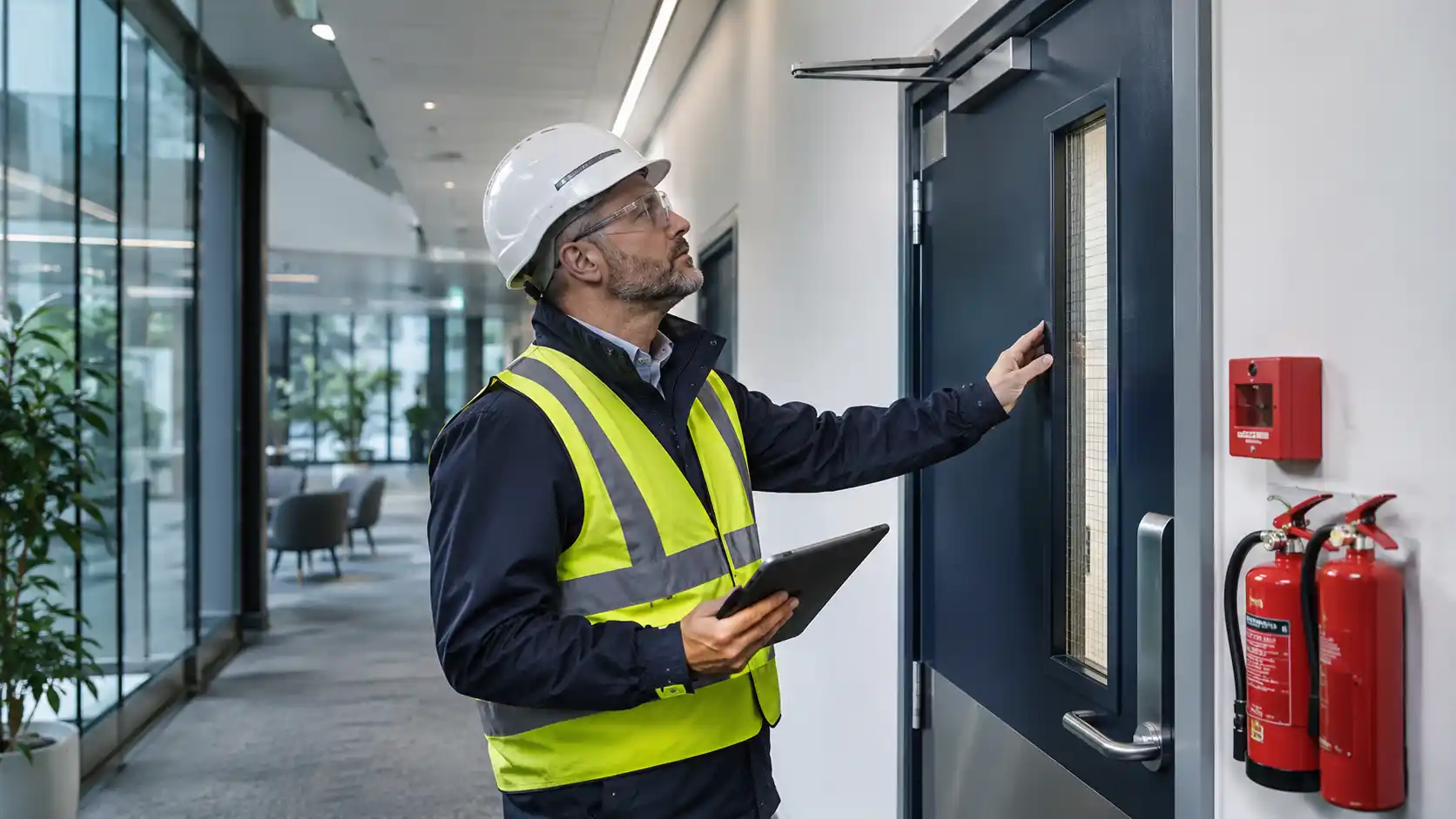
Repeated fire safety defects can indicate that an organisation’s fire prevention and protection arrangements are not working as effectively as intended. A defective fire door, an obstructed escape route, an unreliable alarm system or damaged fire compartmentation may appear to be an isolated maintenance issue. However, when the same problem continues to appear during inspections, it requires a more detailed investigation.
In workplaces, commercial properties, residential buildings and industrial premises, recurring fire safety failures can develop because of inadequate maintenance, unclear responsibilities, insufficient training, poor communication, unsuitable repair methods or changes in building operations. Simply repairing the visible defect without understanding why it occurred may result in the same problem returning during the next inspection.
Learning how to investigate repeated fire safety defects enables responsible persons, facilities managers, fire safety officers and building managers to identify patterns, examine previous failures and introduce corrective measures that address the underlying causes. An effective investigation also creates evidence that problems have been properly assessed, assigned, resolved and monitored.
This guide explains how to investigate recurring fire safety problems through a structured process. It covers common causes, inspection records, root cause analysis, corrective actions, monitoring arrangements and escalation procedures within UK workplace fire safety management.
1. Understanding Repeated Fire Safety Defects in the Workplace
Repeated fire safety defects are deficiencies in fire prevention, detection, protection or emergency arrangements that reappear after being previously identified, reported or supposedly corrected. They may involve the same physical component, a recurring unsafe activity or a failure within the organisation’s inspection and maintenance arrangements.
For example, a workplace inspection may identify a fire door that does not close properly. Maintenance personnel adjust the closer, record the repair and close the maintenance request. During a subsequent inspection, the same door is found defective again. This suggests that the original corrective action may not have addressed the underlying problem.
What Makes a Fire Safety Defect Repeated?
A defect becomes a recurring management concern when evidence shows that an identical or related deficiency continues to occur despite previous reporting or corrective action. Investigators should consider the defect’s history rather than relying only on its appearance during the latest inspection.
Repeated defects can take several forms:
- Identical recurring defects: The same fire door, alarm device or emergency lighting unit repeatedly fails inspection.
- Related defects: Different components within the same system repeatedly experience similar failures.
- Recurring behavioural problems: Employees repeatedly obstruct escape routes or wedge open fire doors despite previous instructions.
- Repeated maintenance failures: Repairs are completed but the same faults return because servicing arrangements are inadequate.
- Systemic management failures: Similar problems occur in multiple locations because inspection, reporting or accountability arrangements are ineffective.
Why Are Recurring Defects a Serious Concern?
Fire safety systems operate together to prevent ignition, detect fires, warn occupants, restrict fire and smoke spread and support safe evacuation. A repeated defect can weaken one or several elements of these arrangements.
A fire door that repeatedly fails to close may compromise compartmentation. An alarm system that regularly develops faults may affect the reliability of fire warning arrangements. An obstructed escape route may delay evacuation, particularly where people are unfamiliar with the premises or require additional assistance.
Repeated findings can also reveal weaknesses in organisational control. If an organisation records the same defect several times without identifying why it returns, its inspection programme may be identifying problems without effectively preventing them.
Examples of Repeated Fire Safety Defects
| Fire safety area | Recurring defect | Potential underlying concern |
|---|---|---|
| Fire doors | Self-closing device repeatedly fails. | Incorrect adjustment, damaged hardware or unsuitable repair. |
| Escape routes | Materials repeatedly obstruct corridors. | Poor storage arrangements and inadequate supervision. |
| Fire alarms | Repeated faults or false activations. | Maintenance problems, environmental conditions or unsuitable system configuration. |
| Emergency lighting | Battery failures continue to appear. | Inadequate maintenance or delayed component replacement. |
| Compartmentation | Unsealed service penetrations reappear. | Uncontrolled building alterations and poor contractor supervision. |
| Fire safety records | Missing inspection and maintenance evidence. | Weak documentation and unclear accountability. |
Recognising these patterns helps investigators distinguish between isolated maintenance issues and wider failures in fire safety management. A comprehensive understanding of these responsibilities is also important when reviewing workplace fire safety responsibilities .
2. Common Causes of Recurring Fire Safety Defects
Repeated fire safety defects rarely have a single universal explanation. They may result from technical failures, organisational weaknesses, unsuitable working practices or insufficient monitoring. Investigators should examine the conditions surrounding each occurrence instead of assuming that the most visible problem is the actual cause.
Inadequate Maintenance and Inspection Arrangements
Inadequate maintenance is a common reason why fire safety defects return. An inspection programme may identify a faulty component without ensuring that the repair is completed to an appropriate standard. Maintenance teams may also concentrate on immediate restoration without examining the condition of related equipment.
For example, replacing a defective fire alarm component may temporarily restore operation. However, if the investigation does not consider repeated electrical faults, environmental conditions or problems elsewhere in the system, the fault may occur again.
Unclear Responsibilities and Accountability
Fire safety management may involve employers, landlords, facilities managers, maintenance contractors and other responsible persons. If their responsibilities are unclear, defects may remain unresolved because each party assumes that another organisation will take action.
This problem is particularly important in shared premises. Article 22 of the Regulatory Reform (Fire Safety) Order 2005 establishes cooperation and coordination requirements for responsible persons who share or have duties in respect of premises in England and Wales. Further details are available in the current Article 22 legislation .
Temporary Repairs Without Permanent Solutions
Temporary repairs may be necessary to address an immediate problem, but they should not automatically be treated as permanent corrective action. For example, repeatedly adjusting damaged door hardware without investigating the damage to the door frame may allow the same failure to continue.
Investigators should establish whether earlier work restored the required performance or simply removed the visible symptom. Temporary controls must be documented, monitored and replaced by an appropriate permanent solution.
Insufficient Employee Awareness and Training
Human behaviour can contribute to recurring fire safety problems. Employees may continue to obstruct escape routes, misuse electrical equipment or interfere with fire doors when they do not understand the risks or when workplace procedures are difficult to follow.
Repeatedly issuing warnings without addressing the reason for unsafe behaviour may be ineffective. Investigators should consider whether employees receive suitable instructions, whether supervisors enforce procedures and whether appropriate facilities are available.
Uncontrolled Building Changes and Contractor Activities
Building alterations, refurbishment, maintenance and service installations can introduce new fire safety defects. Contractors may create openings in fire-resisting construction, disturb fire alarm equipment or change the layout of escape routes.
If work is completed without suitable approval, inspection and reinstatement checks, similar defects may develop whenever further maintenance or construction activities take place. Effective contractor management and change-control arrangements are therefore important parts of fire prevention.
Weak Communication and Record-Keeping
Missing information can prevent organisations from recognising that the same problem has already occurred. If inspection findings are recorded in separate spreadsheets, paper reports or contractor systems without a central tracking process, recurring defects may remain unnoticed.
A consistent reporting system should connect the initial finding, investigation, repair, verification and subsequent inspection. This provides a more reliable history of the organisation’s response.
3. How to Investigate Repeated Fire Safety Defects: Key Steps
A structured investigation helps organisations move from identifying repeated problems to understanding why they occur. Each investigation should be proportionate to the nature and potential consequences of the defect. A recurring problem involving a critical fire protection system requires a more detailed response than a minor administrative discrepancy.
The following process provides a practical framework for investigating recurring fire safety failures.
Step 1: Identify and Confirm the Repeated Defect
Begin by confirming that the reported problem is genuinely recurring. Review the latest inspection findings and compare them with previous reports. Check the exact location, asset reference, defect description and dates of earlier occurrences.
Investigators should establish whether the same component is affected or whether several similar defects are appearing throughout the premises. Photographs, inspection notes, maintenance reports and equipment identification numbers can help confirm the relationship between incidents.
Step 2: Assess the Immediate Fire Safety Risk
Before conducting a detailed investigation, establish whether the defect creates an immediate risk to people, property or essential fire safety arrangements. Consider its potential effect on fire prevention, detection, warning, compartmentation, evacuation and firefighting provisions.
Where a defect compromises an important safety measure, the responsible person should arrange appropriate immediate precautions. Depending on the circumstances, this may involve restricting access, stopping an affected activity, arranging urgent competent repairs or introducing other suitable temporary measures.
Step 3: Establish the History of Previous Occurrences
Examine the history of the defect to understand when it first appeared, how frequently it has returned and what action was previously taken. Identify whether previous repairs were completed, delayed, partially implemented or never independently verified.
Useful information includes inspection dates, maintenance requests, contractor reports, photographs, work orders, service certificates and communication between responsible parties.
A timeline can help identify patterns. For instance, a fire door may repeatedly fail following cleaning activities, building alterations or heavy use. These connections may provide important evidence about the underlying cause.
Step 4: Inspect the Affected Area and Related Systems
Conduct a suitable physical inspection of the affected location. Examine the defective component, surrounding construction, associated equipment and conditions that may contribute to the failure.
Where specialist knowledge is required, involve a competent contractor or appropriately experienced fire safety professional. A visual inspection by general maintenance staff should not replace specialist testing or technical examination where these are necessary.
Investigators should also examine similar components elsewhere in the premises. If multiple fire doors have the same defective closer or several alarm devices show similar faults, the issue may involve a wider installation or maintenance problem.
Step 5: Interview Relevant Employees and Contractors
Speak with people who use, inspect, maintain or supervise the affected area. Their observations may reveal problems that are not immediately visible during a formal inspection.
Relevant questions include:
- When was the defect first noticed?
- Has the same issue occurred previously?
- What work was completed after earlier reports?
- Who was responsible for authorising and verifying repairs?
- Have workplace activities or building arrangements changed?
- Are employees aware of the correct reporting procedure?
- Have contractors experienced difficulties accessing or repairing the equipment?
Step 6: Determine the Root Cause
Use the evidence collected to identify why the defect continues to occur. Separate the immediate technical failure from the organisational or operational factors that allowed it to develop or remain unresolved.
For example, the immediate cause of a blocked fire exit may be the storage of delivery materials. The underlying causes could include insufficient storage capacity, poor delivery scheduling, inadequate supervision or a lack of clearly assigned housekeeping responsibilities.
Step 7: Develop and Implement Corrective Actions
Corrective actions should address both the defect and the underlying causes. Identify what needs to be repaired, replaced, redesigned or changed in the organisation’s procedures.
Each action should have a clearly identified owner, completion date, required resources and verification method. Where temporary measures are used, record their purpose, duration and monitoring arrangements.
Step 8: Verify the Effectiveness of the Solution
Closing a maintenance request does not necessarily demonstrate that the fire safety defect has been permanently resolved. Verification should establish whether the completed work restores the required function and addresses the identified root cause.
This may involve a physical reinspection, specialist testing, functional checks, examination of repair documentation or confirmation that revised workplace procedures are being followed.
Step 9: Record Findings and Monitor Recurrence
Record the investigation outcome, evidence, identified causes, corrective actions and verification results. Update the relevant inspection and maintenance records and review whether the fire risk assessment requires amendment.
Subsequent inspections should check whether the same defect returns and whether similar problems develop elsewhere. This provides evidence of whether the corrective measures are effective over time.
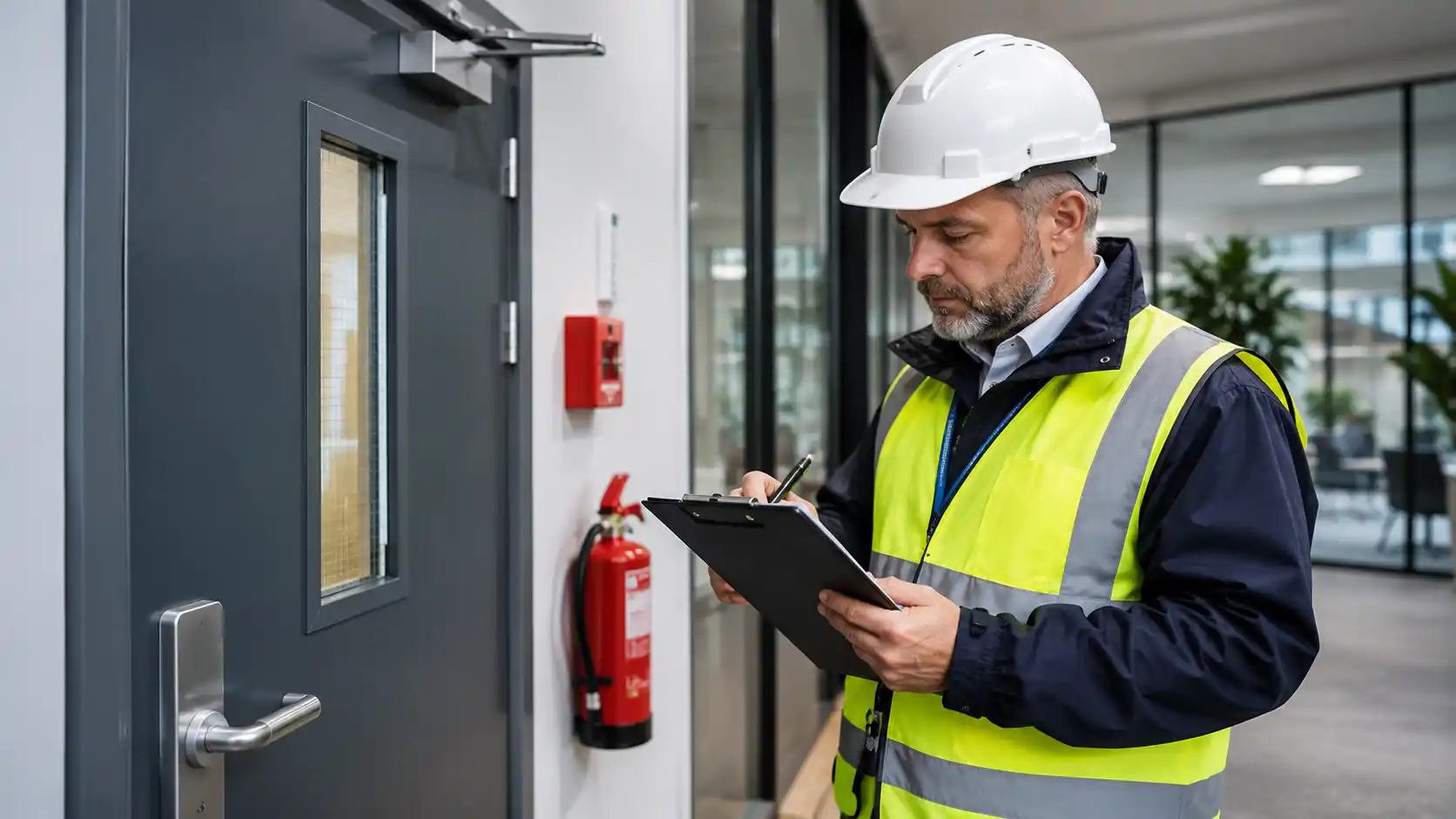
4. Reviewing Fire Risk Assessments and Previous Inspection Records
Historical records provide essential evidence when investigating recurring fire safety problems. Without an accurate record of previous findings, organisations may struggle to determine whether a defect is new, repeated or associated with an earlier unsuccessful repair.
The fire risk assessment should be considered alongside inspection reports, maintenance documentation, testing records, incident reports and previous corrective-action plans.
Examine the Current Fire Risk Assessment
Review the existing assessment to establish which hazards were identified, what precautions were considered necessary and how those precautions were expected to operate.
Compare the recorded arrangements with the actual conditions found during the latest investigation. Determine whether previous assumptions remain valid and whether changes in occupancy, equipment, activities or building layout have affected the effectiveness of existing precautions.
The GOV.UK fire risk assessment guidance explains the importance of identifying hazards, assessing people at risk, implementing precautions, recording findings and regularly reviewing the assessment.
Review Previous Inspection Reports
Inspection reports can help investigators establish how often defects have occurred and whether previous recommendations were implemented. Compare descriptions, photographs and inspection dates to identify similarities.
The review should examine whether inspectors consistently recorded the same problem, whether earlier findings were incorrectly classified as closed and whether subsequent inspections adequately checked the affected components.
Examine Maintenance and Testing Documentation
Maintenance records can reveal whether repairs were performed by competent personnel, whether replacement components were suitable and whether testing was completed after the work.
Examine service reports, work orders, fault logs, maintenance schedules and any recommendations made by contractors. Pay particular attention to recurring fault descriptions, postponed work and repairs that have been completed without supporting verification evidence.
Identify Missing or Inconsistent Information
Missing records can themselves represent a management weakness. Investigators should identify gaps such as undocumented temporary repairs, missing contractor reports, unclear completion dates and the absence of a named action owner.
A centralised defect register can improve visibility by connecting inspection findings with maintenance activities and follow-up verification. Digital systems can support this process, but accurate data and clear accountability remain essential.
5. Identifying Root Causes of Recurring Fire Safety Failures
Root cause analysis examines the underlying factors responsible for a problem rather than concentrating only on its immediate symptoms. In fire safety management, it helps organisations understand why defects continue to develop despite inspections, maintenance and previous corrective measures.
Differentiate Immediate Causes and Root Causes
An immediate cause is the direct condition or event associated with a defect. A root cause is a deeper technical, operational or organisational factor that contributes to the problem.
Consider a workplace where an emergency exit is repeatedly obstructed by stored materials. The immediate cause is the obstruction itself. However, the underlying cause may be inadequate storage capacity, ineffective supervision or a delivery procedure that regularly places materials near the exit.
Use the Five Whys Technique
The Five Whys technique provides a straightforward method for exploring the sequence of factors behind a recurring problem. Investigators repeatedly ask why an issue occurred until the underlying management or technical weaknesses become clearer.
Example: Repeated obstruction of a fire exit
- Why was the fire exit obstructed? Delivery materials were left in front of it.
- Why were materials left there? The designated storage area was full.
- Why was the storage area full? Stock deliveries were not coordinated with available capacity.
- Why was delivery coordination ineffective? No manager had responsibility for reviewing storage arrangements.
- Why was responsibility unclear? The organisation had not established an effective procedure for managing deliveries and escape routes.
The findings suggest that removing the materials alone would not provide a permanent solution. Corrective action should address storage capacity, delivery planning, supervision and inspection arrangements.
Apply Cause-and-Effect Analysis
A cause-and-effect diagram, sometimes called a fishbone diagram, can help investigators organise potential causes into categories. This approach is useful when several factors may contribute to a recurring defect.
Relevant categories include:
- People: Insufficient training, unclear duties, inadequate supervision or poor communication.
- Methods: Weak inspection procedures, unsuitable maintenance processes or ineffective reporting arrangements.
- Equipment: Damaged components, unsuitable replacement parts or recurring technical faults.
- Materials: Inappropriate repair products, incompatible components or unsuitable storage materials.
- Environment: Temperature, moisture, contamination, vibration or demanding operating conditions.
- Management: Insufficient resources, weak contractor controls or ineffective performance monitoring.
Examine Whether the Problem Is Isolated or Systemic
Investigators should determine whether the defect affects one location or reflects a wider weakness. If similar problems occur across several departments or buildings, the investigation should consider organisation-wide procedures and management arrangements.
For example, repeated defects involving fire-stopping around service penetrations may indicate inadequate control of refurbishment activities rather than unrelated maintenance mistakes. The investigation should therefore consider contractor supervision, building change management and inspection of completed works.
Specialist guidance on common building fire safety failures, including compartmentation and fire-resisting construction, is discussed in the Rimkus fire safety defects article .
6. Implementing Corrective Actions and Fire Prevention Measures
Once the underlying causes have been established, organisations should develop corrective actions that restore the affected safety measures and prevent similar problems from occurring again. Effective action should be specific, proportionate and supported by appropriate resources.
Prioritise Actions According to Risk
Not all fire safety defects have the same potential consequences. An investigation should consider the effect of the failure on people, escape arrangements, fire spread and the operation of essential protection systems.
Defects that compromise critical precautions may require urgent intervention. Lower-risk administrative or procedural issues can be managed through a planned action programme, provided suitable risk controls remain in place.
Establish Clear Corrective Action Responsibilities
Each corrective action should identify a responsible person or organisation. The assigned owner should have the authority, resources and competence needed to complete the work.
Actions should also include target dates, completion evidence and verification arrangements. Where several organisations share responsibility, communication and coordination should be documented.
Introduce Permanent Technical Repairs
Technical corrective actions should restore the required performance of the affected equipment or building component. Depending on the defect, this may involve replacing damaged fire door hardware, correcting alarm system faults, restoring emergency lighting functionality or repairing fire-resisting construction using suitable systems.
Specialist repairs should be undertaken by appropriately competent personnel. Improvised materials or unsuitable modifications should not be used as substitutes for technically appropriate solutions.
Improve Workplace Procedures and Employee Awareness
Where investigations identify behavioural or procedural causes, organisations should review workplace instructions, supervision and employee training.
Employees should understand how to report defects, why escape routes must remain clear, why fire doors should not be wedged open and how unsafe conditions can affect other building occupants.
Foundational learning can be supported through the ICTQual AB Level 1 Award in Fire Safety Awareness and the ICTQual AB Level 1 Award in Fire Safety Principles .
Strengthen Contractor and Maintenance Controls
Contractors should receive appropriate information about site-specific fire safety requirements before undertaking work. Organisations should establish arrangements for authorising activities, controlling temporary impairments and checking that fire precautions are properly reinstated after maintenance.
Work involving fire doors, alarms, smoke control, emergency lighting or compartmentation should receive appropriate technical attention and verification.
Update the Fire Risk Assessment Where Necessary
An investigation may reveal that existing fire risk assessment findings are incomplete or that circumstances have changed. Where the assessment is no longer valid or significant changes affect fire safety, the responsible person should review and, where necessary, revise it.
Article 9 of the Regulatory Reform (Fire Safety) Order 2005 sets out the risk assessment and review requirements in England and Wales. The legislation can be consulted here .
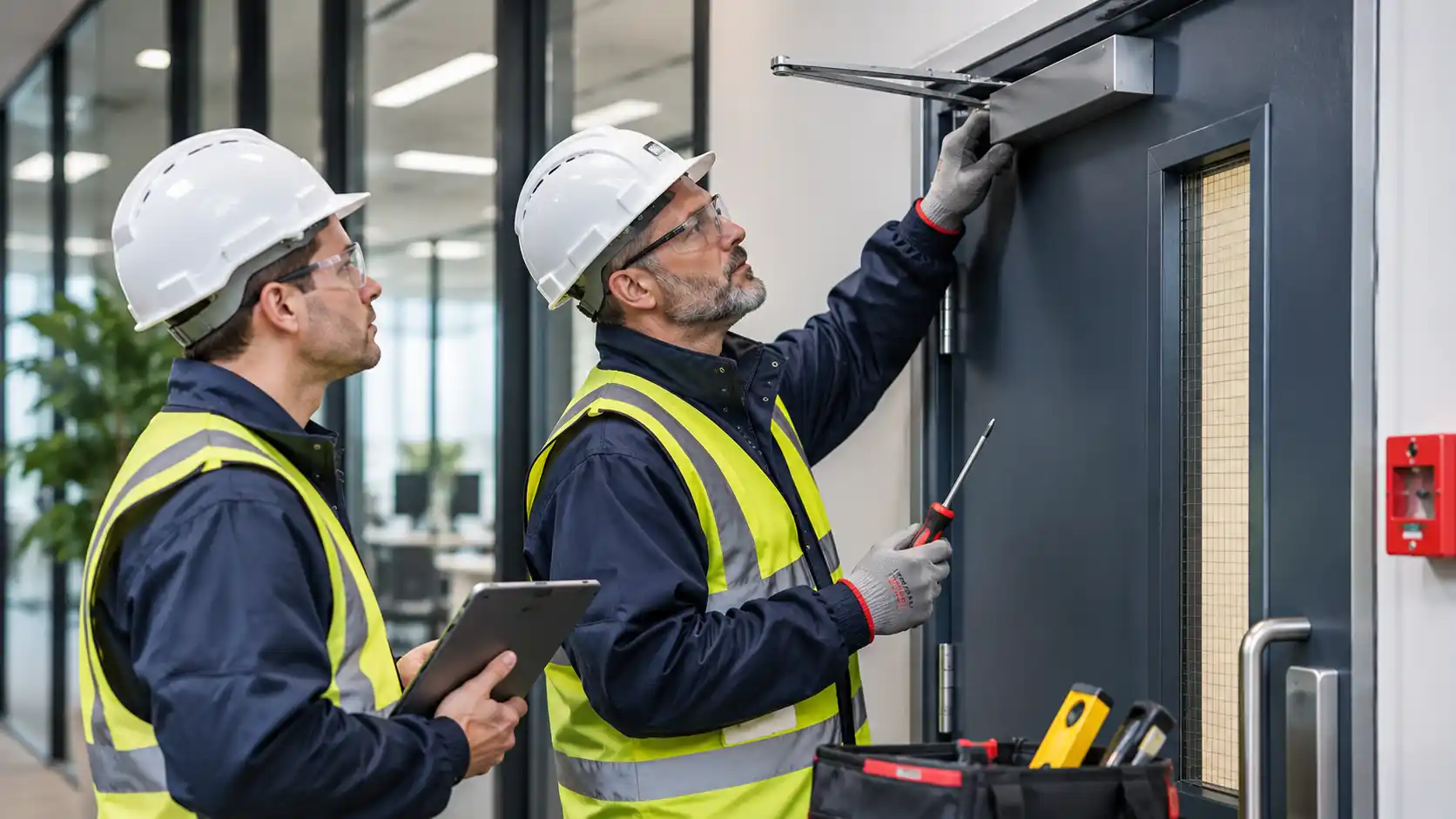
7. Investigate Repeated Fire Safety Defects Checklist
A structured checklist helps fire safety managers maintain consistency when investigating recurring problems. It provides a practical reference for recording evidence, evaluating previous actions and confirming whether the underlying causes have been addressed.
Defect Identification
- Confirm the exact nature and location of the defect.
- Identify the affected equipment, component or safety arrangement.
- Check previous inspection reports for similar findings.
- Record photographs and supporting observations.
- Establish how frequently the defect has occurred.
Immediate Risk Assessment
- Evaluate the potential consequences of the defect.
- Determine whether people or essential safety measures are affected.
- Introduce suitable immediate precautions where necessary.
- Identify whether specialist assistance is required.
- Notify the appropriate responsible person.
Investigation and Root Cause Analysis
- Review historical inspection and maintenance records.
- Compare previous repairs with the current defect.
- Inspect the affected area and related systems.
- Consult relevant employees and contractors.
- Identify technical, procedural and management-related causes.
- Determine whether the issue is isolated or systemic.
Corrective Action and Verification
- Define appropriate corrective and preventive measures.
- Assign a named action owner.
- Establish a target completion date.
- Arrange competent repairs or specialist assessment.
- Record completed work and supporting evidence.
- Verify that the affected safety measure operates effectively.
- Review whether the fire risk assessment requires updating.
Monitoring and Close-Out
- Update the central defect register.
- Communicate findings to relevant personnel.
- Schedule appropriate follow-up inspections.
- Monitor whether the defect returns.
- Escalate overdue or ineffective corrective actions.
- Record the final investigation outcome.
Recommended Defect Investigation Record
Organisations can use a standard investigation record to ensure that important information is not overlooked. The following table illustrates the recommended information.
| Record field | Information to document |
|---|---|
| Defect reference | Unique identification number for tracking. |
| Location and asset | Building, floor, room and equipment reference. |
| Previous occurrences | Dates, descriptions and historical inspection references. |
| Immediate risk | Potential effect on fire prevention, protection and evacuation. |
| Investigation findings | Physical observations, records and supporting evidence. |
| Root cause | Identified technical, procedural or management-related causes. |
| Corrective action | Permanent repair or management improvement required. |
| Action owner | Named individual or responsible organisation. |
| Target date | Agreed completion deadline and interim review dates. |
| Verification | Inspection, test results or other evidence of effectiveness. |
| Close-out status | Outstanding, in progress, completed or verified. |
8. Monitoring Improvements and Preventing Future Fire Safety Defects
Effective fire safety management continues after corrective work has been completed. Organisations need to monitor whether the implemented measures remain effective and whether similar defects develop in other areas.
Establish a Recurring Defect Monitoring Programme
Maintain a central record of repeated findings and review it periodically. The monitoring process should identify open actions, overdue repairs, recurring equipment faults and locations where similar deficiencies have been identified.
Reviewing these records can help management identify departments, contractors or systems that require additional attention.
Use Follow-Up Inspections
Follow-up inspections provide an opportunity to confirm that corrective measures remain effective under normal operating conditions. The timing and scope should reflect the nature of the defect, the potential consequences and any technical recommendations.
For example, a fire door repair should be checked to establish that the door operates as intended and that relevant components remain in suitable condition. Alarm system repairs should receive appropriate testing and documentation by competent personnel.
Monitor Performance Indicators
Organisations can use carefully selected performance indicators to evaluate their fire safety management arrangements. These indicators should support investigation and improvement rather than encourage staff to close maintenance tasks without proper verification.
Useful indicators may include:
- Number of repeated defects identified during inspections.
- Percentage of corrective actions completed within agreed timescales.
- Number of overdue high-priority fire safety actions.
- Frequency of recurring equipment faults.
- Number of defects reopened after attempted repairs.
- Completion of planned inspections and maintenance activities.
- Results of follow-up inspections and verification checks.
Improve Communication and Reporting Arrangements
Employees, contractors and building occupants should understand how to report fire safety defects. Reports should reach the appropriate person quickly and contain enough information to support investigation.
In multi-occupied buildings, communication between responsible persons is particularly important because a defect in shared areas or building systems may affect several organisations.
Strengthen Competence and Continuous Improvement
Employees responsible for inspections, maintenance coordination and fire safety management should receive training appropriate to their duties. Specialist tasks should be allocated to people with suitable knowledge, experience and technical competence.
Organisations seeking more advanced professional knowledge can explore the ICTQual AB Level 3 Certificate in Advanced Fire Safety . Individuals interested in firefighting principles and emergency response knowledge can also review the ICTQual Level 3 Award in Firefighter .
These learning programmes support knowledge development but should not be treated as automatic authorisation to undertake specialist fire safety inspections or operational firefighting duties.
Use Inspection Findings to Improve Organisational Systems
Repeated defects should inform wider management decisions. If an investigation identifies weaknesses in procurement, contractor management, building alterations or maintenance planning, the organisation should consider whether similar weaknesses exist elsewhere.
The purpose is not simply to reduce the number of inspection findings. It is to improve the reliability of fire safety precautions and demonstrate that identified problems lead to meaningful organisational improvement.

9. When to Escalate Repeated Fire Safety Issues
Some repeated fire safety defects require management escalation because they remain unresolved, affect important protective measures or indicate that existing arrangements are inadequate. Escalation ensures that significant problems receive appropriate attention and resources.
When a Critical Fire Safety Measure Is Compromised
Escalation should be considered when a recurring defect affects a fire alarm, escape route, emergency lighting, fire door, smoke control arrangement or other important protective measure.
The responsible person should assess the immediate circumstances, introduce suitable precautions and obtain competent assistance where necessary. Where a serious risk cannot be adequately controlled, the affected activity or area may need to be restricted until appropriate arrangements are established.
When Corrective Actions Remain Overdue
Repeated delays may indicate insufficient resources, unclear responsibilities, contractor performance problems or weak management oversight. Significant overdue actions should be referred to the appropriate management level.
When the Same Defect Continues After Multiple Repairs
If previous repairs have not prevented recurrence, organisations should reconsider the investigation rather than simply authorising another identical maintenance request.
Further specialist assessment may be necessary to establish whether the repair method, equipment specification, installation or wider system design is contributing to the failure.
When Responsibilities Are Disputed
In buildings involving multiple responsible persons, defects can remain unresolved when organisations disagree about their respective responsibilities. The parties should establish the relevant areas of control, exchange necessary information and coordinate suitable action.
Where legal duties or contractual responsibilities are unclear, appropriate professional or legal advice may be required.
When External Advice or Regulatory Attention Is Required
Depending on the circumstances, organisations may need advice from competent fire safety professionals, specialist contractors or relevant enforcement authorities.
The appropriate response depends on the nature of the premises, the defect, the applicable legislation and the level of risk. An organisation should not assume that reporting a problem to an external party transfers its existing responsibilities.
Escalation and Decision-Making Framework
| Situation | Recommended response |
|---|---|
| Immediate threat to an essential fire safety measure | Introduce suitable immediate controls and arrange urgent competent intervention. |
| Repeated defect after previous repairs | Reopen the investigation and conduct further root cause analysis. |
| Overdue corrective actions | Refer the issue to management and agree resources and deadlines. |
| Unclear shared responsibilities | Coordinate with relevant responsible persons and clarify areas of control. |
| Specialist technical failure | Obtain appropriate technical inspection and competent professional advice. |
| Potential legal or regulatory non-compliance | Seek appropriate professional advice and consider relevant regulatory requirements. |
10. Frequently Asked Questions
What are repeated fire safety defects?
Repeated fire safety defects are problems involving fire prevention, detection, protection or emergency arrangements that continue to appear after being previously identified or addressed. Examples include defective fire doors, obstructed escape routes, recurring alarm faults and repeated compartmentation failures. They may indicate weaknesses in maintenance, supervision, technical arrangements or organisational fire safety management.
How do organisations investigate repeated fire safety defects?
Organisations should confirm the defect, assess the immediate risk, examine previous inspection and maintenance records, inspect the affected area and consult relevant employees or contractors. The investigation should identify the underlying cause, establish corrective actions and verify that the completed work has restored the required fire safety function.
What is root cause analysis in fire safety?
Root cause analysis is a systematic method of identifying the underlying reasons why a fire safety problem occurs. It examines technical, operational and management-related factors rather than concentrating only on the visible defect. Techniques such as the Five Whys and cause-and-effect analysis can help investigators identify suitable corrective measures.
Why do the same fire safety defects keep returning?
Recurring defects may result from inadequate maintenance, unsuitable repair methods, unclear responsibilities, insufficient training, poor contractor supervision or ineffective inspection procedures. They can also develop when building alterations or operational changes are not properly assessed. Investigating the history of previous failures helps establish which factors contribute to recurrence.
Which records should be reviewed during a fire safety defect investigation?
Relevant records include fire risk assessments, inspection reports, maintenance work orders, equipment testing records, contractor reports, photographs, incident records and previous corrective-action plans. These documents help establish when the defect occurred, what action was taken and whether previous repairs were properly verified.
Who is responsible for resolving repeated fire safety defects?
Responsibility depends on the premises, the level of control and the applicable legal duties. Employers, owners, landlords, occupiers and building managers may have relevant responsibilities. In England and Wales, multiple responsible persons sharing premises must cooperate and coordinate their fire safety measures where the Fire Safety Order applies.
Should a fire risk assessment be updated after repeated defects?
A review should consider whether the existing fire risk assessment remains suitable and whether the recurring failure indicates that its findings or precautions are inadequate. Where the assessment is no longer valid or relevant circumstances have changed significantly, it should be reviewed and revised where necessary.
How can workplaces prevent recurring fire safety problems?
Workplaces can reduce recurring defects through effective maintenance, consistent inspections, competent repairs, employee awareness, clear reporting procedures and accountable corrective-action management. Follow-up inspections and performance monitoring are also important because they help establish whether improvements remain effective over time.
When should repeated fire safety defects be escalated?
Escalation should be considered when a defect affects an important fire safety measure, remains unresolved after previous repairs, creates an unacceptable risk, involves overdue corrective actions or reveals unclear responsibilities. Appropriate management, competent professional or regulatory assistance should be sought according to the circumstances.
Conclusion
Repeated fire safety defects should be treated as important indicators of potential weaknesses in workplace fire prevention and protection arrangements. When the same problems continue to appear, organisations need to look beyond the visible fault and establish why previous corrective measures have not prevented recurrence.
A systematic investigation involves confirming the defect, assessing immediate risks, reviewing historical records, examining affected equipment and workplace activities, identifying root causes and implementing appropriate corrective actions. Verification and follow-up monitoring are essential to establish whether the improvements are effective.
Strong fire safety management also depends on clear responsibilities, competent maintenance, employee awareness, reliable documentation and effective communication between relevant parties. By treating repeated defects as opportunities to identify and correct wider management weaknesses, organisations can improve the reliability of their fire safety arrangements and support a safer working environment.
For further guidance, explore our complete guide to fire safety and our article comparing fire risk assessment courses .
Develop Professional Fire Safety Knowledge
Developing a strong understanding of fire prevention, risk assessment and fire safety management can support more effective workplace safety practices. Explore relevant fire safety learning programmes to strengthen knowledge of hazard identification, risk control, inspections and emergency arrangements.
Explore Advanced Fire SafetyReferences and Further Reading
The following authoritative and specialist resources provide additional information about UK fire safety responsibilities, risk assessment, inspection and maintenance.
- GOV.UK – Fire Safety Risk Assessment: 5-Step Checklist
- GOV.UK – Fire Risk Assessments
- Regulatory Reform (Fire Safety) Order 2005 – Article 9
- Regulatory Reform (Fire Safety) Order 2005 – Article 17
- Regulatory Reform (Fire Safety) Order 2005 – Article 22
- GOV.UK – Fire Safety Risk Assessment: Offices and Shops
- LRMS – Common Issues Found in a Fire Risk Assessment
- Jersey Fire and Rescue Service – Testing and Maintenance
Editorial note: This article provides general fire safety management information and should not be treated as a substitute for a suitable and sufficient fire risk assessment, specialist technical inspection or professional legal advice. Requirements vary between UK jurisdictions and according to the premises and circumstances.