
Fire Watcher Duties During Hot Work: Safety Controls and Checklist
Discover the essential fire watcher duties during hot work, including fire prevention, hazard identification, permit-to-work procedures, emergency response and post-work monitoring. Explore a practical hot work fire watch checklist for safer workplace operations.

Hot work activities are essential across construction, manufacturing, engineering, maintenance and industrial operations. However, tasks involving welding, flame cutting, grinding, brazing and other spark-producing processes can introduce serious fire hazards into otherwise controlled working environments. A single spark can ignite combustible materials, enter concealed spaces or cause a fire that develops after the work has finished.
This is why fire watcher duties are an important part of effective hot work safety management. A fire watcher is responsible for observing exposed areas, identifying early signs of ignition, maintaining communication with the hot work team and taking appropriate action when unsafe conditions develop. Their responsibilities extend beyond simply standing near a worker with a fire extinguisher.
Effective fire watching starts before the first spark is produced. It involves understanding the work area, checking surrounding combustible materials, confirming that appropriate protective measures are in place and ensuring that the required emergency arrangements are understood. Monitoring must continue throughout the operation and for the period specified by the site’s risk assessment and hot work procedure after the work stops.
In the UK, employers and responsible persons must consider workplace fire risks and implement appropriate precautions. The Regulatory Reform (Fire Safety) Order 2005 establishes important duties concerning fire risk assessment and general fire precautions in applicable premises.
Quick answer: What are the main fire watcher duties?
A fire watcher monitors hot work areas for sparks, heat, smoke and developing fires; checks surrounding spaces; ensures suitable firefighting equipment and communication arrangements are available; stops work when unsafe conditions arise; raises the alarm when necessary; and completes the required post-work monitoring and reporting.
What Is a Fire Watcher?
A fire watcher is a person assigned to monitor an area where hot work activities may create a risk of fire. Their primary responsibility is to identify ignition hazards, observe exposed areas and respond appropriately if sparks, molten materials, flames or excessive heat create a fire risk.
A fire watcher plays an important role in workplace fire prevention because the person carrying out welding, cutting or grinding may be concentrating on the technical operation. They may not be able to observe every surrounding location where sparks or heat could travel. A separate fire watcher provides dedicated observation where the risk assessment or work procedure requires it.
The role is especially important in environments where hot work takes place near combustible materials, structural openings, insulation, cable routes, storage areas or occupied sections of a building.
Primary Responsibilities of a Fire Watcher
| Responsibility | What It Involves |
|---|---|
| Fire hazard identification | Recognising combustible materials, ignition sources and exposed areas. |
| Area monitoring | Observing the hot work location and surrounding spaces. |
| Fire prevention | Checking that fire blankets, shields and other controls remain effective. |
| Communication | Maintaining contact with the hot work operator and supervisor. |
| Emergency action | Raising the alarm and taking appropriate action within training and capability. |
| Post-work monitoring | Checking for residual heat, smoke and smouldering materials. |
| Documentation | Recording observations, incidents and completion of required checks. |
Who Can Perform Fire Watch Duties?
A person assigned to fire watch should have appropriate knowledge, instruction and training for the hazards associated with the specific hot work activity. They should understand how to identify early signs of fire, use the equipment provided within their training and follow the workplace emergency arrangements.
The employer or site management should ensure that the assigned person is capable of maintaining effective observation and has sufficient authority to report unsafe conditions and stop the work in accordance with site procedures.
Fire watching should not be treated as an informal responsibility given to an unprepared worker. Where effective monitoring requires continuous attention, unrelated tasks must not interfere with that responsibility. For example, OSHA’s shipyard fire-watch standard explicitly prohibits assigning other duties during active fire-watch operations. This is a useful international operational benchmark, although it is not itself UK legislation.
Personnel seeking structured knowledge can explore the ICTQual Level 1 Award in Naked Flame, Hot Work and Fire Watcher or the ICTQual Level 2 Award in Naked Flame, Hot Work and Fire Watcher as introductory learning options.
Understanding Hot Work Hazards
Hot work refers to activities that generate heat, sparks, flames or other ignition sources capable of starting a fire. These activities are commonly associated with engineering, fabrication, construction, industrial maintenance and equipment repair.
The fire risk does not depend solely on the temperature of the equipment or the size of the visible flame. It also depends on the materials surrounding the work, the structure of the building, ventilation, the presence of flammable substances and the possibility that hot particles will travel into concealed spaces.
Common Hot Work Activities
- Welding: Electric arc and other welding processes can generate sparks, molten metal and significant heat.
- Flame cutting: Gas cutting equipment produces intense heat and hot metal particles.
- Grinding: Abrasive grinding can release sparks that travel towards nearby combustible materials.
- Brazing and soldering: These processes use heat that may ignite surrounding materials.
- Thermal cutting: Plasma cutting and similar operations can generate hot particles and ignition sources.
- Bitumen heating: Certain roofing and construction operations involve naked flames or heated materials.
Fire Hazards That a Fire Watcher Must Recognise
Combustible Materials
Paper, cardboard, wood, textiles, packaging, insulation, plastics, dust and flammable liquids can contribute to fire development. These materials should be removed from the exposed area wherever reasonably practicable. Materials that cannot be removed must receive suitable protection based on the risk assessment.
Flying Sparks and Molten Metal
Sparks and hot metal particles may travel away from the immediate work position. They can pass through gaps, fall through floor openings or enter areas behind protective barriers. Fire watchers must consider the likely direction of travel rather than looking only at the welding or cutting equipment.
Hidden and Concealed Spaces
Heat can transfer through metal structures and ignite combustible materials on the opposite side of a wall, floor or partition. Sparks may also enter insulation, ceiling voids, cable routes and service penetrations.
Flammable Gases and Liquids
Hot work near gas cylinders, fuel lines, chemical storage, tanks or equipment that previously contained flammable substances requires careful assessment. Never assume that an apparently empty container is safe to heat. Tanks, drums and pipework containing or previously containing flammable substances require specialist preparation and suitable safe systems of work.
Changing Workplace Conditions
Conditions can change during a job. Other contractors may bring combustible materials into the area, ventilation systems may change, protective screens may become displaced, or a previously isolated section may become accessible. A fire watcher must recognise these changes and report them immediately.

Why is monitoring beyond the work area important?
Sparks, heat and molten metal can travel through openings or transfer through structural materials. Monitoring only the welder’s immediate position may leave other exposed areas unprotected.
For a broader understanding of workplace ignition sources, combustible materials and fire prevention, read the related workplace fire hazards guide .
Fire Watcher Duties Before Hot Work Starts
Effective fire prevention begins before welding, cutting or grinding equipment is switched on. The fire watcher should participate in the required pre-work checks and understand the precautions established by the risk assessment, method statement and hot work permit.
The purpose of these checks is to ensure that the working environment is suitable, the fire hazards have been evaluated and the emergency arrangements are ready before the operation begins.
Inspect the Work Area
The fire watcher should inspect the immediate work location and surrounding spaces that may be exposed to sparks, heat or molten material. The inspection should include adjacent rooms, floors above and below, the opposite side of walls, ceiling voids and accessible service openings where relevant.
Particular attention should be given to areas that cannot be seen directly from the hot work position. If the fire watcher cannot observe all exposed areas, additional personnel or protective arrangements may be necessary.
Remove or Protect Combustible Materials
Movable combustible materials should be removed from the work area wherever reasonably practicable. This includes packaging, waste, timber, textiles, flammable liquids and other materials that could be ignited by sparks or heat.
Where removal is not reasonably practicable, suitable non-combustible or fire-resistant barriers and protective covers should be used. Openings through which sparks could travel must also be addressed.
Check Firefighting Equipment
Appropriate firefighting equipment must be available according to the identified risks and workplace arrangements. The fire watcher should know its location, understand which equipment is suitable for the potential fire and have received appropriate instruction in its use.
Equipment should be accessible, serviceable and positioned so that it can be reached without entering an unsafe area. The correct selection depends on the materials and hazards involved. Water, for example, is not suitable for every fire type, including certain electrical and flammable-liquid fires.
Confirm Communication and Emergency Arrangements
Before work starts, the fire watcher should know who is performing the work, who is supervising it and who is authorising the permit. The agreed communication method must work effectively in the actual working environment.
The fire watcher should also understand how to raise the alarm, contact the responsible supervisor, activate emergency arrangements and guide people towards appropriate escape routes.

Pre-Work Fire Watch Checklist
Before Hot Work Begins
- Understand the proposed hot work activity and its location.
- Review the relevant risk assessment and hot work permit.
- Identify combustible materials and possible ignition hazards.
- Inspect adjacent areas, openings and concealed spaces.
- Remove combustible materials wherever practicable.
- Confirm that remaining combustibles are adequately protected.
- Check that suitable firefighting equipment is available.
- Confirm that communication arrangements are operational.
- Understand how to activate the workplace alarm.
- Confirm emergency exits and escape routes remain accessible.
- Understand the fire watch position and monitoring boundaries.
- Confirm that required personnel are present and authorised.
If any critical precaution is missing, the fire watcher should raise the issue with the supervisor or permit issuer. Hot work should not commence until the identified deficiencies have been addressed and the required authorisation is in place.
Fire Watcher Duties During Hot Work
Once the operation begins, the fire watcher must maintain effective observation of the areas exposed to the hot work. The responsibility is active and continuous where required by the work procedure. It is not enough to complete a pre-work inspection and then assume that the area will remain safe.
Maintain Continuous Observation
The fire watcher should remain in a suitable position to observe the hot work operation and the surrounding exposed areas. They must watch for falling sparks, hot slag, smoke, flames, unusual heat and changes in the effectiveness of protective barriers.
The observation position should provide an appropriate view without exposing the fire watcher to unnecessary hazards. If one person cannot safely monitor all affected locations, the work arrangements should provide additional fire-watch coverage.
Monitor Sparks, Heat and Smouldering Materials
Sparks may enter small gaps and remain embedded in combustible materials. Some materials may begin to smoulder without immediately producing visible flames. The fire watcher should therefore pay attention to smoke, glowing particles, unusual smells, discolouration and other indications of developing ignition.
Monitoring should also consider the possibility of heat transfer through metal surfaces and structural components. A fire may develop on the opposite side of a partition without being visible to the person carrying out the hot work.
Maintain Communication With the Hot Work Operator
Effective communication allows the fire watcher to report unsafe conditions immediately. If sparks are escaping, a fire blanket moves out of position or combustible materials become exposed, the operator should be informed and the operation stopped where necessary.
Communication arrangements may involve direct verbal contact, radio communication or another approved method suitable for the workplace.
Stop Work When Conditions Become Unsafe
The fire watcher should have clearly defined authority under the workplace procedure to request or initiate a stop when unsafe conditions arise. Work should not continue simply because a permit has already been issued.
Examples of conditions requiring intervention include unexpected smoke, ignition of nearby materials, damaged fire-resistant barriers, loss of communication, unavailable firefighting equipment or a change in the surrounding environment that invalidates the existing precautions.
Remain Alert During Work Breaks
Fire-watch responsibilities do not automatically end when the welder takes a break. Hot materials may remain capable of igniting combustible materials even when the equipment is temporarily switched off.
The required monitoring arrangements should remain in place during breaks, shift changes and temporary interruptions in the work. Any handover must ensure that another suitable person accepts responsibility before the original watcher leaves the area.
Do Not Perform Distracting Unrelated Tasks
A fire watcher should not undertake activities that prevent effective observation. Administrative work, equipment handling, unrelated maintenance or duties requiring the person to leave the monitoring area can compromise fire prevention.
The number of fire watchers should be based on the size, layout and complexity of the exposed area rather than an arbitrary ratio. Additional personnel may be required where multiple levels, rooms or concealed areas cannot be monitored effectively by one individual.
Record Important Observations
Site procedures may require the fire watcher to record inspection times, work interruptions, hazards, corrective actions, communication with supervisors and monitoring completion. Accurate records help demonstrate that required precautions were implemented.
Develop essential workplace fire safety skills with the ICTQual Level 3 Award in Fire Watcher, covering hot work monitoring, fire prevention and emergency response procedures.
Key principle during hot work
A fire watcher must monitor the full area exposed to sparks and heat, maintain communication and respond immediately when conditions change. Their responsibility is to prevent a developing fire from becoming a serious workplace incident.
Fire Watcher Duties After Hot Work: Post-Work Monitoring
Completing the welding, cutting or grinding operation does not mean that the fire risk has disappeared. Hot metal, residual heat, concealed sparks and smouldering materials may remain capable of causing ignition after workers have stopped using the equipment.
Post-work fire monitoring is therefore a critical part of the hot work control process. The fire watcher must continue monitoring for the period specified by the relevant risk assessment, permit and site procedure.
Inspect the Hot Work Area
The inspection should include the immediate work location, surrounding combustible materials and all areas exposed to sparks or heat. Particular attention should be given to floor openings, ceiling spaces, wall penetrations, insulation and areas behind metal structures.
Look for Signs of Delayed Ignition
The fire watcher should remain alert for smoke, glowing particles, unusual heat, burning smells, discoloured surfaces and signs of smouldering. Where appropriate and authorised, suitable thermal monitoring equipment may support the inspection.
Understand the UK Post-Work Monitoring Guidance
The appropriate monitoring period depends on the work, environment and fire risk. Different HSE guidance addresses different circumstances:
- HSE welding guidance: Where hot work cannot be performed in a safe area or combustible materials cannot be removed, it describes maintaining a fire watch during and after the work for at least 30 minutes. This may need to increase to 60 minutes when unintended ignition is difficult to detect or slow to develop.
- HSE HSG168 construction guidance: Recommends continuous fire watching for at least one hour after hot work, followed by at least one additional check two hours after the work ends.
The construction guidance also emphasises that some materials may smoulder for a significant period before ignition. It recommends completing hot work two hours before the end of the working day to allow appropriate fire checks to take place.
Post-Work Fire Monitoring Checklist
After Hot Work Has Finished
- Confirm that the hot work operation has stopped.
- Record the time when the work was completed.
- Continue the required fire watch period.
- Inspect the immediate hot work location.
- Check areas above, below and behind the work position.
- Inspect accessible openings and concealed spaces.
- Look for smoke, sparks, residual heat and smouldering.
- Check that fire-resistant barriers remain effective.
- Report and escalate any signs of fire immediately.
- Complete any additional inspections required by the permit.
- Record the final monitoring and inspection details.
- Obtain authorised approval before permit close-out.
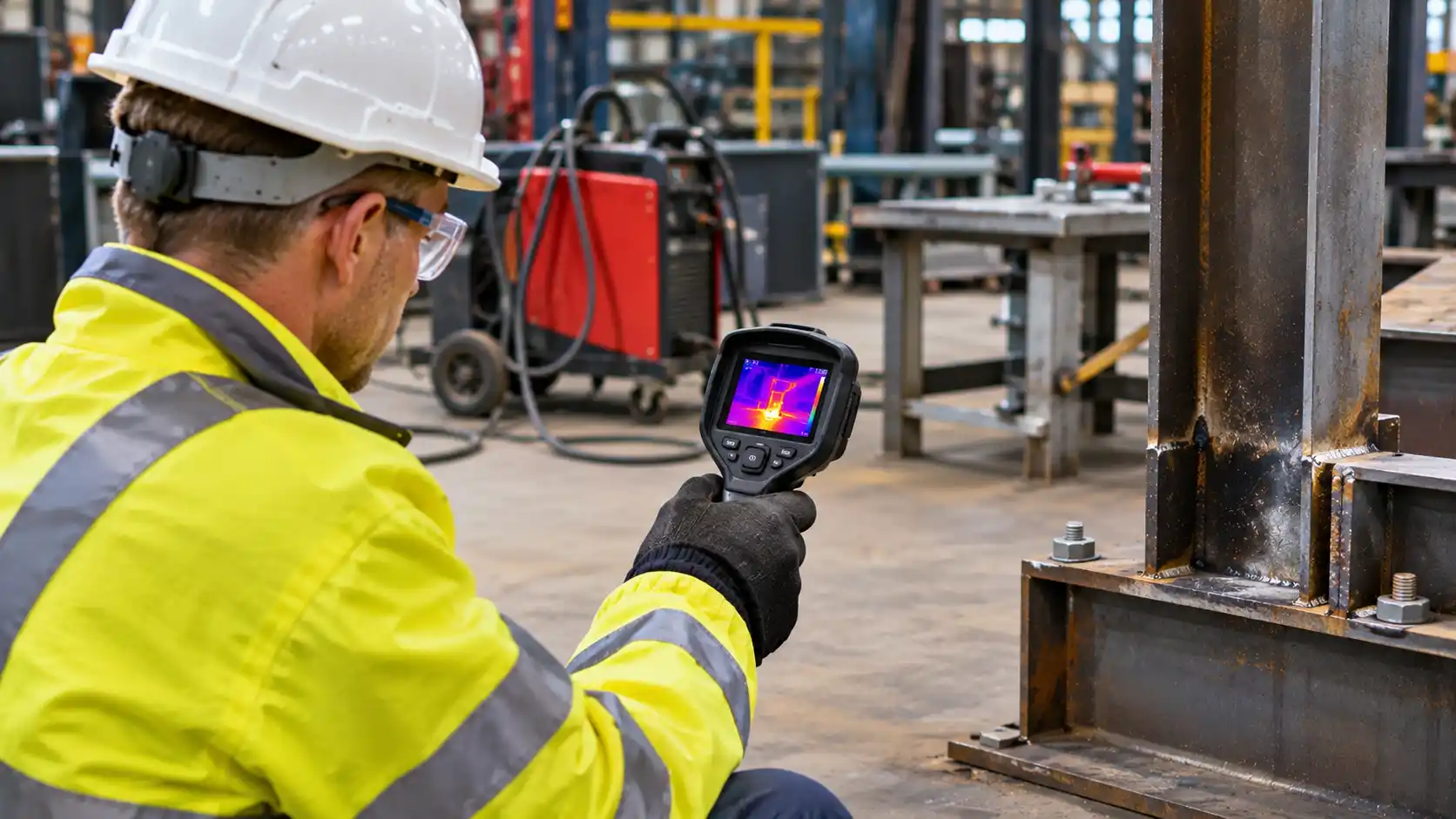
Document the Final Inspection
Once the required monitoring and inspections are complete, the fire watcher should record the results in the appropriate site documentation. This may include the permit number, work location, completion time, inspection times, observations and any corrective action.
The permit should only be closed by the authorised person in accordance with the site’s procedure. The fire watcher should not independently release the area unless that authority has been formally assigned.
Permit-to-Work and Fire Watcher Responsibilities
A hot work permit-to-work system is a formal method of controlling activities that introduce significant ignition risks into a workplace. It helps management ensure that the proposed work has been assessed, the necessary precautions have been established and the relevant personnel understand their responsibilities.
A permit is not simply permission to weld or cut. It is an operational control document that identifies the specific work, location, time period, hazards, required precautions and emergency arrangements.
HSE guidance in HSG168 recommends formal management arrangements, including permit-to-work systems where hot work cannot be avoided and the risks require such controls.
What Information Should a Hot Work Permit Include?
| Permit Information | Purpose |
|---|---|
| Work description | Identifies the welding, cutting, grinding or other activity. |
| Work location | Defines the exact area where hot work is authorised. |
| Validity period | Establishes when the permit starts and expires. |
| Risk assessment | Identifies fire hazards and necessary control measures. |
| Fire-watch details | Identifies the responsible personnel and monitoring arrangements. |
| Protective measures | Records the removal of combustibles and installation of shields. |
| Emergency arrangements | Explains how alarms and emergency responses will be initiated. |
| Post-work monitoring | Defines the inspection requirements and monitoring period. |
| Permit close-out | Records final checks and authorised completion. |
Responsibilities of Different Personnel
Permit Issuer
The permit issuer reviews the proposed work, confirms that suitable precautions have been identified and authorises the activity in accordance with site procedures. They should ensure that the permit defines the work location, validity period and necessary monitoring arrangements.
Hot Work Operator
The operator performs the authorised activity, follows the permit conditions, uses equipment correctly and communicates with the fire watcher. They should stop when required precautions are no longer effective.
Fire Watcher
The fire watcher observes the exposed area, identifies fire hazards, maintains communication, raises concerns and carries out the required monitoring and reporting.
Site Supervisor
The supervisor coordinates the work, ensures that responsible personnel understand their duties and checks that required precautions are maintained. They also support corrective action and permit close-out.
When Should a Hot Work Permit Be Reviewed?
The permit should be reviewed whenever conditions change in a way that may affect the safety of the operation. This may include a change in location, work scope, personnel, environmental conditions, combustible materials or monitoring arrangements.
A permit should not be treated as blanket authorisation for unrestricted hot work across multiple locations. Its scope and validity should be clearly defined.
Emergency Response: What Should a Fire Watcher Do if a Fire Starts?
A fire watcher must understand how to respond when smoke, sparks or flames indicate that a fire has developed. The appropriate response depends on the size and nature of the fire, the available equipment, the person’s training and the workplace emergency procedure.
Recognise the Early Warning Signs
Potential warning signs include smoke, unusual heat, glowing materials, flames, burning smells and unexpected discolouration. The fire watcher should never ignore these indications or assume that a small developing fire will extinguish itself.
Stop the Hot Work
Where it is safe and appropriate, the hot work operation should be stopped and the ignition source isolated according to the emergency procedure. The fire watcher should communicate the hazard immediately.
Raise the Alarm and Protect People
If a fire develops, the workplace emergency arrangements must be activated. The fire watcher should raise the alarm, alert the supervisor and support evacuation where required.
Use Firefighting Equipment Only Within Training
A fire watcher may attempt to tackle a small fire only when it is safe to do so, the equipment is appropriate, and the action is within their training and capability. They must not place themselves or others at unnecessary risk.
If the fire is spreading, producing significant smoke, threatening escape routes or exceeding the capability of the available equipment, the priority is to raise the alarm, evacuate and allow the emergency services to respond.
Report the Incident
Following the emergency, relevant observations and incident details should be recorded under the workplace reporting procedure. This information can support investigations, corrective action and improvements to the hot work safety system.
Complete Hot Work Fire Watch Checklist
A structured fire watch checklist helps supervisors, contractors and fire watchers verify that essential precautions have been considered at each stage of the operation. The following checklist can be adapted for workplace procedures, subject to the specific risk assessment and permit requirements.
Stage 1: Before Hot Work
- Hot work activity and location clearly identified.
- Risk assessment reviewed.
- Permit issued and authorised where required.
- Combustible materials identified and controlled.
- Adjacent and concealed areas inspected.
- Fire blankets, shields and barriers correctly positioned.
- Suitable firefighting equipment available.
- Emergency alarm arrangements confirmed.
- Fire watcher trained and briefed.
- Communication arrangements tested.
Stage 2: During Hot Work
- Fire watcher maintains effective observation.
- Sparks and hot particles monitored.
- Adjacent areas checked where exposed.
- Fire-resistant protection remains effective.
- Communication maintained with the operator.
- Changes in working conditions reported.
- Work stopped if safety controls become ineffective.
- Fire watch maintained during required breaks.
- Observations and incidents recorded as required.
Stage 3: After Hot Work
- Work completion time recorded.
- Required post-work monitoring started.
- Immediate work area inspected.
- Areas above, below and behind the work inspected.
- Concealed spaces checked where accessible and relevant.
- Residual heat and smouldering investigated.
- Additional inspections completed where required.
- Monitoring results documented.
- Final inspection completed by the responsible person.
- Permit closed by an authorised individual.
This checklist is a practical starting point rather than a substitute for a site-specific risk assessment. Organisations should add any additional controls required for their activities, equipment, structures and working environments.
Common Fire Watch Mistakes to Avoid
Even when organisations have established hot work procedures, weaknesses in implementation can reduce the effectiveness of fire prevention. Common mistakes often occur when workers become familiar with routine tasks or assume that a previous inspection guarantees that conditions remain safe.
Monitoring Only the Welder
Watching the welding equipment without considering surrounding areas can leave concealed ignition hazards undetected. The fire watcher must consider all locations exposed to sparks and heat.
Ignoring Combustible Materials
Leaving packaging, dust, oily deposits or other combustible materials near the work area can increase the possibility of ignition. These materials should be removed or suitably protected before work begins.
Using Inadequate Fire Barriers
Incorrectly positioned, damaged or unsuitable protective covers may allow sparks to escape. Fire watchers should check that protective measures remain effective throughout the operation.
Allowing Other Tasks to Distract the Fire Watcher
Assigning unrelated work can reduce observation quality. Dedicated monitoring arrangements should be maintained wherever required by the site’s risk controls.
Ending the Fire Watch Too Early
Stopping monitoring immediately after welding or cutting ends can allow delayed ignition to go undetected. The monitoring period must follow the relevant risk assessment and procedure.
Closing Permits Without Final Inspection
A permit should not be closed simply because the operator has finished the task. Required post-work checks, observations and authorisations must be completed first.
Failing to Record Findings
Missing inspection records can make it difficult to demonstrate that precautions were implemented and that identified issues were addressed. Accurate documentation supports accountability and continuous improvement.
Fire Watcher Training and Professional Development
Effective fire watching requires more than awareness of the presence of sparks or flames. Personnel need to understand the hazards associated with hot work, the purpose of preventive controls, their responsibilities under site procedures and the appropriate response to an emergency.
Training should be relevant to the person’s assigned duties and the workplace environment. It should include hazard recognition, fire prevention, communication, monitoring procedures, equipment awareness, escalation and post-work inspection.
Essential Fire Watcher Learning Areas
- Understanding naked flame and hot work hazards.
- Identifying combustible materials and ignition sources.
- Understanding hot work risk assessments.
- Following permit-to-work procedures.
- Monitoring work areas and surrounding spaces.
- Recognising signs of smouldering and delayed ignition.
- Understanding firefighting equipment and its limitations.
- Following workplace emergency procedures.
- Recording observations and reporting hazards.
- Completing post-work fire monitoring.
Explore Relevant ICTQual Fire Watcher Courses
Individuals and organisations seeking structured learning in naked flame safety, hot work monitoring and fire prevention can explore the following programmes:
ICTQual Level 1 Award in Naked Flame, Hot Work and Fire Watcher
An introductory learning option covering essential fire hazards, naked flame safety, hot work precautions and foundational fire watcher responsibilities.
Explore the Level 1 Award →ICTQual Level 3 Award in Naked Flame, Hot Work and Fire Watcher
A vocational learning option for individuals seeking to develop knowledge of hot work controls, fire prevention, monitoring practices and emergency response responsibilities.
Explore the Level 3 Award →ICTQual Level 3 Diploma in Fire Watcher
A broader professional learning option covering workplace fire prevention, fire watching procedures, operational controls, risk management and associated responsibilities.
Explore the Level 3 Diploma →Course selection should be based on the learner’s experience, occupational responsibilities and the intended learning outcomes. Employers should also provide workplace-specific instruction and practical familiarisation relevant to the actual hot work environment.
UK Fire Safety Responsibilities and Relevant Guidance
Fire watcher arrangements should form part of an organisation’s wider fire prevention and workplace safety management system. The precise legal duties depend on the workplace, activity and applicable legislation.
Regulatory Reform (Fire Safety) Order 2005
The Fire Safety Order establishes duties for the responsible person in applicable premises. These include carrying out a suitable and sufficient fire risk assessment and implementing appropriate general fire precautions.
Its risk assessment provisions are particularly relevant where hot work introduces additional ignition sources or changes the fire risk within a building.
Official legislation: Regulatory Reform (Fire Safety) Order 2005 .
Construction (Design and Management) Regulations 2015
Construction work introduces additional challenges because materials, site layouts and working conditions can change as a project progresses. The CDM framework includes duties relating to prevention of fire risks and emergency procedures.
Organisations should consider the relevant requirements and HSE guidance when planning construction and refurbishment work involving ignition sources.
Official legislation: Construction (Design and Management) Regulations 2015 .
HSE Fire Safety in Construction: HSG168
HSG168 provides practical guidance on construction fire safety, including controlling ignition sources, managing hot work, using permit-to-work systems and maintaining appropriate post-work fire monitoring.
Official guidance: HSE Fire Safety in Construction .
HSE Guidance on Welding and Fire Prevention
The HSE welding guidance discusses the risk of fire and explosion from welding and cutting, the removal of combustible materials and the importance of monitoring areas where ignition may occur.
Read: HSE: Safety Risks from Welding .
Frequently Asked Questions About Fire Watcher Duties
These answers address common questions about fire watching, hot work safety, monitoring periods, permits and workplace responsibilities.
What does a fire watcher do during hot work?
A fire watcher monitors areas exposed to sparks, heat and flames during hot work. Their duties include identifying fire hazards, maintaining observation, checking protective controls, communicating with workers, raising the alarm when necessary and completing required post-work monitoring.
What are the main fire watcher duties?
The main duties include inspecting the work area, controlling combustible materials, checking firefighting equipment, monitoring hot work, identifying early signs of fire, stopping unsafe operations, reporting incidents and carrying out post-work checks.
How long should a fire watcher remain after hot work?
The monitoring period depends on the risk assessment and applicable workplace procedure. HSE welding guidance describes at least 30 minutes, potentially extended to 60 minutes where ignition may be delayed. HSE HSG168 construction guidance recommends at least one hour of continuous monitoring followed by another check two hours after work ends.
Is a fire watcher required for every hot work activity?
Not every hot work activity automatically requires a separate fire watcher. The need depends on the hazards, workplace conditions, risk assessment and applicable procedures. Where a fire watch is necessary, adequate monitoring must be provided.
Can a welder act as their own fire watcher?
Where dedicated monitoring is required, relying on the person performing the hot work to simultaneously watch all exposed areas may be ineffective. A separate competent person should be assigned where necessary to ensure that monitoring is maintained.
Can a fire watcher perform other duties?
A fire watcher should not undertake unrelated tasks that interfere with effective observation. Monitoring responsibilities should remain the priority throughout the required watch. Specific workplace and industry requirements should be followed.
What equipment should a fire watcher have?
Equipment depends on the risk assessment and hot work environment. It may include suitable fire extinguishers, communication equipment, appropriate PPE and other site-approved emergency equipment. Personnel must be trained in its use.
What should a fire watcher do if smoke appears?
The fire watcher should stop or request the immediate suspension of hot work, raise the alarm in accordance with the emergency procedure and protect people. Firefighting should only be attempted when it is safe and within the person’s training and equipment capability.
What should be included in a hot work fire watch checklist?
A checklist should include work-area inspection, combustible material control, protective barriers, suitable firefighting equipment, communication arrangements, continuous monitoring, emergency escalation, post-work inspection and permit close-out.
Why is post-work fire monitoring important?
Sparks and hot materials can remain in combustible materials or concealed spaces after the operation ends. These materials may smoulder and ignite later. Post-work monitoring helps identify such hazards before the area is released.
Does a fire watcher need training?
Yes. The person should receive appropriate instruction and training for the assigned responsibilities, including hazard identification, fire monitoring, emergency arrangements and the use of available firefighting equipment.
What is the difference between a fire watcher and a fire marshal?
A fire watcher is assigned to monitor hot work areas for ignition hazards and developing fires. A fire marshal generally supports wider workplace fire safety arrangements, which may include emergency evacuation, fire safety checks and assisting with emergency procedures. Their responsibilities depend on the organisation’s arrangements.
Conclusion: Why Effective Fire Watcher Duties Matter
Effective fire watcher duties are essential for controlling the fire risks associated with welding, cutting, grinding and other hot work activities. A properly organised fire watch helps identify ignition hazards, maintain protective measures and detect developing fires before they become serious workplace emergencies.
The responsibility begins before work starts and continues throughout the operation and the required post-work monitoring period. Inspecting surrounding areas, controlling combustible materials, maintaining communication, understanding emergency procedures and recording final checks are all important elements of effective hot work safety.
Organisations should integrate fire watching into their risk assessments, permit-to-work arrangements and wider fire safety management systems. Equally, personnel assigned to these responsibilities should receive appropriate training and understand the limits of their authority and competence.
By applying structured fire prevention measures and maintaining effective monitoring, employers and contractors can help protect workers, workplaces, equipment and property from preventable hot work fires.
Develop Your Knowledge of Hot Work and Fire Watching
Explore professional fire watcher learning programmes covering naked flame safety, hot work hazards, fire prevention, monitoring responsibilities and workplace emergency procedures.
Explore Fire Watcher TrainingOfficial Guidance and Further Reading
The following resources provide additional information about fire prevention, welding hazards, hot work controls and workplace fire safety responsibilities.
- Health and Safety Executive – Safety Risks from Welding
- HSE – Process Fire Risks
- HSE – Fire Safety in Construction, HSG168
- UK Legislation – Regulatory Reform (Fire Safety) Order 2005
- UK Legislation – Construction (Design and Management) Regulations 2015
- OSHA – Fire Watch Duties During Hot Work