
Fire Safety Manager Responsibilities: Skills, Systems and Training
Discover what a fire safety manager does, how the role supports workplace fire safety compliance, and the essential skills, management systems and professional training needed to oversee effective fire risk management.

Fire safety in a workplace requires more than installing fire alarms, placing extinguishers around a building and displaying evacuation instructions. It depends on a structured management approach that identifies hazards, controls risks, maintains protective systems and ensures that people understand how to respond when an emergency occurs. A fire safety manager plays an important role in coordinating these activities and helping an organisation maintain effective fire safety arrangements.
Modern workplaces contain a wide range of potential fire hazards. Electrical equipment, combustible materials, heating systems, industrial processes, chemical storage, maintenance activities and temporary construction work can all introduce risks. The complexity increases in buildings shared by multiple businesses, facilities operating around the clock and premises accommodating visitors, contractors or people who may require additional evacuation assistance.
Understanding fire safety manager responsibilities is therefore important for employers, facilities managers, building owners, health and safety professionals and individuals seeking a career in fire safety management. The role combines technical knowledge, leadership, communication, organisational planning and the ability to turn fire safety policies into practical workplace controls.
This guide explains what a fire safety manager does, how the position relates to UK fire safety duties, which management systems support effective performance, and what skills and training can help professionals develop their capabilities.
A fire safety manager coordinates and monitors an organisation’s fire safety arrangements. Typical responsibilities include supporting fire risk assessments, implementing preventive measures, monitoring fire protection systems, organising staff training and evacuation drills, maintaining records, coordinating contractors and reporting unresolved risks to the appropriate management or responsible person. The precise scope depends on the organisation, premises, delegated authority and applicable legal duties.
What Does a Fire Safety Manager Do?
A fire safety manager coordinates the practical arrangements an organisation uses to prevent fires, reduce the consequences of an incident and protect people who may be affected. The position often connects senior management, facilities teams, employees, fire risk assessors, maintenance contractors and emergency response personnel.
The role is not identical in every organisation. In a small office, fire safety management may form part of a facilities manager’s or health and safety manager’s duties. In a hospital, manufacturing facility, university, shopping centre or large commercial building, a dedicated fire safety manager may coordinate specialist teams and complex building-wide arrangements.
Fire Prevention and Hazard Control
Prevention is one of the most important parts of fire safety management. A manager helps identify conditions that could cause ignition or allow a fire to develop and spread. These may include damaged electrical installations, overheating equipment, unsafe storage of combustible materials, inappropriate waste accumulation, smoking-related hazards and uncontrolled hot work.
The manager should establish arrangements for identifying hazards, assigning corrective actions and checking that controls remain effective. For example, if a routine inspection identifies combustible packaging stored beside electrical distribution equipment, the issue should be reported, addressed and documented rather than simply noted on an inspection sheet.
Coordinating Fire Risk Assessments
Fire risk assessment provides the foundation for effective fire safety arrangements. The fire safety manager may coordinate the assessment process, provide information about workplace activities, support competent assessors and help ensure that identified actions are implemented.
The assessment should consider ignition sources, combustible materials, people who may be at risk, fire detection and warning arrangements, escape routes, emergency procedures and the suitability of existing protective measures. It should also reflect the actual use of the premises rather than relying on a generic checklist.
The manager must understand the limits of personal competence. Where specialist knowledge is required, a suitably competent fire risk assessor, engineer or other technical professional should be involved. The organisation should not assume that a managerial job title automatically demonstrates the competence to undertake every technical assessment.
Coordinating People and Responsibilities
Fire safety arrangements involve several groups. The manager helps define responsibilities for fire wardens, facilities staff, security personnel, department heads, contractors and other employees. Responsibilities should be communicated clearly, including arrangements for different shifts and periods when normal management staff are absent.
In a multi-occupancy building, coordination becomes especially important because one organisation’s activities may affect other occupants. Landlords, managing agents and individual occupiers may have different areas of control, but they need to cooperate where fire safety arrangements overlap.
For additional guidance on shared premises, see our article on managing fire risk in buildings with multiple occupiers.
Reporting and Management Oversight
A fire safety manager should provide management with accurate information about significant risks, overdue actions, system faults, inspection findings, training gaps and resource requirements. Effective reporting helps decision-makers understand whether fire safety arrangements are working or whether further intervention is needed.
This responsibility requires more than sending periodic compliance updates. Reports should identify the issue, explain its potential consequences, identify the person responsible for corrective action and establish an appropriate completion target. Serious or immediate risks must be escalated promptly through the organisation’s established procedures.
Legal and Organisational Responsibilities
Fire safety responsibilities in the UK are determined by the relevant legislation, the type and location of premises, and the extent of control held by employers, owners, landlords, occupiers and other dutyholders. A fire safety manager should understand this framework because management activities must support the duties of the appropriate legal dutyholders.
The Regulatory Reform (Fire Safety) Order 2005
In England and Wales, the Regulatory Reform (Fire Safety) Order 2005 is a principal legal framework for fire safety in relevant non-domestic premises. It places duties on the responsible person and, where applicable, other persons who have control of premises to the extent of that control.
The responsible person will commonly be an employer in a workplace or an owner, occupier or other person with control in other circumstances. More than one responsible person or dutyholder may have responsibilities within the same building. They must cooperate and coordinate their arrangements where their duties overlap.
The responsible person must ensure that a suitable and sufficient fire risk assessment is completed, appropriate general fire precautions are implemented and relevant people are protected. The manager may be assigned tasks to support these obligations, but appointing a fire safety manager does not automatically transfer the responsible person’s statutory accountability.
Fire Safety (England) Regulations 2022
The Fire Safety (England) Regulations 2022 introduce additional requirements for responsible persons in specified residential buildings in England. These include arrangements relating to information for residents, fire and rescue service information, building plans and fire door checks, depending on the building’s characteristics.
A fire safety manager working in a relevant residential or mixed-use building should understand which provisions apply and ensure that appropriate information, checks and records are coordinated. These requirements should not be incorrectly applied to every workplace or every building.
Understanding the Different UK Jurisdictions
Fire safety legislation is not identical throughout the United Kingdom. Scotland and Northern Ireland have their own legal frameworks and associated guidance. Organisations operating across the UK should identify the requirements applicable to each site rather than applying one country’s procedures universally.
| Jurisdiction | Principal framework | Management consideration |
|---|---|---|
| England and Wales | Regulatory Reform (Fire Safety) Order 2005 | Responsible person duties, risk assessment and general fire precautions. |
| England | Fire Safety (England) Regulations 2022 | Additional requirements for specified residential buildings. |
| Scotland | Fire (Scotland) Act 2005 and associated regulations | Apply Scottish fire safety duties and relevant guidance. |
| Northern Ireland | Fire and Rescue Services (Northern Ireland) Order 2006 and associated legislation | Apply Northern Ireland’s separate fire safety framework. |
Turning Legal Duties into Workplace Procedures
Legal compliance requires practical arrangements. A fire safety manager can help translate organisational policies and applicable duties into inspection schedules, maintenance arrangements, staff instructions, emergency procedures and corrective action processes.
This includes identifying who has authority to approve expenditure, who can stop unsafe work, who arranges specialist inspections and who must be informed when a significant fire safety defect is identified. Written responsibilities help avoid gaps between departments and contractors.
Organisations should also consult the official GOV.UK workplace fire safety guidance and the relevant legislation for their premises.
Risk Management and Records
A structured fire risk management process helps organisations identify hazards, evaluate the effectiveness of precautions and ensure that necessary improvements are completed. The fire safety manager plays a coordinating and monitoring role in this process.
Identifying Fire Hazards
Hazard identification should consider the building, its occupants, equipment, activities and operating conditions. Potential ignition sources include electrical faults, cooking equipment, heating appliances, machinery, smoking materials and hot work. Fuel sources may include packaging, furniture, textiles, flammable liquids, gases and accumulated waste.
The manager should also consider how building layout, compartmentation, fire doors, ventilation and maintenance activities may influence fire development or smoke movement. Changes in occupancy, storage arrangements or industrial processes can alter the original risk profile.
Evaluating People at Risk
A fire risk assessment must consider people who may be affected, not only permanent employees. Visitors, agency workers, delivery personnel, contractors, customers and people living in or near relevant premises may also be exposed to risk.
Particular consideration should be given to people who may need additional assistance during an evacuation. This may include individuals with mobility, hearing, visual or cognitive impairments, as well as people unfamiliar with the building. Suitable arrangements should be developed, communicated and reviewed with appropriate involvement.
Implementing Corrective Actions
A fire safety action plan should convert assessment findings into specific tasks. Each action should have a clear description, responsible person, priority, completion target and verification method. The manager should monitor progress and escalate overdue or unresolved issues.
For example, if a fire risk assessment identifies inadequate fire separation around a service penetration, the manager should coordinate an appropriate technical review, arrange authorised remedial work and obtain evidence that the completed work meets the required specification.

Maintaining Accurate Fire Safety Records
Records provide evidence of the organisation’s fire safety arrangements and help managers monitor performance over time. They should be accurate, accessible to authorised personnel and updated when significant changes occur.
Depending on the premises and applicable requirements, important records may include:
- Current fire risk assessments and review records.
- Fire safety policies, procedures and emergency plans.
- Inspection and maintenance reports for fire protection systems.
- Fire alarm and emergency lighting test records.
- Fire door inspection and remedial action records.
- Fire evacuation drill reports and lessons learned.
- Employee induction and fire safety training records.
- Contractor permits, hot work controls and relevant risk assessments.
- Incident reports, investigation findings and corrective actions.
- Fire safety equipment registers and relevant certificates.
Under the Fire Safety Order, the responsible person must keep a record of the fire risk assessment and fire safety arrangements as required by the applicable provisions. The Building Safety Act 2022 amendments strengthened recording and cooperation requirements. Organisations should refer to the official Section 156 guidance for further information.
Developing a Workplace Fire Safety Management Plan
A workplace fire safety management plan brings together the procedures, responsibilities, resources and monitoring activities needed to maintain fire safety. It should be based on the findings of the fire risk assessment and reflect how the premises actually operate.
A fire safety manager can coordinate its development and implementation, working with the responsible person, senior management, facilities teams and other relevant stakeholders.
Essential Elements of a Management Plan
- Management responsibilities: Identify the responsible person, delegated roles, reporting arrangements and decision-making authority.
- Risk assessment: Explain how fire hazards, people at risk and existing controls are assessed and reviewed.
- Prevention arrangements: Establish procedures for housekeeping, waste control, electrical safety, smoking restrictions and hot work.
- Protection systems: Identify inspection, testing, maintenance and fault-reporting arrangements.
- Emergency procedures: Explain how alarms are raised, people evacuate, assistance is provided and emergency services are contacted.
- Training: Define induction, refresher instruction, fire warden responsibilities and emergency exercises.
- Communication: Explain how employees, contractors, visitors and other occupants receive relevant information.
- Record management: Identify the records required, their owners, review arrangements and access controls.
- Review and improvement: Establish how performance is monitored and how corrective actions are completed.
Making the Plan Suitable for the Building
A workplace plan should not be copied from another building without checking its suitability. An office, manufacturing facility, warehouse, healthcare setting and residential building have different operational risks, occupancy patterns and emergency requirements.
For instance, a warehouse may need additional controls for high-rack storage, combustible packaging, charging areas and vehicle movements. A healthcare facility may need carefully coordinated arrangements for people who cannot evacuate independently. A multi-tenanted office building may require communication between several responsible persons and coordination of shared escape routes.
The plan should also account for night shifts, weekends, temporary workers, contractors, maintenance shutdowns and periods when usual management representatives are unavailable.
For more information about evacuation procedures and planning, read the related guide on workplace fire evacuation plans.
Training and Emergency Drills
Fire safety training helps people understand the hazards present in their workplace and the actions expected during an emergency. A fire safety manager supports the development, delivery and monitoring of appropriate training arrangements.
Employee Fire Safety Induction
New employees should receive relevant fire safety information when they start work. This should explain the alarm arrangements, escape routes, assembly point, emergency reporting process and actions to take if they discover a fire.
Training should also explain workplace-specific hazards, restrictions on unsafe activities, fire door arrangements and the procedure for reporting damaged equipment or obstructed escape routes. Employees should understand that they must not place themselves or others at unnecessary risk when responding to an incident.
Fire Warden and Fire Marshal Training
Fire wardens or marshals may be assigned responsibilities for supporting evacuation procedures, reporting hazards, checking designated areas where safe to do so and assisting with accountability arrangements. Their duties must be clearly defined and appropriate to the premises.
Training should reflect the building’s evacuation strategy and the individual’s actual responsibilities. Fire wardens should not be expected to undertake dangerous searches, enter smoke-affected areas or fight fires beyond their training and the organisation’s safe procedures.
Planning and Reviewing Fire Drills
Fire drills provide an opportunity to assess whether employees understand the emergency arrangements and whether the evacuation process works as intended. A fire safety manager can coordinate drills, communicate the exercise objectives and review the results.
A useful drill review considers alarm recognition, evacuation behaviour, route accessibility, communication, assistance arrangements, assembly point management and any delays or confusion. Findings should be documented and translated into corrective actions.
GOV.UK workplace guidance states that employers should carry out at least one fire drill each year and record the results. The appropriate arrangements should also reflect the nature of the premises, the risk assessment and any more specific applicable requirements.

Supporting People Who Need Additional Assistance
Emergency planning should consider people who may not be able to use standard escape routes independently. Depending on the building and circumstances, this may involve personal emergency evacuation plans, suitable refuges, trained assistance personnel or alternative evacuation arrangements.
The manager should coordinate appropriate consultation, ensure that relevant information is available to authorised personnel and review arrangements when an individual’s needs or the building layout changes.
Training should also account for visitors, contractors and temporary workers who may be unfamiliar with the premises. Clear instructions and accessible information are essential for effective emergency response.
Monitoring Fire Protection Systems
Fire protection systems help detect, warn, contain or control fire-related hazards. A fire safety manager must understand the purpose of the systems installed within the premises and ensure that suitable inspection, testing, maintenance and fault-reporting arrangements are in place.
Fire Detection and Alarm Systems
Fire detection and alarm systems provide warning when smoke, heat or other specified conditions are detected. The manager should ensure that routine user checks and specialist maintenance are arranged in accordance with the system design, applicable standards, manufacturer instructions and competent contractor recommendations.
Alarm faults, disabled zones, unwanted alarm activations and changes to building occupancy should be recorded and assessed. Any impairment that could affect occupant safety must be escalated and managed through suitable temporary arrangements until the system is restored.
Emergency Lighting and Escape Routes
Emergency lighting supports safe movement when normal lighting fails. Escape routes, exit doors and directional signs must also remain suitable, visible and unobstructed.
Inspections should identify damaged fittings, blocked corridors, locked emergency exits, missing signs and changes that may affect evacuation. Problems should be addressed promptly, with the level of urgency determined by the risk.
Fire Doors and Compartmentation
Fire doors and fire-resisting construction help limit the spread of fire and smoke. Their effectiveness depends on correct installation, suitable specification, maintenance and proper use.
The manager should coordinate appropriate checks, report damaged seals or closers, monitor unauthorised alterations and ensure that maintenance work is carried out by competent professionals. Fire doors should not be routinely wedged open or altered without suitable authorisation and risk assessment.
Firefighting Equipment and Suppression Systems
Portable extinguishers, hose reels, sprinklers and other fixed suppression systems must be appropriate for the premises and the risks identified. The manager should maintain an equipment register and coordinate the necessary inspections and servicing.
Employees should receive appropriate information about the equipment relevant to their workplace. Firefighting should only be attempted where it is safe, the person is suitably trained and the organisation’s emergency procedures permit it. Evacuation and protection of life remain the priority.
Contractor and Maintenance Coordination
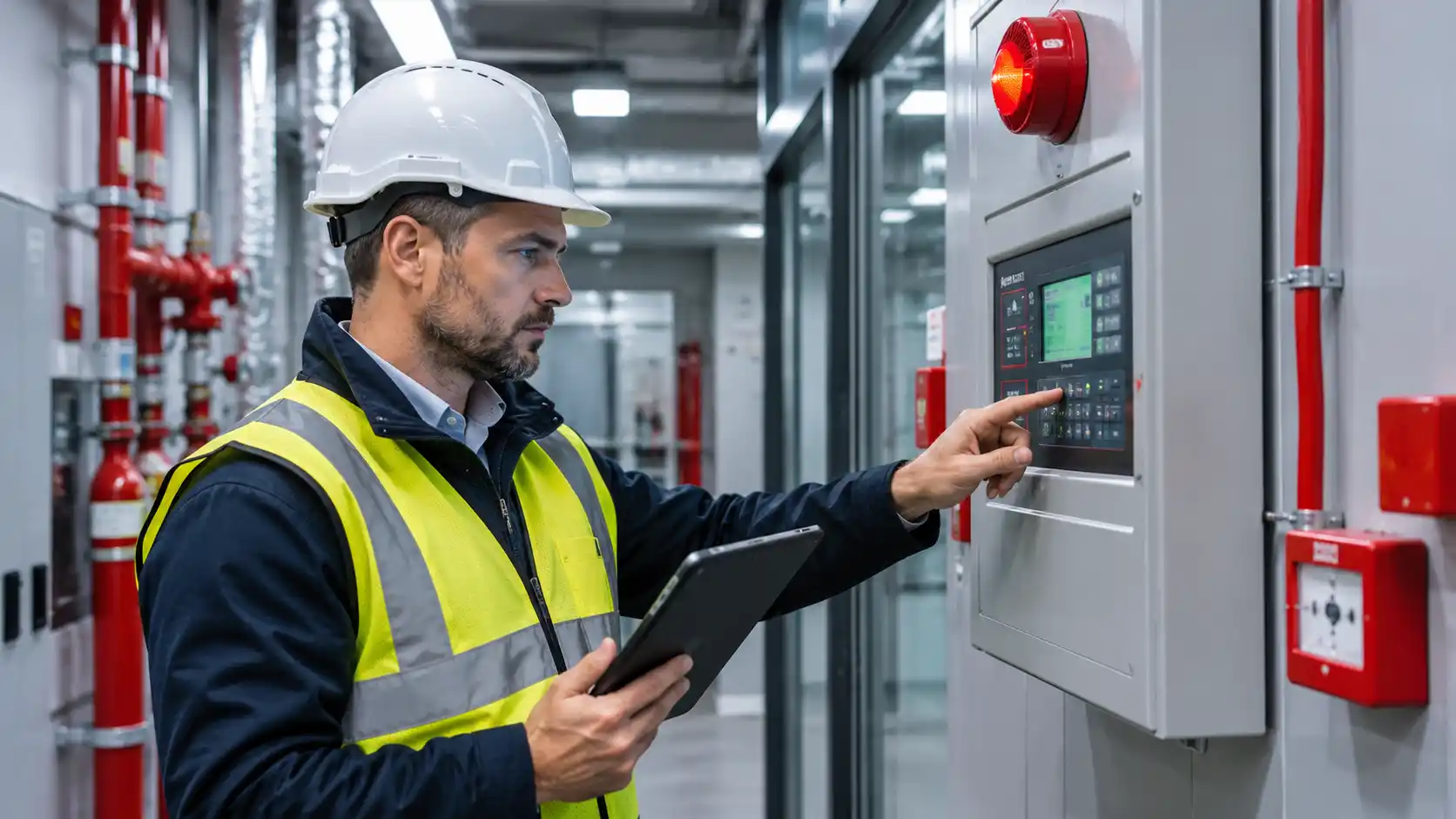
Many organisations use external specialists to inspect and maintain fire alarm systems, emergency lighting, extinguishers, sprinklers and other equipment. The fire safety manager may coordinate access, work schedules, records and defect reporting.
Maintenance work itself can introduce additional fire hazards. Hot work, electrical isolation, ceiling access and temporary system impairments should be managed through suitable authorisation and risk control procedures.
The manager should ensure that the organisation understands any temporary loss of protection and that appropriate interim measures are agreed, communicated and monitored.
Essential Skills and Competencies of a Fire Safety Manager
Effective fire safety management requires a combination of technical understanding, organisational capability and professional judgement. The exact competency profile depends on the premises, hazards, level of responsibility and complexity of the systems being managed.
Fire Risk Assessment Knowledge
A manager should understand the principles of fire hazard identification, risk evaluation and selection of preventive and protective measures. This includes recognising when specialist assessment or engineering advice is needed.
Knowledge of Fire Protection Systems
Understanding fire detection, alarm systems, emergency lighting, fire doors, compartmentation and suppression equipment enables the manager to coordinate inspections and recognise potential weaknesses. Technical design, certification and specialist servicing should remain within the responsibilities of appropriately competent professionals.
Leadership and Decision-Making
Fire safety managers often coordinate people from different departments and organisations. Leadership is necessary to establish responsibilities, obtain cooperation, challenge unsafe practices and ensure that agreed actions are completed.
Communication and Stakeholder Coordination
The manager must communicate technical issues in language that employees, contractors and senior decision-makers can understand. Good communication also helps coordinate emergency arrangements across departments, shifts and shared premises.
Planning and Organisational Skills
Inspection schedules, maintenance programmes, training records, corrective actions and risk assessment reviews require consistent planning. Strong organisational skills help prevent important tasks from being overlooked.
Problem-Solving and Incident Investigation
When a fire-related incident, alarm failure or repeated safety defect occurs, the manager should help establish what happened, identify contributing factors and recommend proportionate improvements. The focus should be on preventing recurrence rather than simply completing an incident report.
| Competency | Workplace application | Expected contribution |
|---|---|---|
| Risk assessment | Identifying hazards and evaluating precautions | Better risk control and prioritisation. |
| Technical awareness | Monitoring fire protection equipment | Improved system oversight. |
| Leadership | Coordinating staff and delegated roles | Clearer accountability. |
| Communication | Explaining risks and emergency procedures | Improved workforce awareness. |
| Record management | Maintaining inspection and training evidence | Better monitoring and traceability. |
| Problem-solving | Investigating defects and incidents | Continuous improvement. |
Fire Safety Manager Training and Professional Development Routes
Professional development helps individuals build the knowledge and capabilities needed to undertake fire safety management responsibilities. The most appropriate training route depends on previous experience, existing knowledge, the type of premises and the level of responsibility involved.
There is no single course title that automatically makes someone competent for every fire safety management task. Employers should assess competence against the actual responsibilities assigned and ensure that appropriate specialist support is available.
Developing Management-Level Fire Safety Knowledge
Individuals moving into senior fire safety roles may benefit from structured learning in fire risk management, organisational responsibilities, safety leadership, audit processes, emergency planning and performance monitoring.
The ICTQual Level 4 Diploma Senior Fire Safety Advisor is one relevant development route for individuals seeking to strengthen their understanding of professional fire safety advisory responsibilities.
The ICTQual Level 4 Diploma in Senior Fire Safety Advisor is also included in the available course portfolio. Prospective learners should review the course specifications and confirm the appropriate course title, awarding details and learning requirements before registration.
Industrial Fire Safety Management
Industrial environments may involve machinery, manufacturing processes, flammable substances, storage operations, hot work and complex plant arrangements. Fire safety professionals working in these settings need to understand how operational activities influence fire risk.
The ICTQual Level 3 Diploma in Industrial Fire Safety Management is a relevant option to explore for individuals interested in developing industrial fire safety management knowledge.
Fire Safety Responsibilities for Managers
Managers who oversee teams, departments or operational areas also need to understand their role in maintaining safe working practices, communicating fire risks and implementing organisational procedures.
The QualCert Level 3 Award in Fire Safety for Managers provides another course option to consider when developing management-level fire safety awareness and responsibilities.
Develop Professional Fire Safety Management Knowledge
Explore relevant fire safety management and advisory courses to strengthen understanding of risk assessment, workplace fire precautions, leadership and organisational safety arrangements.
Continuous Professional Development
Fire safety knowledge should be maintained throughout a professional career. Changes to buildings, workplace activities, fire protection technologies, organisational procedures and applicable legislation can affect how fire safety arrangements should be managed.
Continuing professional development may include relevant training, technical seminars, professional guidance, supervised workplace experience, specialist workshops and lessons learned from audits or incidents.
Professionals should also maintain an accurate record of their learning and seek development where knowledge gaps have been identified. Where a role involves specialist fire engineering, risk assessment or system inspection, appropriate technical competence and experience are essential.
Monitoring Performance and Overcoming Common Challenges
Effective fire safety management should be evaluated through evidence rather than assumptions. A workplace may have policies and equipment in place but still experience weaknesses in implementation, maintenance, communication or staff understanding.
Monitoring Fire Safety Performance
A fire safety manager can use practical performance indicators to evaluate whether management arrangements are being implemented effectively. These indicators should be selected according to the size, complexity and risk profile of the organisation.
- Completion of scheduled workplace fire safety inspections.
- Progress against actions arising from fire risk assessments.
- Timely resolution of fire alarm and emergency lighting defects.
- Completion of planned maintenance and specialist servicing.
- Staff induction and relevant refresher training coverage.
- Completion and evaluation of planned evacuation exercises.
- Reporting and closure of identified fire hazards.
- Effectiveness of contractor and hot work control arrangements.
These indicators should be interpreted carefully. A low number of reported hazards does not necessarily demonstrate good performance; it may indicate that employees are not reporting problems. Similarly, completing a drill does not automatically demonstrate that evacuation arrangements are effective. The quality of the process and the actions taken afterwards are equally important.
Common Fire Safety Management Challenges
Unclear Responsibility
When several departments or organisations share control, tasks may be overlooked because each party assumes another is responsible. Clear responsibility matrices, documented agreements and regular coordination meetings help reduce this problem.
Insufficient Resources
Delayed maintenance, inadequate training and unresolved defects may result from insufficient resources or competing operational priorities. Managers should provide evidence of the risks and escalate resource requirements to the appropriate decision-makers.
Changes in Workplace Conditions
New equipment, building alterations, changed occupancy, temporary construction work and different storage arrangements may affect existing fire precautions. Fire safety arrangements should be reviewed when significant changes occur rather than waiting for a routine annual review.
Inadequate Communication
Employees may not understand evacuation instructions, contractors may be unaware of temporary alarm impairments, and tenants may not know who manages shared fire protection systems. Consistent communication and accessible procedures help address these weaknesses.
Incomplete Records
Missing inspection reports, outdated plans and untracked corrective actions make it difficult to demonstrate effective management. A controlled record management process should identify document owners, update requirements and arrangements for retrieving relevant information.
Treat fire safety as an ongoing operational management process. Risk assessments, inspections, training, maintenance and emergency exercises should inform one another. When one activity identifies a weakness, the finding should feed into the organisation’s corrective action and review process.
Frequently Asked Questions About Fire Safety Manager Responsibilities
1. What does a fire safety manager do?
A fire safety manager coordinates workplace fire safety arrangements, including risk assessment support, preventive controls, equipment monitoring, emergency planning, employee training, contractor coordination and fire safety records. The precise duties depend on the organisation and the authority delegated to the role.
2. What are the main fire safety manager responsibilities?
Main responsibilities commonly include identifying fire hazards, monitoring corrective actions, coordinating inspections, maintaining fire safety records, supporting evacuation planning, organising training and reporting significant risks to management.
3. Is a fire safety manager legally responsible for the entire building?
Not automatically. Legal duties under UK fire safety legislation depend on the identity of the responsible person and the extent of control held by relevant dutyholders. A fire safety manager may receive delegated tasks, but their job title does not automatically transfer another person’s statutory accountability.
4. Does every workplace need a dedicated fire safety manager?
Not every workplace is required to appoint someone with the specific job title of fire safety manager. However, applicable fire safety duties must be fulfilled, and suitable arrangements and competent assistance must be provided according to the premises and risks.
5. What should a workplace fire safety management plan include?
It should address management responsibilities, fire risk assessment, prevention measures, protection systems, emergency procedures, evacuation arrangements, training, communication, maintenance, record keeping and ongoing performance review.
6. How often should workplace fire risk assessments be reviewed?
There is no universal annual review interval for every premises. The responsible person must review the assessment regularly to keep it up to date and when there is reason to believe it is no longer valid or a significant change occurs. The appropriate review frequency should reflect the premises and its risks.
7. What training does a fire safety manager need?
Training should match the responsibilities and risks of the role. Relevant development may cover fire risk assessment, fire protection systems, workplace emergency planning, fire safety legislation, auditing, management and leadership. Specialist tasks require appropriate competence, knowledge and experience.
8. What skills are important for a fire safety manager?
Important skills include risk assessment knowledge, technical awareness, leadership, communication, planning, record management, problem-solving and the ability to coordinate different stakeholders.
9. What records should a fire safety manager maintain?
Depending on the premises and applicable requirements, records may include risk assessments, maintenance reports, alarm tests, emergency lighting checks, fire door inspections, evacuation drill results, training records, incident reports and corrective action registers.
10. Can a facilities manager perform fire safety management duties?
Yes, where the individual has the appropriate competence, resources and authority for the assigned tasks. However, the organisation must ensure that the relevant statutory duties remain fulfilled and specialist tasks are carried out by suitably competent people.
11. What is the difference between a fire safety manager and a fire warden?
A fire safety manager generally coordinates broader fire safety arrangements, management processes and monitoring activities. A fire warden normally supports specific workplace emergency arrangements, such as evacuation procedures, hazard reporting and communication. Their responsibilities should be clearly defined.
12. Is professional training useful for a fire safety management career?
Professional training can help develop the knowledge and skills required for fire safety management responsibilities. The most suitable programme depends on existing experience, career objectives, the complexity of the premises and the competencies required by the employer.
Conclusion
Fire safety manager responsibilities extend beyond equipment checks and emergency notices. The role involves coordinating risk management, supporting legal compliance, monitoring protection systems, developing workforce awareness, maintaining records and helping an organisation improve its fire safety arrangements.
Effective fire safety leadership requires clear accountability, competent people, suitable resources and consistent management oversight. Risk assessments must lead to practical action, maintenance findings must be addressed, and emergency procedures must be understood and tested.
For professionals seeking to develop their capabilities, relevant fire safety management and advisory training can provide a structured route to improving technical understanding and leadership skills. The right development programme should always be matched to the actual duties and competence requirements of the role.
Ultimately, effective fire safety management is demonstrated through the quality of the precautions maintained, the readiness of people to respond and the organisation’s ability to identify and correct weaknesses before they lead to serious consequences.
Explore Fire Safety Management Training
Explore relevant professional courses designed to support the development of workplace fire safety knowledge, industrial fire safety management and senior advisory capabilities.
Official Fire Safety Guidance and References
The following official resources provide further information about UK fire safety duties, risk assessments, workplace emergency planning and relevant legal requirements.
- Regulatory Reform (Fire Safety) Order 2005 – legislation covering fire safety duties in relevant premises in England and Wales.
- GOV.UK – Fire Safety in the Workplace – guidance on responsible persons and workplace fire safety responsibilities.
- GOV.UK – Fire Risk Assessments – guidance on identifying hazards, people at risk and appropriate precautions.
- GOV.UK – Fire Safety Equipment, Drills and Training – information on fire protection equipment, checks and staff training.
- GOV.UK – Fire Safety and Evacuation Plans – workplace evacuation planning and arrangements for people with mobility needs.
- Home Office – Fire Safety (England) Regulations 2022 – guidance on additional duties for specified residential buildings in England.
- Health and Safety Executive – Emergency Procedures – workplace emergency planning and coordination.
Editorial note: This article provides general educational information and is not a substitute for legal advice, a suitable and sufficient fire risk assessment or specialist technical advice. Legal requirements should be checked against the jurisdiction and circumstances of the premises.