
How to Become a Fire Safety Trainer: Skills, Planning and Assessment
Discover how to develop the technical knowledge, teaching abilities and assessment skills needed to become an effective fire safety trainer in the UK. Explore relevant trainer qualifications, practical training methods, lesson planning and professional development.

Fire safety is an essential part of workplace health and safety management. Organisations need employees who understand fire hazards, recognise potential sources of ignition, follow emergency procedures and know how to respond appropriately when a fire occurs. However, providing effective fire safety instruction requires more than simply understanding fire prevention. It requires the ability to communicate technical information, plan learning activities, engage participants and assess whether essential knowledge has been understood.
This is where a professional fire safety trainer plays an important role. Fire safety trainers help organisations develop employee awareness, improve emergency preparedness and establish safer workplace practices. They may deliver induction sessions, fire awareness programmes, evacuation instruction, fire marshal training or specialist firefighting demonstrations, depending on their competence and the scope of their responsibilities.
For professionals interested in entering this field, understanding how to become a fire safety trainer involves several stages. These include developing relevant fire safety knowledge, gaining practical experience, building instructional skills, choosing appropriate trainer qualifications and learning how to assess training outcomes.
This guide explains the main steps involved in becoming a fire safety trainer in the UK. It also explores the difference between technical fire safety qualifications and train-the-trainer certifications, helping aspiring instructors make informed professional development decisions.
To become a fire safety trainer, develop suitable fire safety knowledge and practical experience, understand the responsibilities associated with the training subject, gain instructional and assessment skills, complete relevant trainer development where appropriate, and maintain professional competence. The precise requirements depend on the subject being taught, the workplace risk, the practical activities involved and the expectations of the training provider or employer.
What Does a Fire Safety Trainer Do?
A fire safety trainer is a professional who develops and delivers learning activities that help individuals understand fire hazards, prevention measures, workplace precautions and emergency response procedures. The trainer’s responsibility is to communicate accurate information in a structured way and establish whether participants have achieved the intended learning outcomes.
The exact role depends on the type of organisation, training programme and learner responsibilities. An instructor delivering general workplace fire awareness may have different responsibilities from a trainer conducting practical extinguisher demonstrations or specialist firefighting exercises.
Key Responsibilities of a Fire Safety Trainer
1. Delivering Fire Safety Knowledge
Trainers explain the fundamentals of fire safety, including the fire triangle, common ignition sources, combustible materials, fire development, smoke hazards and the importance of prevention. They help participants understand how everyday workplace activities can increase or reduce fire risk.
2. Explaining Workplace Fire Prevention
A trainer explains how suitable housekeeping, safe storage, electrical safety, control of ignition sources and responsible working practices contribute to fire prevention. Examples should reflect the learners’ actual working environments, such as offices, construction sites, warehouses, manufacturing facilities and healthcare settings.
3. Teaching Emergency Procedures
Employees need to understand what to do when a fire is discovered or an alarm sounds. Trainers explain how to raise the alarm, report emergencies, follow escape routes, proceed to designated assembly points where applicable and comply with the organisation’s evacuation arrangements.
4. Preparing Training Materials
Training materials may include presentations, lesson plans, handouts, diagrams, workplace examples, practical demonstration plans, learner activities and assessment questions. Every resource should support the learning objectives rather than simply provide large amounts of information.
5. Assessing Learner Understanding
Trainers use appropriate assessment methods to establish whether participants understand the information being taught. This may include questioning, knowledge tests, discussions, observation and practical demonstrations, depending on the intended learning outcomes.
6. Maintaining Training Records
Accurate records help organisations demonstrate that relevant training has been provided. Depending on the organisation’s arrangements, records may include attendance, training dates, subjects covered, assessment results, refresher requirements and any additional learning needs identified.
A trainer should only deliver instruction and practical activities within their knowledge, competence and authorised scope. General fire awareness instruction and specialist firefighting instruction should not be treated as interchangeable responsibilities.
Technical and Teaching Skills Required to Become a Fire Safety Trainer
Successful fire safety training depends on two complementary areas of competence: subject knowledge and instructional ability. A trainer must understand the principles being taught while also knowing how to explain them clearly to people with different levels of experience.
Technical knowledge without teaching ability can result in confusing or ineffective sessions. Similarly, strong presentation skills cannot compensate for inaccurate fire safety information. Both areas need to develop together.
Technical Fire Safety Knowledge
A fire safety trainer should develop a sound understanding of the subjects relevant to the training programme. These commonly include the following areas.
- Fire science and behaviour: Understanding combustion, heat transfer, ignition, fire development and the conditions that influence fire spread.
- Fire hazards: Recognising common workplace ignition sources, combustible materials, unsafe storage and activities that can increase fire risk.
- Fire prevention: Explaining housekeeping, electrical precautions, maintenance, safe working practices and risk reduction.
- Fire detection and warning: Understanding the purpose of alarm systems, detectors, warning arrangements and workplace emergency communication.
- Escape and evacuation: Explaining escape routes, emergency exits, evacuation procedures and arrangements for people who may require additional assistance.
- Fire protection: Understanding the purpose of passive and active fire protection measures, including fire doors, compartmentation and firefighting equipment.
- Risk awareness: Understanding how workplace activities, occupancy, building design and changing conditions influence fire safety arrangements.
Teaching and Instructional Skills
A fire safety trainer also needs to understand how adults learn and how to create an environment that encourages participation. The following skills support effective delivery.
- Communication: Explaining technical concepts using clear language, relevant examples and appropriate terminology.
- Presentation: Organising information logically and using suitable visual resources to maintain attention.
- Lesson planning: Establishing learning objectives, selecting appropriate teaching methods and allocating realistic session timings.
- Group management: Encouraging participation, managing discussions and responding professionally to different learner needs.
- Questioning: Using open and closed questions to check understanding and identify knowledge gaps.
- Assessment: Selecting appropriate methods to measure knowledge, understanding and practical performance.
- Feedback: Providing constructive explanations that help participants understand what they have done correctly and what requires improvement.
Why Adult Learning Principles Matter
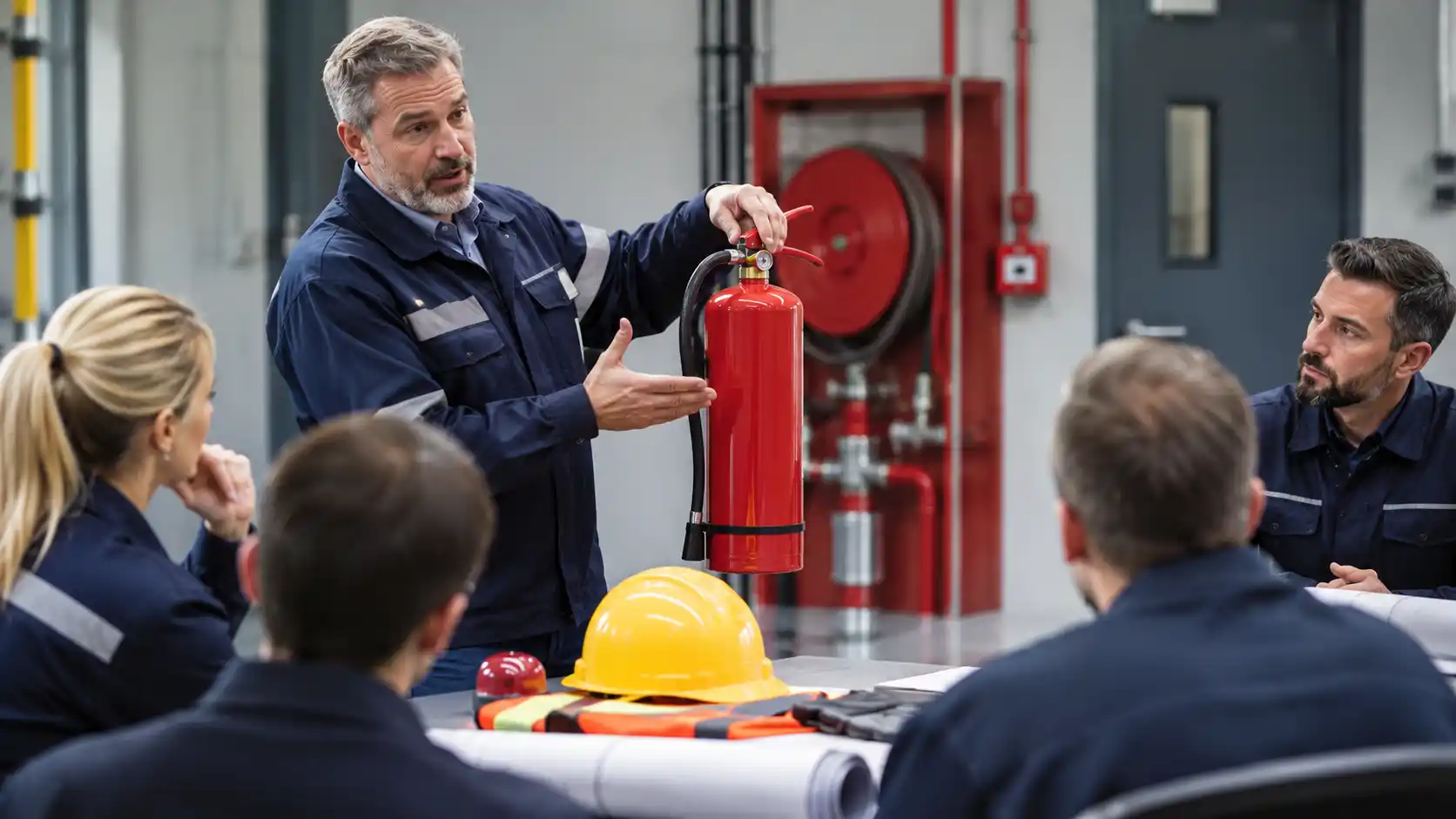
Adult learners often bring professional experience, workplace knowledge and practical expectations into a training environment. A trainer should connect new information with situations that participants recognise.
For example, rather than explaining electrical fire hazards only through theoretical definitions, an instructor could discuss overloaded extension leads, damaged electrical cables, unsuitable equipment and poor maintenance practices. Learners can then relate the information to the risks they may encounter in their own workplaces.
Scenario-based learning is another useful method. Participants may be presented with a situation involving a blocked emergency exit, an electrical fault or an alarm activation and asked to explain the appropriate response. Such activities encourage learners to apply knowledge instead of simply memorising definitions.
Planning Fire Safety Training Sessions
Effective training begins before the instructor enters the classroom. Planning ensures that the session addresses relevant workplace risks, meets its learning objectives and provides enough time for explanation, participation and assessment.
A structured training session should be based on the needs of the learners and the organisation’s fire safety arrangements. Trainers should avoid delivering generic material without considering the workplace activities, building characteristics and emergency procedures relevant to participants.
Step 1: Identify Training Needs
Begin by identifying who will attend the session and what they need to learn. New employees may require introductory fire awareness, while designated fire marshals or wardens may require additional role-specific instruction.
Consider the workplace’s fire risk assessment, the nature of the work, employee responsibilities, previous training records and any changes to equipment, technology or working practices. These factors help determine the appropriate training content.
Step 2: Establish Clear Learning Objectives
Learning objectives describe what participants should be able to understand or demonstrate by the end of a session. They should be specific, relevant and measurable.
Examples of suitable fire safety learning objectives include:
- Identify common sources of workplace fire hazards.
- Explain the basic principles of fire prevention.
- Describe the procedure for raising the fire alarm.
- Identify the designated escape routes and assembly arrangements relevant to the workplace.
- Explain the responsibilities assigned to designated fire wardens.
- Recognise circumstances in which attempting to fight a fire would be unsafe.
Step 3: Develop a Structured Lesson Plan
A lesson plan provides a framework for organising the session. It should identify the subject, intended learning outcomes, teaching methods, learning resources, activities and assessment arrangements.
| Training stage | Suggested activity | Learning purpose |
|---|---|---|
| Introduction | Explain the objectives and introduce the topic. | Establish expectations. |
| Technical instruction | Discuss fire hazards, prevention and relevant precautions. | Develop subject knowledge. |
| Workplace examples | Use relevant scenarios and case studies. | Connect theory with practice. |
| Participation | Conduct group activities and guided discussions. | Encourage active learning. |
| Assessment | Use questions, exercises or appropriate demonstrations. | Check learning outcomes. |
| Conclusion | Summarise key points and provide feedback. | Reinforce understanding. |
Step 4: Select Appropriate Training Methods
Different subjects require different teaching methods. A trainer should select approaches that support the learning objectives and the complexity of the subject.
Classroom Instruction
Classroom instruction is useful for explaining fire science, workplace hazards, prevention measures and emergency procedures. Presentations should be supported by examples, diagrams and opportunities for questions.
Group Discussions
Group discussions allow learners to share workplace experiences and consider different fire safety situations. They can also help trainers identify misunderstandings and encourage participants to think critically about risk prevention.
Scenario-Based Learning
Scenarios provide an opportunity to explore realistic situations. For example, a trainer could ask learners how they would respond if they discovered smoke in a storage area or noticed that an emergency exit was obstructed.
Practical Demonstrations
Demonstrations can be useful when a learning objective involves equipment or practical procedures. However, practical firefighting activities require appropriate facilities, equipment, risk assessment, supervision and instructor competence. Trainers should never improvise unsafe demonstrations.

Step 5: Prepare the Training Environment
The learning environment should support concentration, communication and safe participation. Trainers should check that the venue has appropriate seating, lighting, presentation equipment and sufficient space for planned activities.
Where practical demonstrations are included, the trainer should confirm that the location, equipment and safety arrangements are suitable. Participants must receive clear instructions about the activity and any relevant precautions before it begins.
Step 6: Adapt Training to Different Learners
Participants may have different levels of literacy, technical knowledge, language proficiency and workplace experience. An effective trainer adapts explanations, resources and activities without reducing essential safety requirements.
Visual examples, short explanations, demonstrations and guided discussions can make complex subjects easier to understand. Trainers should also provide opportunities for learners to ask questions and request clarification.
Always connect the training session with the workplace’s actual fire safety arrangements. General learning should be supported by site-specific information about alarm activation, emergency exits, assembly points, reporting procedures and individual responsibilities.
For a broader explanation of workplace fire safety training requirements, explore the Fire Safety Training Guide. It provides additional information about training types, workplace responsibilities and course selection.
Assessment and Feedback in Fire Safety Training
Assessment is an essential part of effective fire safety training because attendance alone does not demonstrate that a participant has understood the subject. Trainers need suitable methods to check whether learners can explain important principles, recognise hazards and apply the information to relevant workplace situations.
The assessment method should match the intended learning outcome. A written knowledge test may be appropriate for checking understanding of fire prevention principles, while observation may be necessary when a practical skill needs to be demonstrated.
Types of Assessment Methods
1. Questioning and Discussion
Verbal questions allow trainers to explore learner understanding during a session. Open questions encourage participants to explain their reasoning, while closed questions can check specific facts.
For example, asking “What actions should an employee take after discovering a fire?” can help assess whether a learner understands the relevant emergency procedure.
2. Multiple-Choice Questions
Multiple-choice assessments can help measure knowledge of fire safety terminology, hazard identification, prevention measures and emergency procedures. Questions should be clear, relevant and based on the learning objectives.
Scenario-based questions can make assessments more meaningful. Instead of testing definitions alone, they ask participants to consider what they should do in a realistic workplace situation.
3. Written Activities
Written activities can require learners to explain fire prevention methods, identify workplace hazards or describe emergency arrangements. They can also provide evidence of understanding where written assessment is suitable for the course.
4. Practical Observation
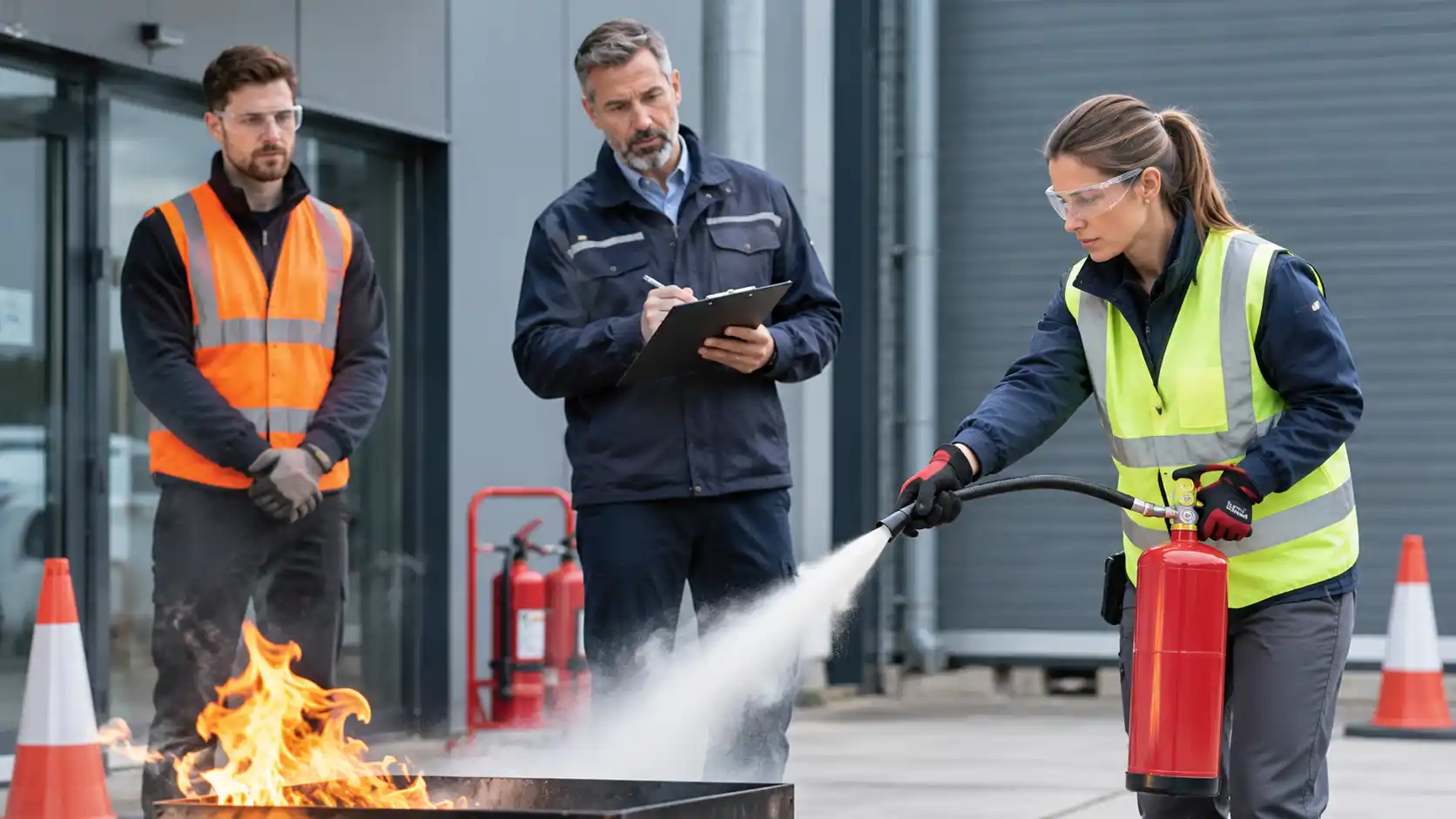
Where practical competencies are included, the trainer may observe participants performing relevant tasks. Assessment criteria should be established in advance, and practical activities must be carried out within suitable safety arrangements.
5. Scenario-Based Assessment
Scenario-based assessment evaluates how learners apply their knowledge to specific situations. For example, a participant could be asked to identify hazards in a workplace image, explain the consequences of obstructed escape routes or describe an appropriate response to an alarm.
Providing Constructive Feedback
Feedback helps participants understand their performance and identify areas for improvement. It should be specific, objective, respectful and connected to the learning objectives.
Effective feedback should:
- Identify what the learner has understood correctly.
- Explain any incorrect or incomplete responses.
- Clarify the correct procedure or safety principle.
- Provide practical guidance for improvement.
- Encourage learners to ask questions.
- Identify whether further instruction or reassessment is necessary.
Evaluating Training Effectiveness
Assessment of individual learners and evaluation of the training programme are related but different activities. Learner assessment checks individual understanding, while training evaluation considers whether the overall session achieved its intended purpose.
Trainers can review participant feedback, assessment results, recurring misunderstandings, workplace observations and relevant incident trends. Where problems are identified, the content, teaching approach or training resources may need improvement.
Maintaining Assessment Records
Training providers and employers should follow their applicable assessment and recordkeeping procedures. Records may include assessment results, attendance, feedback, practical observations, reassessment outcomes and identified development needs.
Trainers should handle personal information appropriately and follow relevant organisational data protection and recordkeeping policies. Assessment evidence should be accurate, relevant and securely maintained.
What Qualifications Do You Need to Teach Fire Safety?
One of the most common questions from aspiring instructors is what qualifications are needed to teach fire safety. The answer depends on the type of training, the learners, the workplace risks and the organisation delivering the programme.
There is no single universal trainer certificate that automatically covers every type of fire safety instruction in the UK. Employers and training providers should consider the trainer’s relevant technical knowledge, practical experience, instructional competence and ability to deliver the specific subject safely.
1. Fire Safety Knowledge and Technical Qualifications
Relevant fire safety learning can help establish the technical foundation needed to teach workplace fire safety subjects. Depending on the intended scope, professionals may consider certificates or other recognised learning in fire safety management, fire risk assessment, fire prevention and workplace health and safety.
The NEBOSH Certificate in Fire Safety is an example of a technical fire safety learning route. Its published content covers fire and explosion prevention and protection principles and fire risk assessment. However, completing a technical fire safety certificate should not automatically be interpreted as proof of competence to deliver every type of fire safety training.
2. Train-the-Trainer Qualifications
Train-the-trainer programmes focus on the instructional skills needed to deliver structured learning. Depending on the syllabus, they may cover adult learning principles, lesson planning, presentation skills, learner engagement, assessment methods and feedback.
For individuals seeking to develop both subject-related and instructional competencies, a fire safety train-the-trainer programme can be a relevant professional development option.
Explore the ICTQual Level 4 Award in Fire Fighting Train the Trainer to review a programme focused on fire-fighting instruction, fire prevention, practical training methods, learner assessment and instructional techniques.
Professionals interested in non-clinical workplace fire safety instruction can also review the LICQual Certificate in Non-Clinical Fire Safety Train the Trainer. Its published course information covers fire prevention, workplace hazard awareness, emergency procedures, evacuation and training delivery.
3. Teaching and Assessment Development
Some employers and training providers may expect evidence of broader teaching or assessment competence. This can include relevant trainer certifications, vocational teaching experience, assessment training or an appropriate instructional development programme.
The correct choice depends on the intended teaching responsibilities. A trainer delivering general awareness instruction may have different development needs from an instructor responsible for specialist practical firefighting exercises.
4. Practical Experience
Practical experience helps trainers explain how fire safety principles apply in real workplaces. Experience may come from relevant safety roles, fire prevention responsibilities, facilities management, emergency planning, industrial operations or other suitable professional activities.
Experience should be relevant to the subject being taught. Someone who has experience in office fire safety should not automatically assume that this is sufficient preparation for delivering specialist industrial firefighting instruction.
Understanding the Difference Between Technical and Trainer Qualifications
| Development route | Main purpose | Professional value |
|---|---|---|
| Fire safety certificate | Develop technical fire safety knowledge. | Supports subject understanding. |
| Train-the-trainer certification | Develop instructional and training delivery skills. | Supports structured teaching. |
| Teaching development | Improve lesson planning and learning methods. | Supports effective instruction. |
| Assessment development | Improve the ability to evaluate learner performance. | Supports consistent assessment. |
| Relevant work experience | Develop practical understanding of workplace risks. | Supports context-based instruction. |
Before enrolling, verify the awarding organisation, official course specification, learning outcomes, assessment requirements, certificate title and regulatory status. A course certificate, an awarding organisation’s recognition and Ofqual regulation are different matters and should not be confused.
Choosing a Fire Safety Train-the-Trainer Course
Selecting an appropriate fire safety instructor course is an important step for professionals who want to deliver workplace training. The course should match the intended teaching responsibilities and provide relevant knowledge and instructional development.
A course title alone is not enough to establish its suitability. Prospective learners should examine the syllabus, assessment process, learning outcomes, practical requirements and status of the certificate.
What Should a Good Fire Safety Trainer Course Cover?
A comprehensive programme may include the following areas, depending on its level and intended scope.
- Fundamental fire safety principles and fire behaviour.
- Common workplace fire hazards and prevention measures.
- Fire protection systems and emergency arrangements.
- Relevant fire safety legislation and organisational responsibilities.
- Adult learning principles and communication techniques.
- Training session design and lesson planning.
- Presentation methods and learner engagement.
- Knowledge assessment and constructive feedback.
- Training evaluation and professional development.
- Safe planning and delivery of practical activities, where included.
Questions to Ask Before Enrolling
Check the awarding organisation
Confirm who awards the certificate and whether the awarding organisation publishes an official specification or verification process.
Review the course syllabus
Ensure that the learning content covers the technical and instructional subjects relevant to the intended professional role.
Understand the assessment method
Check whether assessment involves assignments, knowledge tests, practical demonstrations, observed delivery or other methods.
Confirm delivery arrangements
Compare online, classroom and blended delivery options. Check the learner support and practical arrangements available.
Check the certificate status
Verify whether the programme is independently regulated, internally awarded or issued under another recognition arrangement. Do not assume that every professional certificate is Ofqual-regulated.
Which Train-the-Trainer Route May Be Appropriate?
The right route depends on the type of fire safety instruction a professional intends to deliver.
Professionals focusing on fire-fighting instruction, equipment demonstrations and practical emergency response can investigate programmes that specifically cover these responsibilities. The ICTQual Level 4 Award in Fire Fighting Train the Trainer is one option to examine.
Those focusing on general and non-clinical workplace fire safety awareness may prefer to examine programmes with a syllabus covering prevention, hazard recognition, emergency procedures and instructional delivery, such as the LICQual Certificate in Non-Clinical Fire Safety Train the Trainer.
Neither route should be assumed to replace workplace-specific instruction, practical experience or any additional competence required for specialist activities. Course suitability should always be checked against the intended professional scope.
Understanding UK Fire Safety Legislation and Trainer Responsibilities
A professional fire safety trainer should understand the legal context relevant to the training being delivered. This helps ensure that instruction reflects applicable responsibilities and avoids confusing general safety advice with legal requirements.
Fire safety legislation differs across the UK. In England and Wales, the Regulatory Reform (Fire Safety) Order 2005 is a central part of the legal framework for most non-domestic premises. Scotland and Northern Ireland have separate legislative frameworks.
Article 21: Safety Training
Article 21 of the Regulatory Reform (Fire Safety) Order 2005 addresses the provision of adequate safety training by the responsible person. It requires employees to receive suitable training when first employed and when they are exposed to certain new or increased risks.
The training must include suitable instruction on precautions and actions employees should take to safeguard themselves and other relevant people. It should be repeated periodically where appropriate, adapted to new or changed risks and delivered in a manner appropriate to the risk assessment.
Read the Regulatory Reform (Fire Safety) Order 2005, Part 2 for the relevant statutory provisions.
The Role of the Responsible Person
The responsible person has duties relating to fire safety arrangements in relevant premises. These include assessing fire risks, implementing appropriate preventive and protective measures and providing relevant information and training.
A fire safety trainer may support an organisation in delivering instruction, but this does not automatically transfer the responsible person’s statutory duties to the trainer.
Connecting Training with Fire Risk Assessments
Fire safety training should reflect the findings of the workplace fire risk assessment. The assessment identifies hazards, people who may be at risk, existing precautions and additional actions required to reduce risk.
The UK Government’s fire risk assessment guidance explains the importance of identifying hazards, evaluating risks, preparing emergency plans, providing training and reviewing the assessment.
Trainers should also understand that workplace arrangements can change. New equipment, building alterations, changes in occupancy and new working processes may create additional training needs.
Keeping Training Content Legally Relevant
A professional instructor should regularly review legislation, official guidance and relevant organisational procedures. This is especially important where training covers specific legal duties, evacuation arrangements or specialist workplace activities.
Trainers should distinguish between statutory requirements, official guidance, British Standards, industry recommendations and an organisation’s internal procedures. These sources have different legal and professional functions.
The Regulatory Reform (Fire Safety) Order 2005 is not the single fire safety law for every UK nation. Trainers working across England, Wales, Scotland and Northern Ireland should identify the applicable legislation and official guidance for the premises concerned.
Gaining Experience and Maintaining Professional Competence
Becoming an effective fire safety trainer is an ongoing professional development process. Completing a course can provide useful knowledge and instructional foundations, but continued learning and relevant experience help trainers maintain the quality of their work.
Develop Relevant Workplace Experience
Experience in health and safety, fire prevention, facilities management, emergency planning or relevant industrial environments can help trainers understand the practical challenges organisations face.
Professionals should seek opportunities to observe workplace procedures, participate in suitable training activities and learn how fire safety arrangements are managed. This experience can provide useful examples for future learning sessions.
Practise Instructional Delivery
New trainers can improve their delivery through supervised practice, short presentations, peer discussions and feedback from experienced instructors. Reviewing recorded practice sessions, where appropriate and permitted, can also help identify improvements in communication and presentation.
Keep Technical Knowledge Updated
Fire safety guidance, equipment, workplace risks and organisational procedures may change. Trainers should review relevant official publications, technical resources and professional development materials.
They should also monitor changes in the workplaces for which they deliver training. A session designed for a small office may not be suitable for a warehouse, care facility or industrial environment without appropriate adaptation.
Evaluate Training Performance
Trainers should review the effectiveness of their sessions using learner feedback, assessment results and relevant organisational observations. Repeated misunderstandings may indicate that a topic needs clearer explanations or a different teaching method.
Maintain Professional Records
Depending on employer and provider arrangements, a professional development record may include completed courses, relevant work experience, training delivered, feedback received, updated technical knowledge and areas identified for improvement.
Common Mistakes to Avoid When Becoming a Fire Safety Trainer
Aspiring trainers can improve their professional development by recognising common mistakes that affect training quality and learner safety.
Relying Only on a Certificate
A certificate can demonstrate completion of a particular learning programme, but it does not automatically prove competence across every fire safety subject. Trainers should consider relevant experience, knowledge and the actual scope of their responsibilities.
Using Generic Training Materials
Generic resources may introduce important principles, but they cannot replace site-specific information. Training should reflect the organisation’s actual alarm arrangements, escape routes and emergency procedures.
Ignoring Practical Safety
Practical demonstrations should never be conducted without suitable preparation. Trainers must consider equipment, facilities, supervision, risk assessment and their own competence before delivering practical instruction.
Using Assessments That Do Not Match the Objectives
An assessment should measure what participants were expected to learn. For example, a multiple-choice test may check theoretical knowledge but cannot independently demonstrate practical competence where a physical skill must be observed.
Failing to Update Training Content
Outdated legislation, incorrect procedures and obsolete examples can reduce the reliability of a training programme. Resources should be reviewed regularly and whenever significant changes affect the subject.
Providing Insufficient Feedback
Simply telling a participant that an answer is wrong does not explain how to improve. Constructive feedback should identify the issue, clarify the correct information and provide an opportunity for further learning.
Career Opportunities for Fire Safety Trainers
Fire safety trainers can work in different professional environments depending on their experience, technical knowledge and teaching competence. Opportunities may exist within organisations that deliver workplace training, health and safety services, emergency preparedness programmes or specialist vocational instruction.
Corporate and Workplace Training
Organisations may require internal trainers to support employee induction, fire awareness sessions, emergency procedure instruction and refresher training. These roles can be relevant to offices, commercial buildings, warehouses and industrial workplaces.
Health and Safety Training Providers
Training organisations may employ or engage competent instructors to deliver fire safety courses. The exact requirements depend on the programme, the provider’s policies and any applicable awarding organisation or regulatory expectations.
Fire Safety and Emergency Preparedness
Professionals with relevant experience may contribute to emergency preparedness programmes, evacuation instruction, fire prevention awareness and specialist workplace safety development.
Independent Training and Consultancy
Experienced professionals may choose to establish independent training services. This requires more than instructional ability. They should consider business arrangements, insurance, client requirements, training facilities, equipment, legal responsibilities and quality assurance.
Trainers should be transparent about their experience, course recognition, assessment arrangements and the scope of services they are competent to provide. They should never make unsupported claims about regulatory approval or professional recognition.
Fire Safety Trainer Development Checklist
The following checklist can help aspiring trainers organise their professional development and identify areas that require further attention.
Technical development
- Develop a sound understanding of fire safety principles.
- Study workplace fire hazards and prevention measures.
- Understand relevant emergency procedures.
- Review applicable fire safety legislation and guidance.
- Gain experience relevant to the intended training subject.
Instructional development
- Study adult learning principles.
- Practise communication and presentation skills.
- Develop lesson planning abilities.
- Learn appropriate assessment methods.
- Practise providing constructive feedback.
Professional preparation
- Compare suitable fire safety trainer courses.
- Verify the awarding organisation and certificate status.
- Understand the intended scope of training delivery.
- Prepare suitable teaching and assessment resources.
- Establish a continuing professional development plan.
Conclusion: Building a Professional Career as a Fire Safety Trainer
Becoming a fire safety trainer requires a combination of technical knowledge, relevant experience, instructional competence and a commitment to professional development. Trainers must understand the principles of fire prevention and emergency response while also developing the ability to plan structured sessions, communicate clearly and assess learner understanding.
Choosing an appropriate fire safety train-the-trainer course can support this development by strengthening instructional skills and providing structured learning in relevant areas. However, course selection should always reflect the professional responsibilities and technical subjects the individual intends to teach.
For aspiring instructors, the most effective approach is to build a strong technical foundation, develop teaching and assessment abilities, gain relevant experience and maintain current knowledge of workplace fire safety requirements.
With the right preparation and a responsible approach to training delivery, professionals can contribute to improved workplace awareness, stronger emergency preparedness and a more effective fire safety culture.
Develop Professional Fire Safety Training Skills
Explore structured fire safety train-the-trainer programmes designed to develop instructional knowledge, training delivery skills and learner assessment capabilities.
Review the ICTQual Level 4 Award in Fire Fighting Train the Trainer and the LICQual Certificate in Non-Clinical Fire Safety Train the Trainer to compare their intended learning areas and suitability.
Frequently Asked Questions About Becoming a Fire Safety Trainer
1. How do I become a fire safety trainer in the UK?
Develop relevant fire safety knowledge, gain appropriate practical experience, build teaching and assessment skills, and consider a suitable fire safety train-the-trainer certification. The exact requirements depend on the training subject, practical responsibilities and the expectations of the employer or training provider.
2. What qualifications do you need to teach fire safety?
There is no single universal qualification for every fire safety trainer role. Relevant fire safety knowledge, instructional competence and practical experience should be considered. Employers and training providers may also require specific certifications depending on the programme.
3. Is a fire safety train-the-trainer course necessary?
A train-the-trainer course can help develop lesson planning, presentation, learner engagement and assessment skills. Whether a particular certification is required depends on the organisation, course requirements and intended teaching responsibilities.
4. What is the difference between a fire safety certificate and a trainer certificate?
A fire safety certificate generally focuses on technical subject knowledge, while a trainer certificate focuses on instructional and training delivery skills. A professional delivering fire safety instruction may need relevant competence in both areas.
5. Can someone become a fire safety trainer without firefighting experience?
Some general workplace fire awareness roles may not require previous operational firefighting experience. However, specialist practical firefighting instruction requires appropriate subject competence, practical experience and safe training arrangements.
6. What subjects should a fire safety trainer teach?
Depending on the training scope, subjects may include fire hazards, prevention, fire behaviour, emergency procedures, alarm response, evacuation arrangements, fire protection measures and safe workplace practices.
7. How do fire safety trainers assess learners?
Trainers can use questioning, written tests, multiple-choice questions, discussions, scenario-based exercises and practical observation. Assessment methods should match the learning objectives and the type of competence being evaluated.
8. Can fire safety trainers deliver online training?
Online delivery can be appropriate for many theoretical fire safety subjects, awareness sessions and knowledge assessments. However, workplace-specific instruction and practical competencies may require additional site-based teaching, demonstrations or supervised assessment.
9. What does Article 21 of the Fire Safety Order require?
Article 21 of the Regulatory Reform (Fire Safety) Order 2005 requires the responsible person to provide employees with adequate safety training at specified stages, including when first employed and when exposed to certain new or increased risks. Training should reflect the identified risks and appropriate safety precautions.
10. How can a fire safety trainer maintain professional competence?
Trainers can maintain competence through continuing professional development, reviewing official guidance, gaining relevant workplace experience, updating training resources and evaluating the effectiveness of their sessions.
11. What is the difference between a fire safety trainer and a fire marshal?
A fire safety trainer delivers learning and instruction, while a fire marshal or fire warden carries out designated workplace emergency responsibilities. One individual may perform both roles if appropriately appointed and competent, but the responsibilities are different.
12. Which fire safety trainer course should I choose?
Select a programme based on the intended training responsibilities. Compare the technical syllabus, instructional content, assessment arrangements, awarding organisation, certificate status and relevance to the workplace subjects you intend to teach.
References and Further Reading
The following official and professional resources can support further reading and the verification of fire safety information.
- Regulatory Reform (Fire Safety) Order 2005 – Part 2
- GOV.UK – Fire Risk Assessments
- GOV.UK – Fire Safety Equipment, Drills and Training
- NEBOSH – Certificate in Fire Safety
- Fire Safety Training: Types, Requirements and Course Options
Editorial note: This article provides general professional and educational information. It is not a substitute for legal advice, a workplace fire risk assessment or specialist technical instruction. Always consult the legislation and official guidance applicable to the relevant UK jurisdiction and premises.